Trolls
2016
DreamWorks Animation, dir. Mike Mitchell, Walt Dohrn
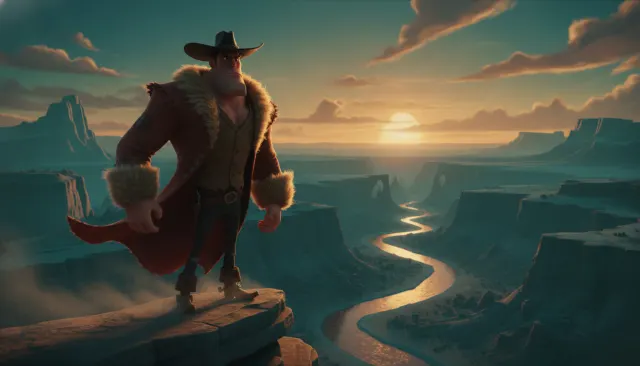
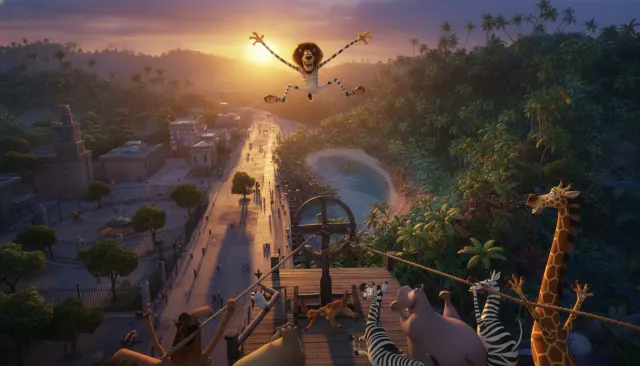
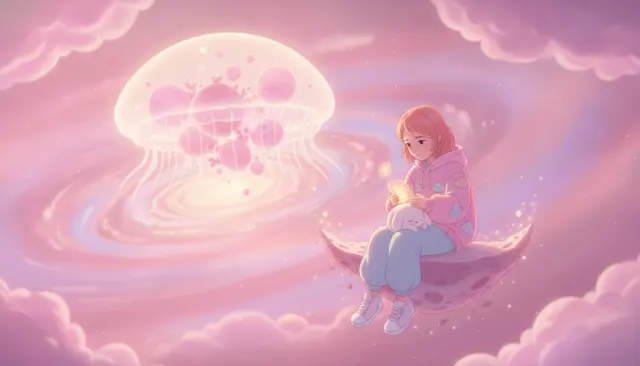
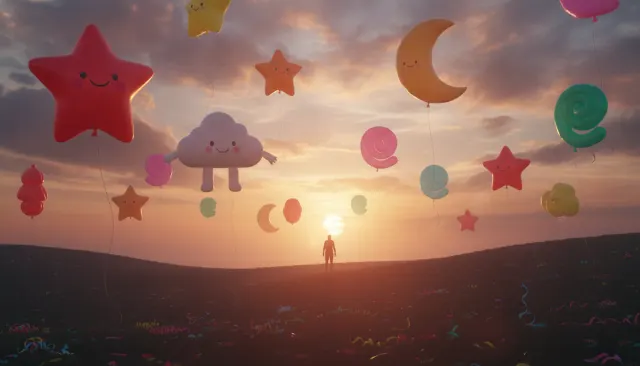
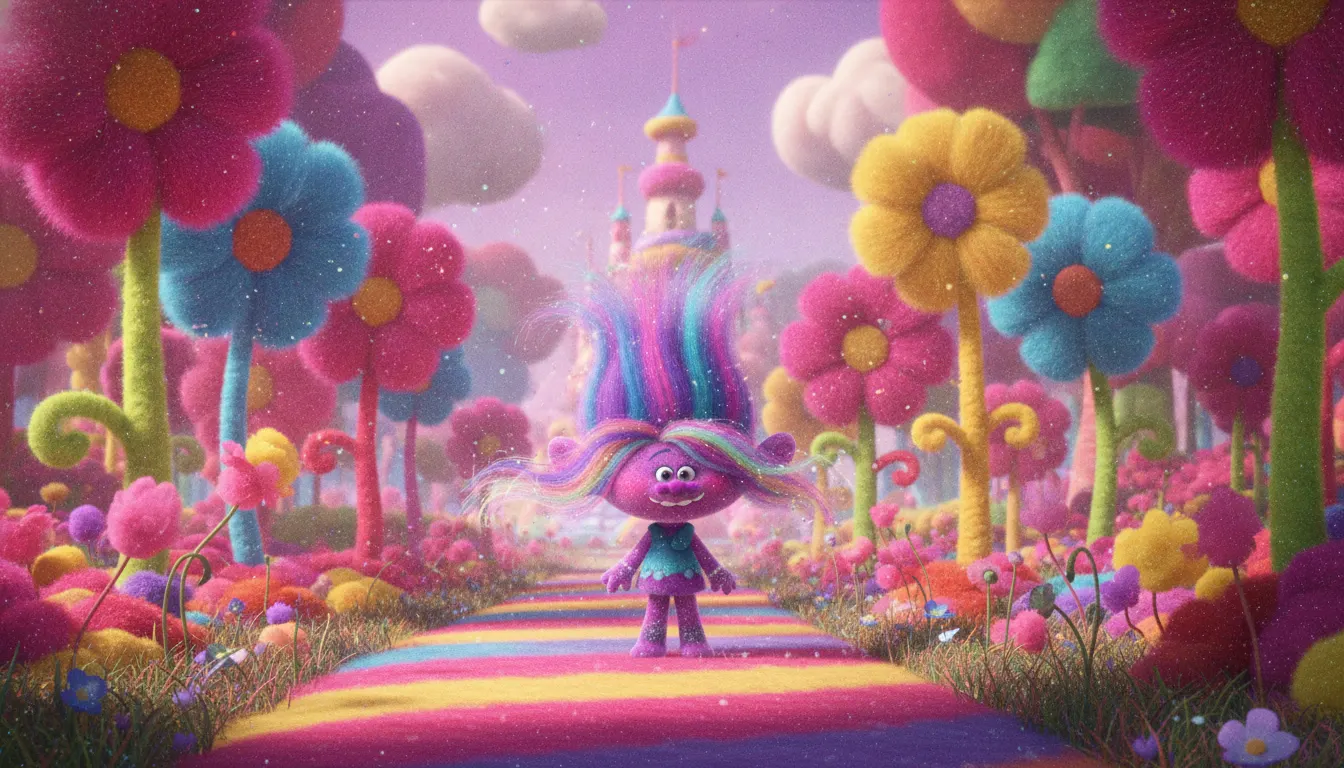
DreamWorks Trolls CG. Felt-and-glitter material experiment, hyper-saturated pop palette, fiber hair simulation, musical pop sensibility.
The moves a human crew would use to get here. Cue applies them for you, and knowing their names is how you ask for a change.
facet glitter shader: individual reflective particles on curved surfaces with angle-dependent sparkle
directional light interaction with thread-width fiber geometry on character clothing
matte surface with visible fiber direction and soft ambient occlusion
directional reflectance: mirror-to-diffuse transition based on viewing angle
fiber hair simulation maintaining impossible upward volume through custom DreamWorks Prism solver
material world elements: embroidered fabric flowers, cellophane water, scrapbook-paper rock formations
free rendering in Bergen environments as explicit visual contrast coding for joy vs. misery
Trolls (DreamWorks Animation, 2016) directed by Mike Mitchell and Walt Dohrn is the most texturally ambitious film in DreamWorks' catalog-a production that set out to make every surface in its world look like it was constructed from craft materials: felt, yarn, glitter, sequins, fabric, cardboard, and embroidered textile. Production designer Kendal Cronkhite-Shaindlin and the art team treated the film as a tactile art project, reverse-engineering CGI shaders from physical craft material samples brought into the production design department.
The central conceit of Trolls' visual design is that the troll world is not a world made of conventional natural materials-it is a world made of craft supplies. Flower petals are embroidered fabric circles. Tree trunks have felt-covered bark texture. Water is transparent cellophane. Scrapbook paper cutouts serve as rock formations. This extends to the characters themselves: Poppy's hair has individual glitter particles embedded in the yarn-like strands. Guy Diamond literally produces glitter from his body as a biological function.
This approach required DreamWorks' technical team (led by simulation supervisor Markus Manninen) to build material shaders for every craft category: micro-facet glitter (individual reflective particles on a curved surface), woven fabric (directional light interaction with thread-width fibers), pressed felt (matte, fiber-scattered diffuse with visible surface fiber direction), and sequin (bi-directional reflectance function combining mirror and diffuse based on viewing angle).
The troll characters' hair is the film's most distinctive design element-impossibly upward-defying volumes of yarn-textured hair that function as architecture. Poppy's hair changes shape as a narrative expression device. The hair simulation system (built on DreamWorks' in-house Prism simulation tool) needed to maintain the impossible yarn-fiber texture while simulating dynamic movement. Individual trolls' hair styles serve as character design shorthand: Poppy's bubblegum pink cascades, Branch's grey practical helmet-flat.
Trolls uses glitter-both the literal material and the rendering approach-as a consistent signal for joy, positivity, and troll culture. Scenes in the Bergen world are rendered with no glitter, no fabric warmth, and no craft texture-they are conventional CGI grey stone and metal, emphasizing the misery of that world by contrast. This glitter-as-happiness metaphor is one of the most direct mappings of visual style to emotional content in DreamWorks' output.
2016
DreamWorks Animation, dir. Mike Mitchell, Walt Dohrn
2020
DreamWorks Animation, dir. Walt Dohrn, David P. Smith
2023
DreamWorks Animation, dir. Walt Dohrn, Tim Heitz
TV continuation of the aesthetic
2017
DreamWorks Animation holiday special
A Look is not a filter. It is a set of stored decisions the pipeline reads before it makes a single frame, so two videos in the same Look actually match.