Kung Fu Panda
2008
DreamWorks Animation, dir. Mark Osborne, John Stevenson, prod. design Raymond Zibach
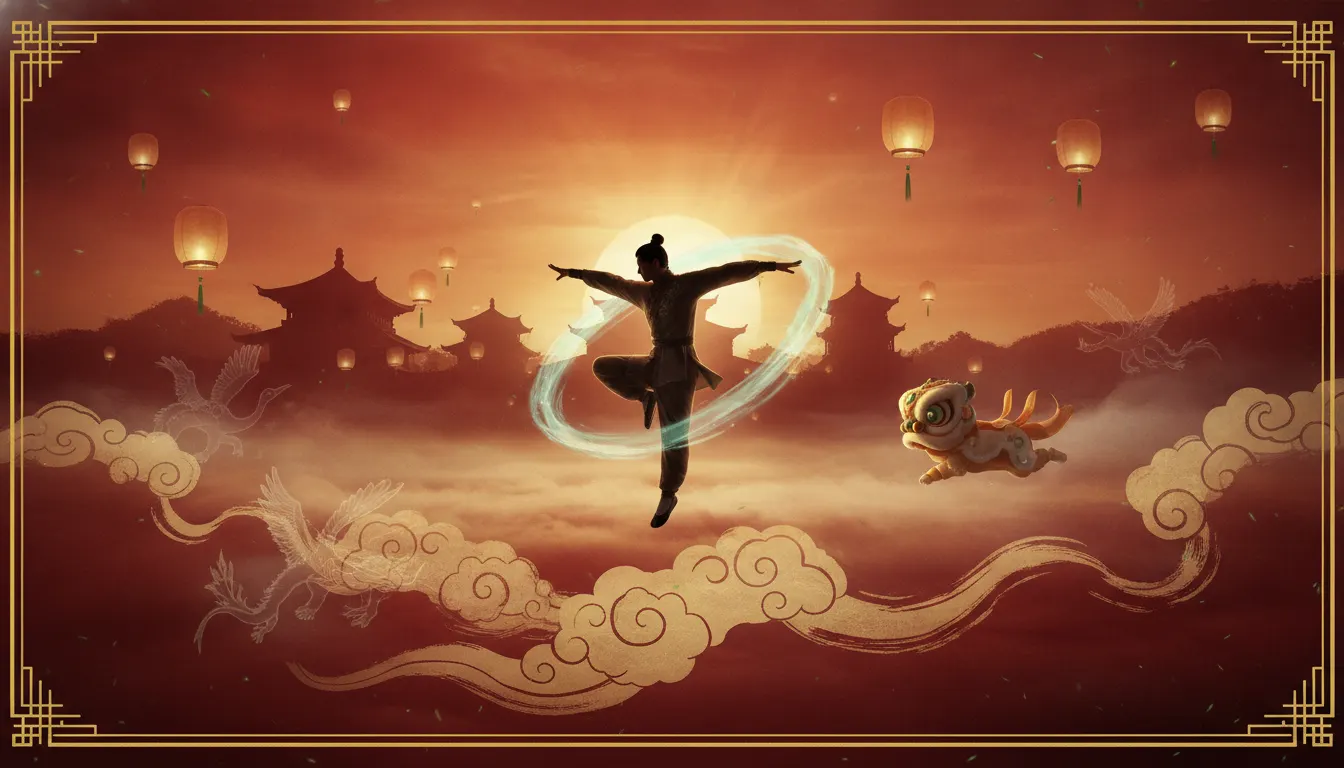
DreamWorks Kung Fu Panda Chinese-stylized CGI. Ink-wash dream sequences, Jade Palace silhouettes, brushstroke title cards, wushu choreography.
The moves a human crew would use to get here. Cue applies them for you, and knowing their names is how you ask for a change.
mist-grey, moss green, ochre, lacquer red, imperial gold
upturned eave corners, dougong bracket systems, glazed tile
based wood, lacquer, and jade material shaders referencing Chinese craft traditions
wire-work physics, mid-air pose holds, style-specific animal fighting forms
painting sequence inserts as art historical citation (James Baxter Animation prologue)
misty-mountain soft depth-of-field suggesting ink-wash background planes
Kung Fu Panda (DreamWorks Animation, 2008) directed by Mark Osborne and John Stevenson is the most culturally research-intensive film in DreamWorks' catalog-and produced what many animation scholars consider the studio's most cohesive artistic vision. Production designer Raymond Zibach and art directors Tang Kheng Heng and Nathaniel McLaughlin led a production design process grounded in Chinese visual traditions: Song Dynasty ink painting, Tang Dynasty architectural lacquerwork, martial arts scroll illustration, and the specific aesthetic vocabulary of Hong Kong wuxia cinema.
The film's prologue-Po's dream sequence rendered in flat 2D with a deliberately retro Saturday-morning-cartoon style-establishes the ink-painting reference before the CGI world takes over. The 2D animation by James Baxter Animation serves as an explicit art historical citation: this film knows where it comes from. The CGI world that follows attempts to translate that ink-painting sensibility into three dimensions: buildings have the upturned eave geometry of Tang and Ming dynasty architecture, environmental palette references the misty-mountain aesthetic of Song Dynasty landscape paintings (shanshui), and character costumes use red lacquer, jade green, and imperial gold as the dominant hue vocabulary.
Co-director John Stevenson worked with martial arts choreographer Yuen Woo-ping (choreographer of The Matrix (1999), Crouching Tiger, Hidden Dragon (2000), Kill Bill (2003)) as a visual and motion reference. Character fighting animation borrows wuxia conventions: exaggerated wire-work physics, mid-air pose holds, and the specific rhythm of Chinese martial arts forms rather than Western boxing animation conventions. Po and the Furious Five's fighting styles are rooted in actual Chinese martial arts schools: Tigress fights Tiger style, Mantis fights Praying Mantis style.
The Jade Palace complex uses Tang-to-Ming dynasty architectural layering-wooden corbel brackets (dougong), glazed tile roofs with upturned corners, red column-and-white-wall construction-rendered with physically-based wood and lacquer shaders that reference Chinese craft materials. Village of the Valley of Peace uses a more modest Qing dynasty rural aesthetic: mud brick, thatched roofs, paper lanterns. The deliberate contrast between palatial and village environments reinforces Po's class-crossing narrative.
2008
DreamWorks Animation, dir. Mark Osborne, John Stevenson, prod. design Raymond Zibach
2011
dir. Jennifer Yuh Nelson - first major animated film directed by a woman of color
2016
dir. Jennifer Yuh Nelson, Alessandro Carloni - Spirit Realm China setting
2000
Ang Lee - wuxia live-action choreography reference
1998
Disney - Chinese cultural animation predecessor
2020
Netflix / Pearl Studio - Chinese cultural animation successor
A Look is not a filter. It is a set of stored decisions the pipeline reads before it makes a single frame, so two videos in the same Look actually match.