Frozen
2013
Walt Disney Animation Studios, dir. Jennifer Lee, Chris Buck
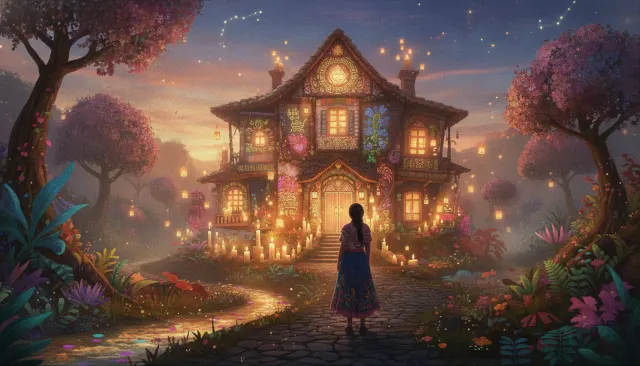
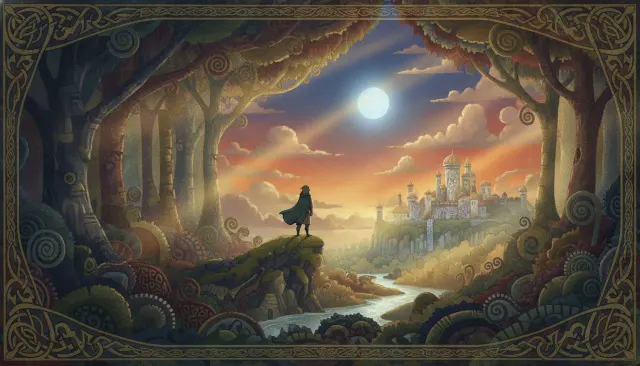
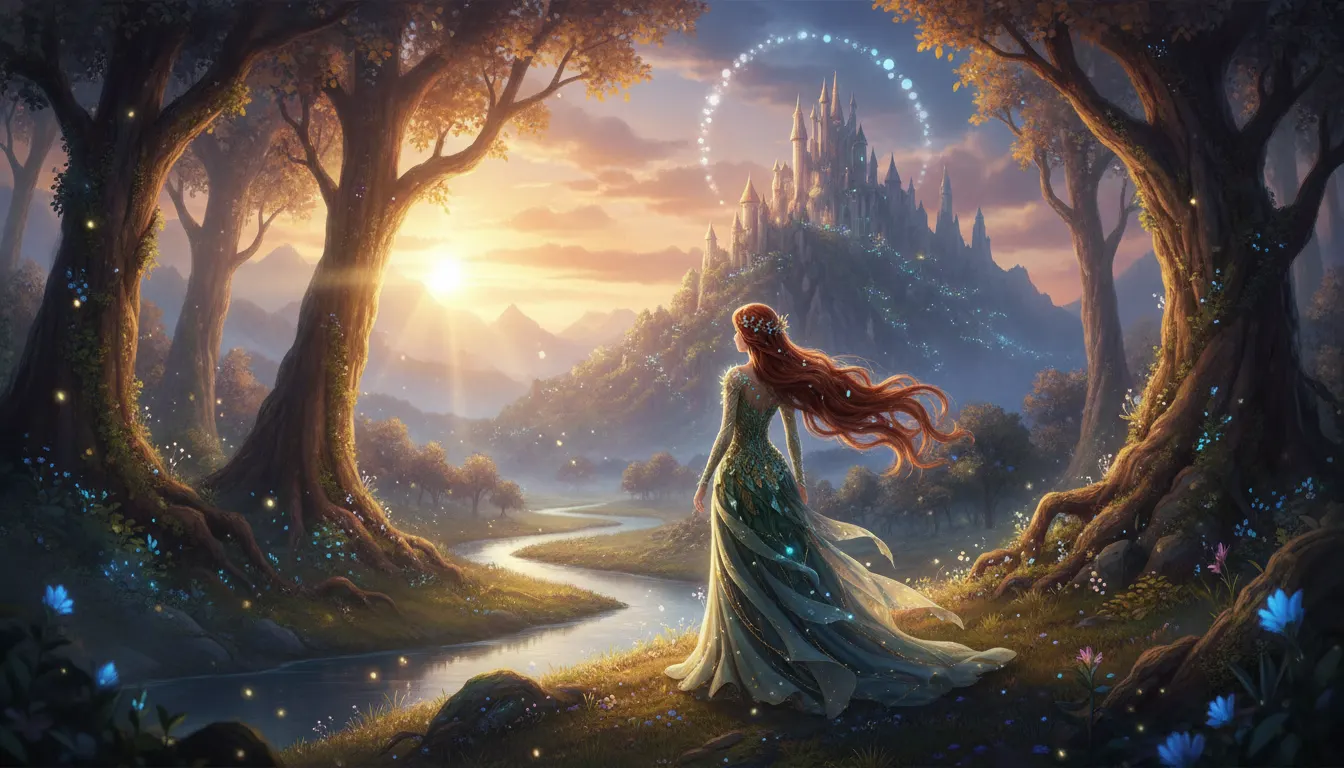
Disney Animation modern CGI. Frozen, Tangled, Moana. Painterly stylization, lush hair and fabric simulation, princess-fairy-tale lighting.
The moves a human crew would use to get here. Cue applies them for you, and knowing their names is how you ask for a change.
traced global illumination with physically accurate ice and snow light scatter
fog, breath condensation, and frost-crystal particles
Frozen (Walt Disney Animation Studios, 2013) directed by Jennifer Lee and Chris Buck represents a landmark in Disney's CGI evolution-primarily for introducing the Hyperion renderer, a physically-based global illumination system developed in-house by Disney Research that solved the long-standing challenge of rendering snow and ice at feature quality. The film set the visual template that subsequent Disney CGI films (Big Hero 6, Zootopia, Moana, Ralph Breaks the Internet, Frozen II, Encanto) have evolved from.
Before Hyperion, Disney CGI (like most CGI) used biased rendering techniques that approximated global illumination through tricks: photon mapping, final gather passes, and hand-placed fill lights compensating for physically inaccurate radiosity. Hyperion, developed by Brent Burley and the Disney Research team and deployed first in Big Hero 6 (2014) with a predecessor system in Frozen (2013), implemented unbiased path tracing-simulating actual photon behavior including multiple light bounces, volumetric scatter in participating media (fog, snow, ice), and the caustic patterns that occur when light passes through crystal.
For Frozen specifically, this meant Elsa's ice palace-a complex structure of ice panels, snow drifts, and frozen crystal formations-could be lit by a single sun source and rendered with accurate caustics and internal reflections rather than manually placed fill lights. The Scandinavian palette of pale blue, white, and gold reads differently in every scene as the light angle changes, exactly as physical ice would behave.
The film's simulation team (effects supervisor Dale Mayeda) built a granular snow simulation system that modeled individual snow crystals rather than particle sheets. The 'matterhorn' snow accumulation and Elsa's dress-train snow-sculpting required this granular approach. The team reportedly simulated over 10,000 unique snowflake shapes for the opening 'Frozen Heart' sequence.
Production designer David Womersley and art director Mike Giaimo traveled to Norway, visiting Røros, Bergen, and the fjords. Norwegian rosemaling folk painting patterns, bunad folk costume embroidery, and Sami textile motifs are embedded in Elsa's dress designs, the interior architecture of Arendelle castle, and environmental surface details. Character designs (supervised by Bill Schwab) use a Disney princess template updated with Scandinavian physiognomic features and a more restrained palette than the saturated primary colors of 1990s Disney.
2013
Walt Disney Animation Studios, dir. Jennifer Lee, Chris Buck
2014
Walt Disney Animation Studios - first full Hyperion deployment
2019
Walt Disney Animation Studios, dir. Jennifer Lee, Chris Buck - expanded Hyperion
2016
Disney - Hyperion fur and environment rendering evolution
2016
Disney - Hyperion ocean and water rendering expansion
2021
Disney - latest evolution of the Hyperion-era visual pipeline
A Look is not a filter. It is a set of stored decisions the pipeline reads before it makes a single frame, so two videos in the same Look actually match.