Cow and Chicken
David Feiss / Cartoon Network · 1997
The canonical work; the fullest expression of Feiss's thick-line anarchic animation aesthetic
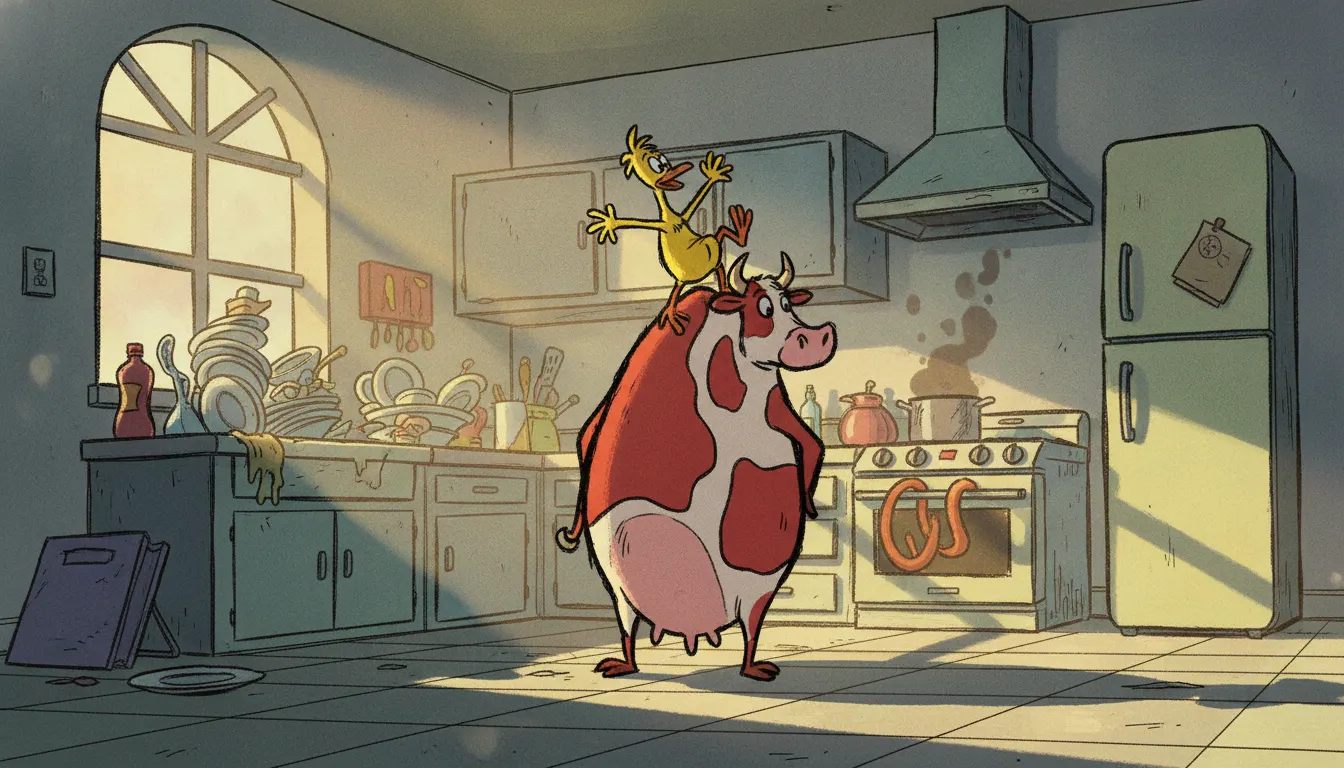
David Feiss Hanna-Barbera Cartoon Cartoons 90s thick-outline absurd siblings. Suburban kitchen with cow and chicken kids, exaggerated rubber-hose physicality.
The moves a human crew would use to get here. Cue applies them for you, and knowing their names is how you ask for a change.
Characters use outlines at the extreme upper range of TV animation convention, giving them graphic boldness that reads as simultaneously crude and confident.
Animal-human hybrid characters are designed with deliberate anatomical impossibility that functions as visual comedy -- Chicken's human legs on a bird body.
Adult characters are shown only from the waist down throughout the series, a running visual gag that makes the parents visually blank figures.
Characters move with a quality of barely-contained physical excess that the heavy outlines amplify -- they seem about to burst the frame.
Character designs incorporate body-horror elements (The Red Guy's buttocks, Cow's digestive sound effects) that push children's animation propriety limits.
Environments are minimally detailed, keeping visual focus on the character action and preventing the thick-line characters from feeling overcrowded.
Cow and Chicken premiered on Cartoon Network on July 15, 1997, created by David Feiss, a veteran animator who had worked at Hanna-Barbera before pitching the series as part of Cartoon Network's What a Cartoon! anthology (1995-1997). The show ran through July 26, 1999, and spawned a spinoff I Am Weasel (1997-2000, also created by Feiss). Both shows share a distinct visual identity rooted in Feiss's personal drawing style.
David Feiss's visual style is one of the most idiosyncratic in American commercial animation. His character designs are characterized by extremely thick, confident black outlines -- lines that exist at the upper end of what television animation conventionally uses. These heavy outlines give characters a physical weight and graphic boldness that reads as simultaneously crude and deliberate.
Cow and Chicken themselves are designed with gleeful anatomical improbability: Cow is a large bovine with enormous eyelashes and human-like limbs; Chicken is a rooster with actual chicken proportions from the neck up and human legs, inexplicably wearing a shirt but no pants. The show's premise (siblings who are literally a cow and a chicken, living with human parents shown only from the waist down) is never explained, functioning as pure absurdist premise.
The thick-line tradition in American animation traces to the squash-and-stretch era of Chuck Jones and Tex Avery -- extreme outlines that amplify the physical exaggeration of gag animation. Feiss's work at Hanna-Barbera absorbed this tradition, and Cow and Chicken extends it into the digital production era.
The heavy outlines serve a specific comedic function: they make the characters look slightly out of control, as though they might literally smash through the frame. This quality of barely-contained physical excess suits the show's comedy, which runs on gross-out physicality, body horror gags, and anarchic energy.
The Red Guy (also called the Devil, though never explicitly) is the show's most distinctive character design: a red humanoid figure with no pants, visible buttocks, and an ever-changing identity. The Red Guy appeared in multiple disguise personas across the show, each played completely straight. His design is an example of the show's deliberate transgression of propriety norms -- a cartoon character defined by exposed posterior was a recurring subject of viewer complaints and network negotiations.
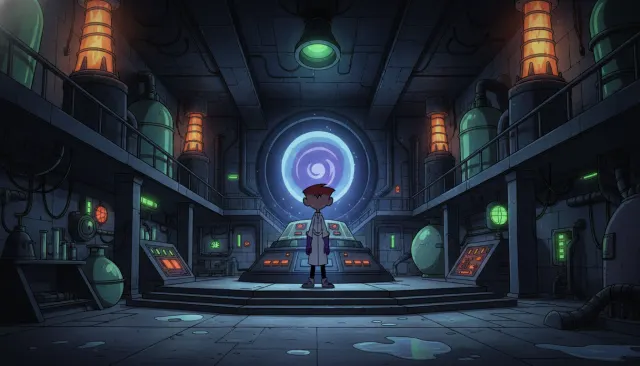
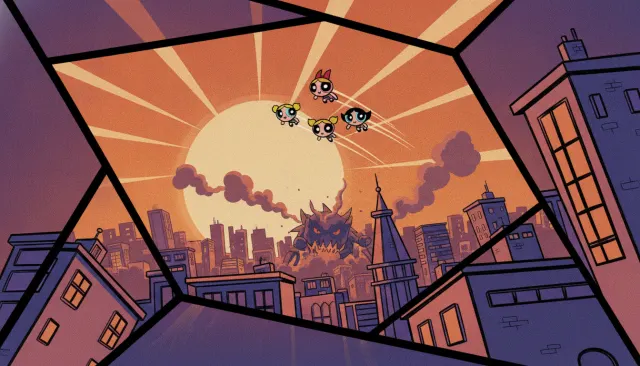
Cow and Chicken aired during the period when Cartoon Network was establishing its identity as distinct from the Disney Saturday morning sensibility. Alongside Dexter's Laboratory (1996), Johnny Bravo (1997), and The Powerpuff Girls (1998), the What a Cartoon! alumni series defined a Cartoon Network aesthetic: creator-driven, visually distinctive, willing to be gross or transgressive within the children's animation frame.
David Feiss / Cartoon Network · 1997
The canonical work; the fullest expression of Feiss's thick-line anarchic animation aesthetic
David Feiss / Cartoon Network · 1997
Direct spinoff sharing the same visual vocabulary, focusing on a weasel-and-baboon buddy dynamic
Genndy Tartakovsky / Cartoon Network · 1996
Cartoon Network contemporary; same era but geometric-clean versus Feiss's thick-rough aesthetic
Van Partible / Cartoon Network · 1997
What a Cartoon! alumnus sharing the thick-outline, physical-comedy visual tradition
Craig McCracken / Cartoon Network · 1998
CN contemporary that used thick outlines in a more graphic, geometric rather than loose manner
John Kricfalusi / Nickelodeon · 1991
Primary pre-CN influence on the gross-out-thick-line aesthetic tradition Feiss extends
A Look is not a filter. It is a set of stored decisions the pipeline reads before it makes a single frame, so two videos in the same Look actually match.