brutalistwebsites.com
2014
Pascal Deville
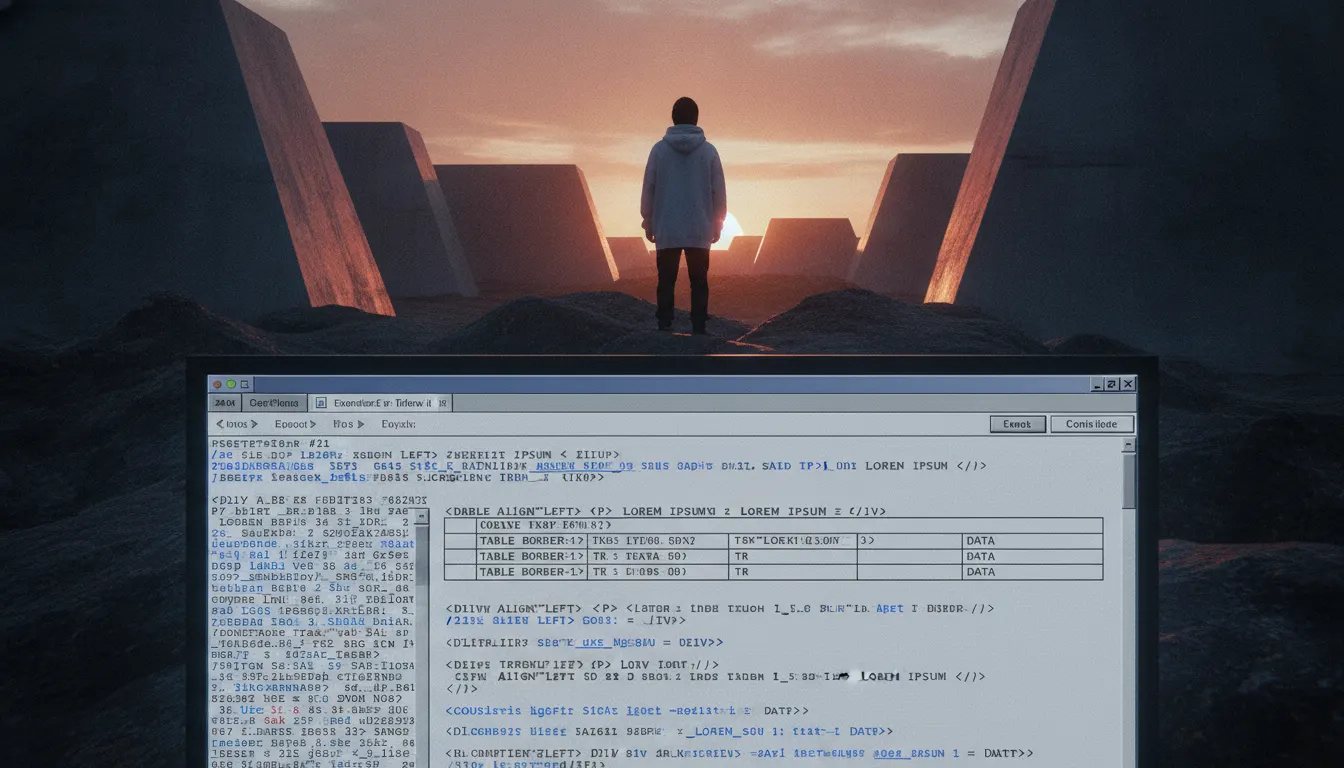
Brutalist web raw HTML. Default browser styles, monospace and Times serif, no rounded corners, harsh contrast, intentional ugliness, anti-design.
The moves a human crew would use to get here. Cue applies them for you, and knowing their names is how you ask for a change.
Times New Roman or serif body text, no custom fonts
contrast black on white with default browser margins
tables used visually, list elements unstyled
grid layouts that expose the underlying grid
Brutalist web design is a deliberate refusal of the norms that have governed web aesthetics since the mid-2000s: the rounded corners, gradient backgrounds, hero images, and card-based layouts that characterize most contemporary websites. Instead, brutalist web draws on the raw, unstyled HTML of the early web and deploys its visual grammar - Times New Roman, blue underlined hyperlinks, gray backgrounds, scrolling text - as an intentional aesthetic statement.
The movement was named and cataloged by Pascal Deville, a Swiss art director who launched brutalistwebsites.com in 2014. Deville identified a loose community of designers building sites that used default browser styles, extreme simplicity, or deliberately confrontational layouts. His catalog included sites for artists, musicians, and studios that had independently arrived at similar conclusions about digital decoration.
Deville's definition drew on architectural brutalism's principle of 'as found' - using materials as they are encountered rather than refining them into something palatably beautiful. For the web, 'as found' meant HTML as the browser renders it by default: black text, blue links, Times New Roman, white background.
Blake Fall-Conroy's Minimum Wage Machine website (2010) anticipated the aesthetic with its stark economic presentation. Hacker News remains the most-visited site that operates on brutalist principles by default. Bloomberg's 2015 redesign briefly went viral when it launched with unusual starkness. The websites of designers Dexter Sinister (Stuart Bailey and David Reinfurt) and the Occasional Papers publishing collective operated within this space.
Brutalist web design makes a philosophical argument parallel to its architectural namesake: digital surfaces should not pretend to be something they are not. The web is text and links. Decoration is a form of dishonesty about the medium. This argument resonates with developers and designers who are frustrated with the homogenizing effect of CSS frameworks and template-driven design tools. The aesthetic also functions as a reaction to the corporate smoothness of Google Material Design and its widespread adoption after 2014.
2014
Pascal Deville
Paul Graham / Y Combinator (2007-present)
Craig Newmark (1995-present, essentially unchanged)
Stuart Bailey and David Reinfurt (2006-present)
2015
Adam Gault art direction
A Look is not a filter. It is a set of stored decisions the pipeline reads before it makes a single frame, so two videos in the same Look actually match.