Unité d'Habitation
1952
Le Corbusier, Marseille
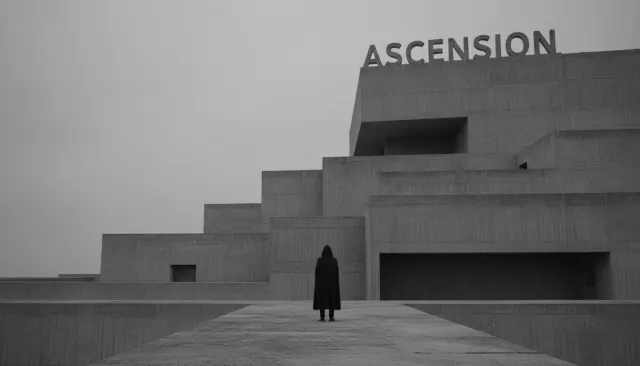
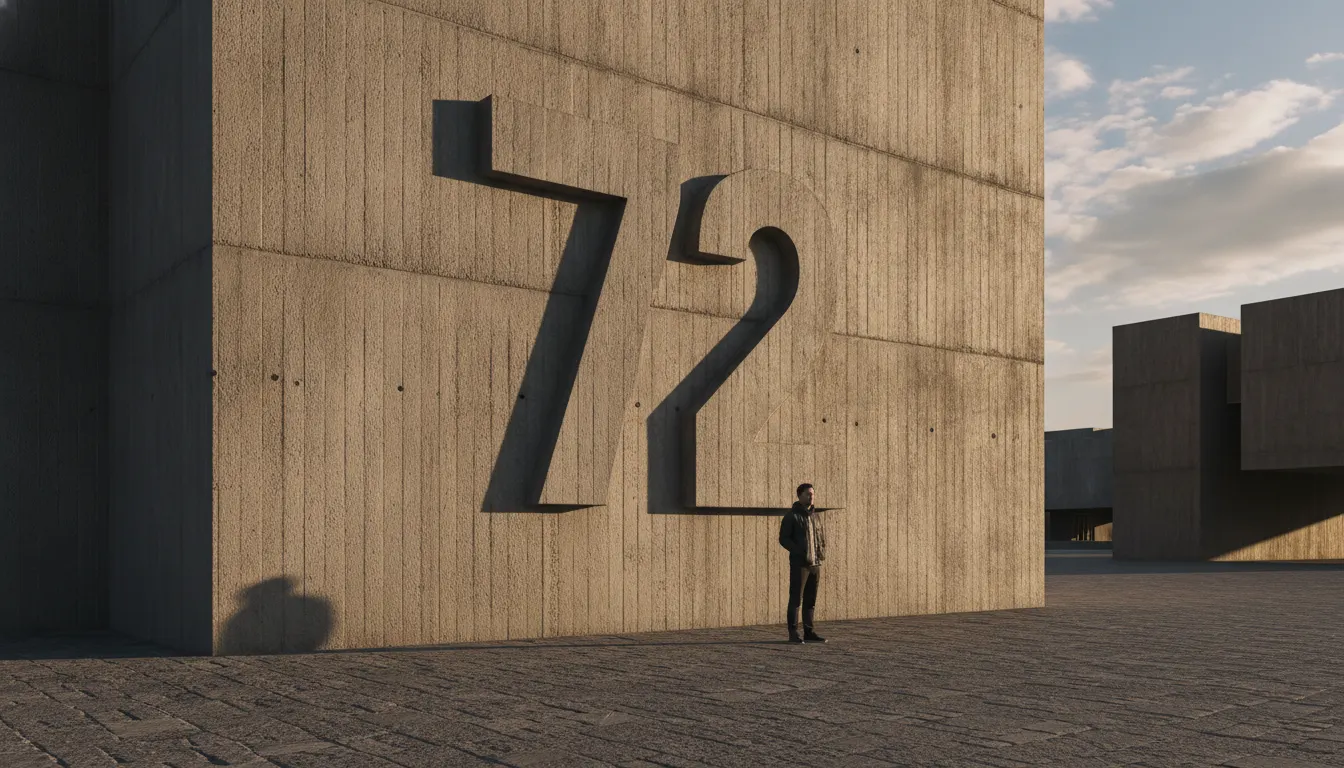
Brutalist architectural signage. Cast-concrete number plaques, sans-serif extruded letterform, raw concrete wall as backdrop, civic monumental.
The moves a human crew would use to get here. Cue applies them for you, and knowing their names is how you ask for a change.
serif letterforms (Helvetica or Univers) set against raw concrete or board-formed surfaces
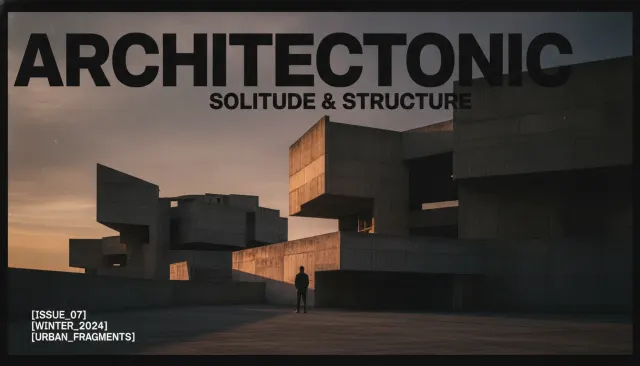
contrast black-and-white or monochrome photography of concrete textures
form concrete grain, and rough plinth textures as background fields
Brutalist architectural signage sits at the intersection of two mid-century movements: the concrete architectural language pioneered by Le Corbusier and extended by a generation of British, Soviet, and American architects, and the modernist typography reform that made Helvetica the official typeface of institutional power.
The term 'brutalism' derives from the French 'béton brut' - raw concrete - a phrase Le Corbusier used to describe the exposed board-formed concrete of his Unité d'Habitation in Marseille (1952). When British architects Alison and Peter Smithson coined 'New Brutalism' in 1954, they extended the concept beyond material to mean an architectural honesty that refused decorative concealment. Structure, services, and circulation would all be visible.
In this context, signage had to match the architecture's aesthetic commitments. Applied lettering on concrete surfaces was typically sans-serif - Helvetica, Univers, or their grotesque predecessors - either incised into the concrete during casting, applied as brushed aluminum or stainless steel letters, or painted directly. The approach was functional and declarative: the building's name or purpose in letters as honest as the exposed aggregate behind them.
Ernő Goldfinger's Trellick Tower in London (1972) and the earlier Balfron Tower (1967) represent the domestic scale of this approach. The Robin Hood Gardens estate by the Smithsons (1972) used its signage to reinforce a sense of collective identity rather than individual address. Denys Lasdun's National Theatre on London's South Bank (1976) extended the visual logic of béton brut into its directional signage systems.
American brutalism - Paul Rudolph's Art and Architecture Building at Yale (1963), Marcel Breuer's Whitney Museum (1966), SOM's work at the University of Illinois - developed parallel signage languages, often with cast-in lettering or heavy black-painted steel letterforms.
Brutalist architecture is undergoing significant critical rehabilitation after decades of demolition campaigns. Social media accounts devoted to brutalist photography have massive followings; the signage and numbering systems of housing estates have become objects of aesthetic appreciation. Designers draw on this vocabulary to signal a kind of anti-luxury authenticity - materials and words without ornament.
1952
Le Corbusier, Marseille
1972
Ernő Goldfinger, London
1976
Denys Lasdun, London
1963
Paul Rudolph, Yale University
1966
Marcel Breuer, New York
1972
Alison and Peter Smithson, London
Chamberlin Powell and Bon, London (1969-1982)
A Look is not a filter. It is a set of stored decisions the pipeline reads before it makes a single frame, so two videos in the same Look actually match.