2Advanced Studios portfolio site
Josh Davis (2001-2003)
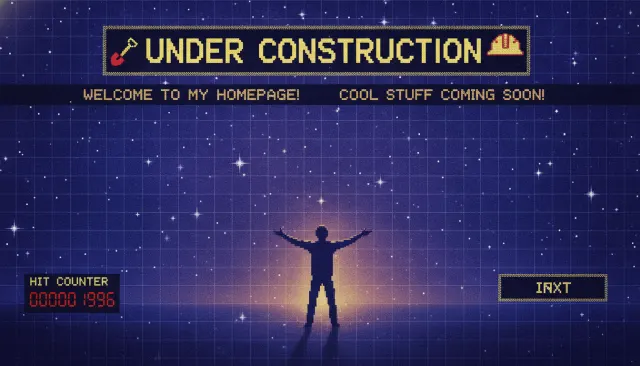
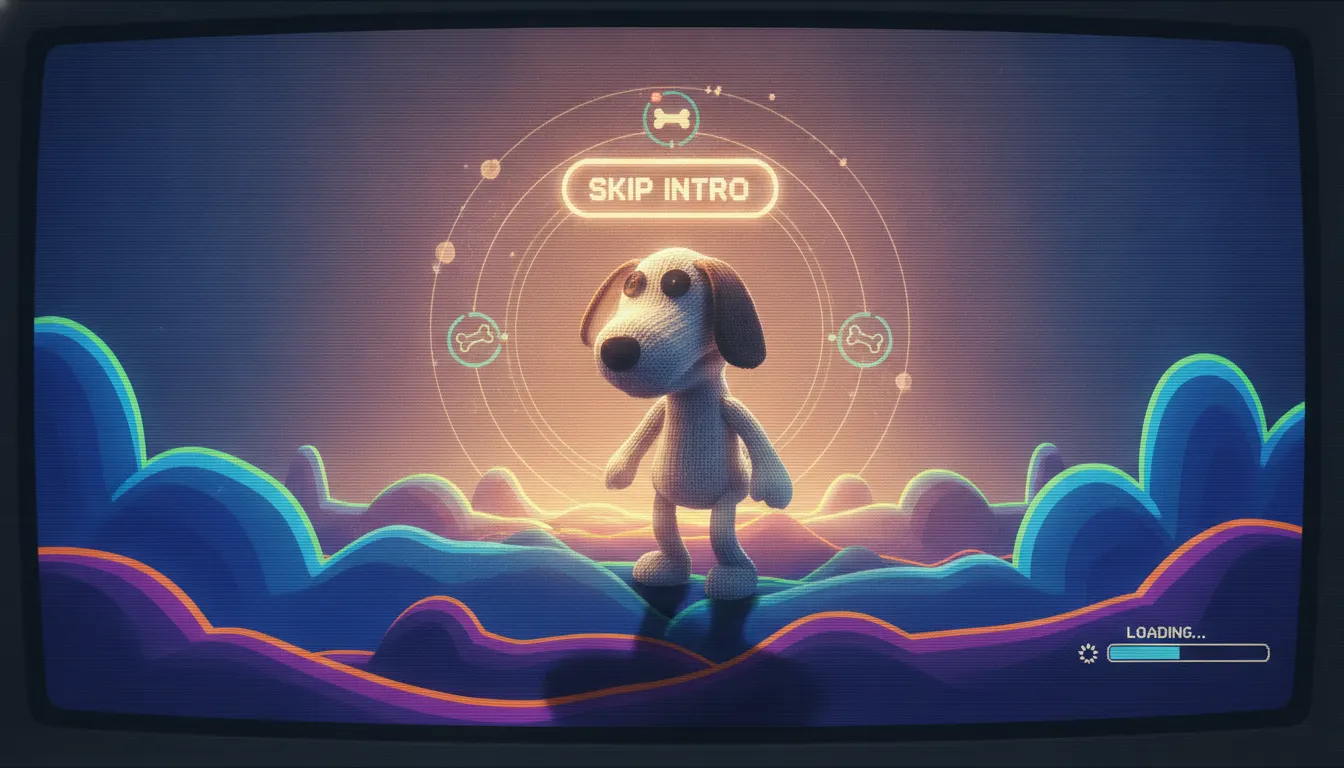
Dot-com era Macromedia Flash splash page aesthetic. SKIP INTRO button, looping vector animation, Pets.com sock-puppet whimsy, Y2K Flash 5 ActionScript intro.
The moves a human crew would use to get here. Cue applies them for you, and knowing their names is how you ask for a change.
serif title typography suggesting futurism
default easing: fast-in-slow-out on geometric forms
conscious design elements
small circle or star elements drifting across dark backgrounds
letters assembling from offscreen or exploding outward
Between 1998 and 2002, the intersection of Macromedia Flash technology, the dot-com investment bubble, and a generation of designers discovering animation tools created one of the most distinctive - and, in retrospect, most nostalgically affecting - visual eras in web history. The Flash splash screen was its cathedral: a loading bar, an animated logo, a trance music loop, and the button that users would click against to arrive at the actual website.
Flash (originally FutureSplash Animator, acquired by Macromedia in 1996) gave web designers something HTML could not: frame-by-frame animation, complex motion paths, and synchronized audio. The tool was democratizing in one sense - any designer with the software could add motion to the web - and homogenizing in another, because the aesthetic possibilities of early Flash versions were constrained by the tool's interfaces and export qualities.
Flash 4 (1999) and Flash 5 (2000) were the peak versions for this aesthetic. Motion tweens produced the characteristic easing curves: fast-in, slow-out, or sudden snapping. Vector shapes - circles, spiky geometric forms, and swooshing trails - were technically easy to animate and visually emblematic of the era. Text appeared letter by letter, slid in from off-screen, or exploded outward from the center in 'kinetic typography' effects that felt genuinely revolutionary in 1999.
The dot-com Flash aesthetic was partly cosmopolitan: Japanese and European web design had been using Flash more experimentally. American corporate sites absorbed the aesthetic as validation of their modernity. Agency sites like 2Advanced (Josh Davis, Yugo Nakamura) built entire Flash portfolio sites that demonstrated the medium at its most sophisticated - these became templates for the era's visual ambitions.
Colors were electric: deep black backgrounds with teal, electric blue, and orange-red vector elements. 3D-rendered logos with chrome or gold finishes appeared over these fields, often revolving slowly. The sans-serif typefaces were thin and widely tracked, suggesting futurism. The overall message was: this company exists in the future.
The cultural artifact that most encapsulates the era is the 'Skip Intro' button: the admission that the elaborate animated sequence was decoration, not navigation. The button was both apology and promise - the animation was valuable enough to warrant an opt-out. When Flash was deprecated from browsers (with Steve Jobs's famous 2010 iPad announcement marking the turning point), the skip intro became a synecdoche for the entire period's digital excess.
Josh Davis (2001-2003)
Yugo Nakamura Flash experiments (2000-2002)
2010
hrbstuff.com, Flash cartoon series (2000-2014)
A Look is not a filter. It is a set of stored decisions the pipeline reads before it makes a single frame, so two videos in the same Look actually match.