WPA National Park Poster Series
Various FAP artists, multiple regional offices · 1935-1943
The most celebrated output of the program - flat-color landscape posters for Yosemite, Yellowstone, the Grand Canyon
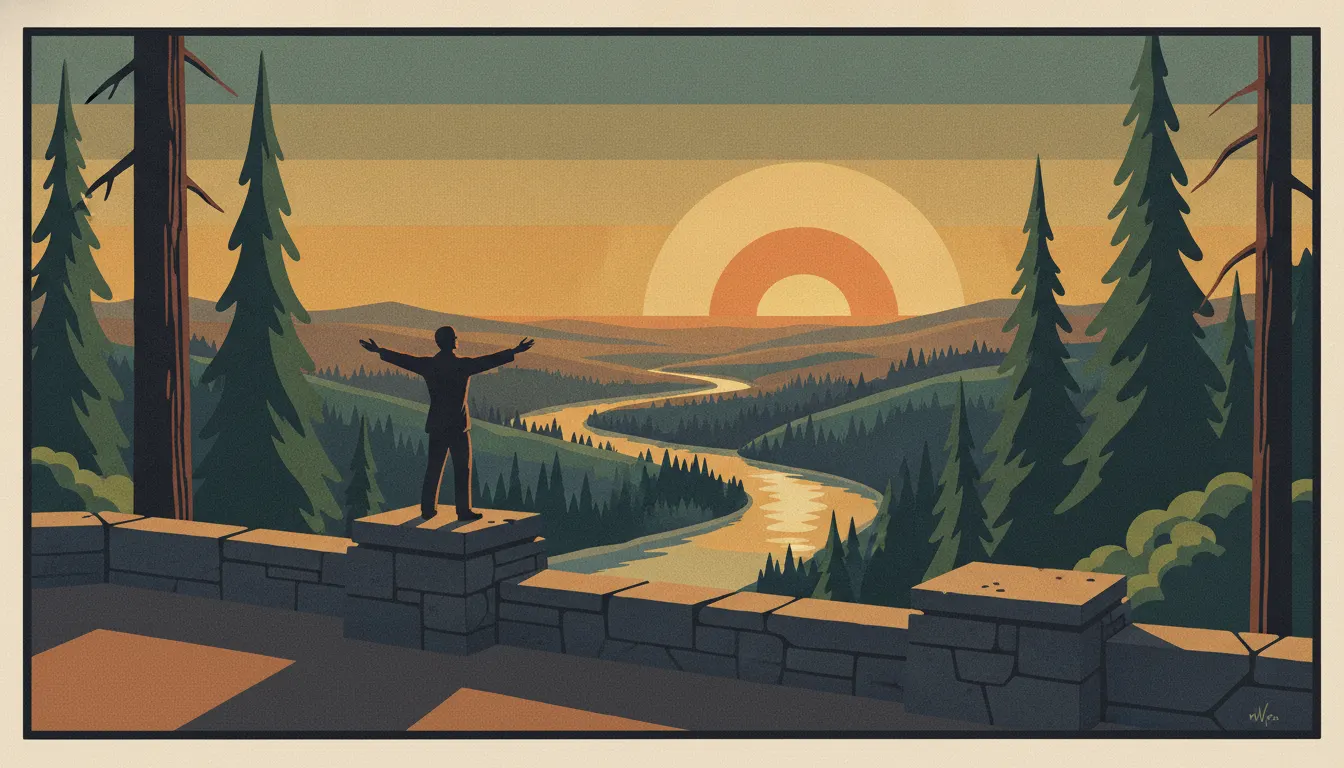
WPA Federal Art Project poster. Flat silkscreen color blocks, parks and travel themes, simplified illustration, friendly civic optimism.
The moves a human crew would use to get here. Cue applies them for you, and knowing their names is how you ask for a change.
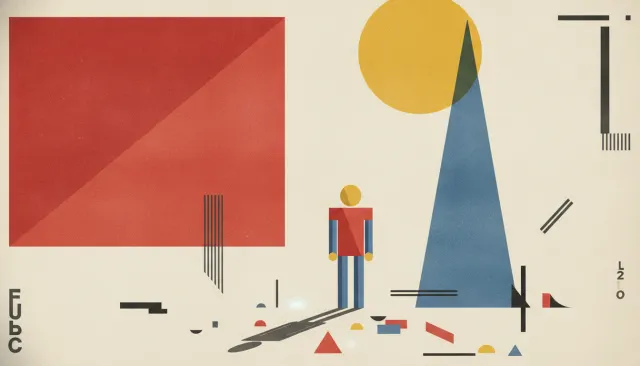
Each color printed as a completely flat field with no gradient or tonal modulation - a hard edge between hues.
Animals, mountains, trees, and human figures simplified to their most essential contour, filled with a single flat color.
Print runs using only three to five ink colors, often earth tones or vivid primaries, with white paper as the lightest value.
Title type drawn to work as visual form within the composition, often in the same weight and character as the imagery.
Panoramic landscape format with the horizon positioned in the lower third and sky or negative space dominating the upper zone.
Mountains as triangles, forests as repeated wedge shapes, waves as chevrons - nature translated into Art Deco geometry.
The Works Progress Administration (renamed Work Projects Administration in 1939) Federal Art Project (FAP), operating from 1935 to 1943, produced approximately 35,000 poster designs across approximately 2,000 final designs released for mass printing. The FAP poster division, operating out of regional centers in New York, Chicago, Cleveland, Los Angeles, and other cities, employed artists who had been rendered destitute by the Great Depression to produce public communications for government agencies, cultural institutions, parks, and public health campaigns.
The FAP was part of the New Deal's broader Works Progress Administration employment program, administered under Harry Hopkins and involving visual artists, musicians, writers, and theater workers. Holger Cahill directed the visual arts program, and under his direction the poster division produced some of the most formally innovative public communication graphics in American history.
The flat silkscreen printing process available to the FAP poster workshops fundamentally shaped the aesthetic. Silkscreen (serigraphy) in the mid-1930s was a relatively new process for fine-art and commercial applications; the FAP workshops used it because it was inexpensive, could be executed by artists without industrial printing training, and allowed production runs of hundreds of copies. The process imposed a flat-color aesthetic - each color required a separate screen, and gradients were either absent or achieved through coarse halftone screens. The result was a visual language defined by flat areas of vivid color, simplified shapes, and bold silhouettes.
The WPA poster aesthetic is characterized by: flat color areas without gradients or photographic halftones; bold simplified silhouettes of animals, figures, landscapes, and activities; stylized typography that integrates with rather than labels the imagery; and a palette that ranged from natural earth tones (for parks and conservation posters) through vivid primary colors (for civic and health campaigns). The influence of Constructivism, Art Deco, and American Scene painting are all visible in different regional offices' output.
The travel and tourism posters - for national parks, state tourism bureaus, and the US Travel Bureau - became the most celebrated visual artifacts of the program. Their bold landscape silhouettes, often using a limited palette of three to five colors, achieved an aesthetic simplicity that contemporary designers have repeatedly returned to as a model.
The WPA poster aesthetic was effectively forgotten between the 1950s and the 1990s, displaced first by photographic advertising and then by offset printing's ability to reproduce full-color photographs. The Smithsonian Institution's digitization and publication of the Library of Congress FAP poster collection in the early 2000s triggered a major revival. National Park Service merchandise and tourism promotion from approximately 2005 onward has consistently invoked the WPA aesthetic through flat-color silkscreen-style designs.
Various FAP artists, multiple regional offices · 1935-1943
The most celebrated output of the program - flat-color landscape posters for Yosemite, Yellowstone, the Grand Canyon
Federal Art Project / US Travel Bureau · 1936-1938
Travel promotion series using bold flat silhouettes and limited palettes; widely reproduced in revival contexts
Various FAP artists · 1935-1943
Public health communication using the same flat-color visual language for civic education campaigns
New York FAP poster workshop · 1935-1943
Animal silhouette posters for the New York City zoo and parks system; some of the most formally refined FAP output
Library of Congress / Smithsonian · 2000s-present
Digitized archive that triggered the WPA aesthetic revival and made the 35,000 designs publicly accessible
A Look is not a filter. It is a set of stored decisions the pipeline reads before it makes a single frame, so two videos in the same Look actually match.