Four Freedoms (series)
Norman Rockwell / The Saturday Evening Post · 1943
Four paintings generating $132M in war bond sales - the most effective commercial illustration ever created for a civic purpose
WWII war bond propaganda. Norman Rockwell painted realism, Buy Bonds caption, Rosie the Riveter We Can Do It, patriotic red white and blue.
The moves a human crew would use to get here. Cue applies them for you, and knowing their names is how you ask for a change.
Subjects in kitchen, town hall, or family dinner contexts rather than military or industrial settings - the Rockwell domestic technique.
Figures rendered with photographic-accuracy ambition but idealized in physique, skin, and expression toward heroic normativity.
Faces lit with the warm, frontal, slightly elevated light of studio portraiture or north-window indoor light.
Title typography in bold condensed or display serif fonts, letterspaced for legibility at poster scale.
American flag colors deployed without abstraction - the specific warm red, navy blue, and paper white of period chromolithography.
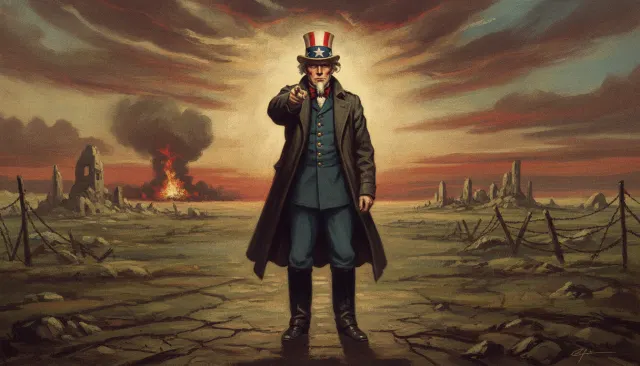
The Flagg Uncle Sam convention of direct viewer address through pointing or eye-contact gesture.
The American war bond advertising campaign of World War II, running from 1942 to 1945 under the War Advertising Council and the US Treasury Department's War Finance Division, produced the most sophisticated propaganda-through-commercial-advertising system ever assembled. The campaign combined the talents of the most celebrated illustrators of the period with the distribution networks of major magazines, newspapers, and billboard systems, reaching virtually every American adult through multiple visual touchpoints.
Norman Rockwell's Four Freedoms series (1943) represents the pinnacle of the war bond visual tradition. The four paintings - Freedom of Speech, Freedom of Worship, Freedom from Want, and Freedom from Fear - were created for The Saturday Evening Post (published February-March 1943) after Rockwell's offer to create paintings based on President Roosevelt's 1941 Four Freedoms speech was initially rejected by the War Department and subsequently accepted by the Post. The paintings were then adapted into a national touring exhibition and sold in reproduction as war bond incentives, generating approximately $132 million in war bond sales.
Rockwell's visual approach was entirely domestic and unheroic in the military sense. Freedom from Want shows a white New England family Thanksgiving dinner; Freedom of Speech shows a working man standing at a town hall meeting. The paintings argued that what Americans were defending was not territory but a specific way of life - the argument was more persuasive than any military imagery because it made the stakes personal.
J. C. Leyendecker (1874-1951), whose Saturday Evening Post covers had defined American commercial illustration for three decades, contributed to the war effort in his characteristically idealized style. His figures - the broad-shouldered, clean-jawed American types he had developed through his Arrow collar shirt advertising - appeared in war effort contexts as embodiments of American physical and moral virtue.
James Montgomery Flagg's I Want YOU for U.S. Army (1917), technically a World War I image repurposed from the original 1917 magazine cover, was reprinted for World War II and hung in post offices and recruitment centers as the period's most recognized graphic. The pointing Uncle Sam figure was Flagg's own face rendered into the allegorical costume.
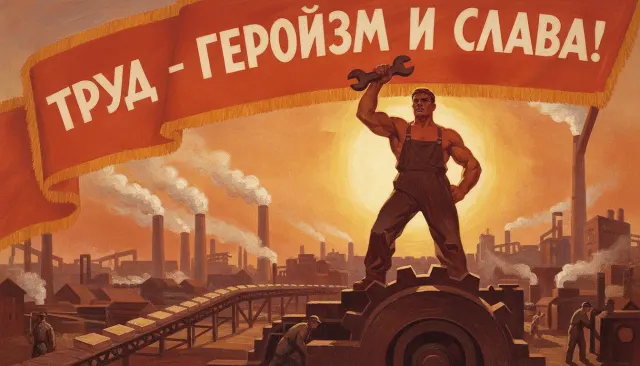
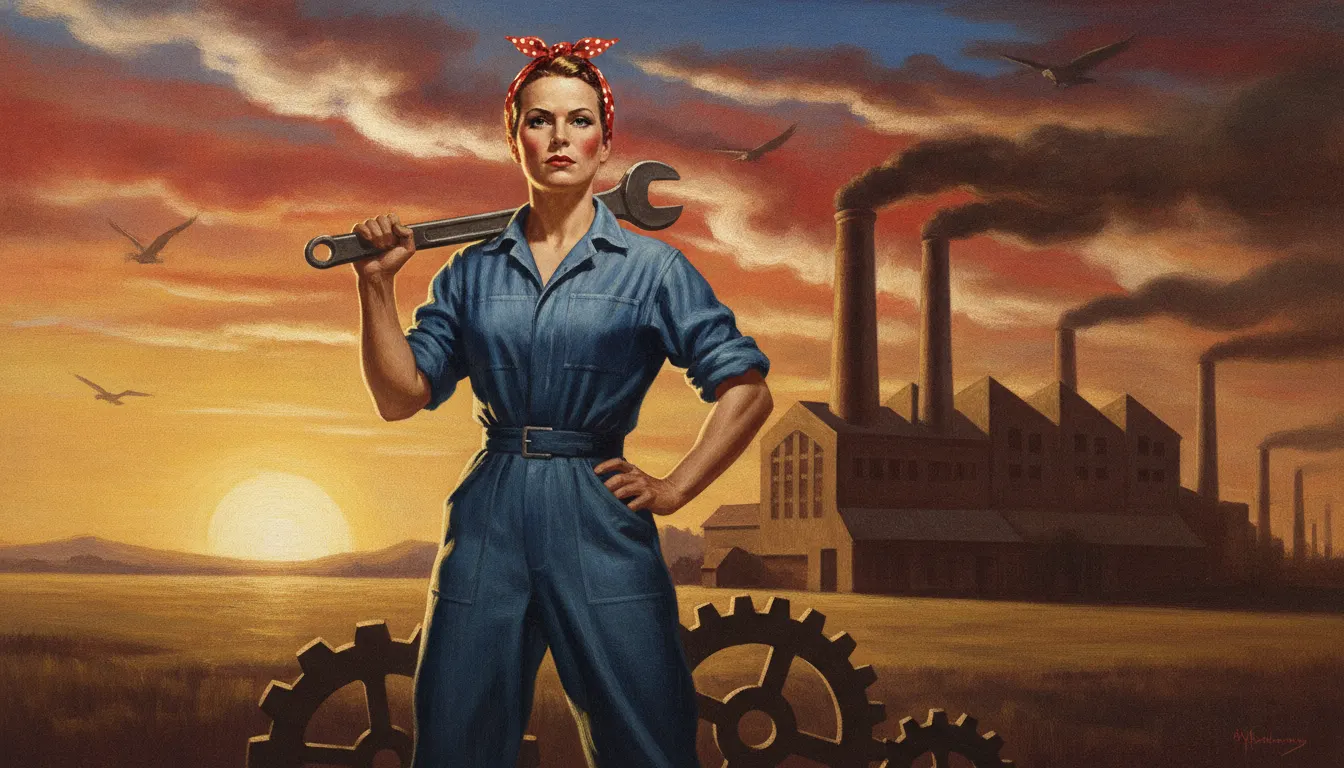
J. Howard Miller's We Can Do It! (Rosie the Riveter) poster (1943, created for Westinghouse Electric as an internal employee motivation poster, not a war bond image specifically) became retrospectively the most recognized American home-front poster of the period. Ben Shahn, Jon Whitcomb, and Dean Cornwell contributed to various war effort visual campaigns. The Office of War Information (OWI) produced its own poster campaigns with a somewhat flatter, more modernist visual approach than the magazine illustration mainstream.
Norman Rockwell / The Saturday Evening Post · 1943
Four paintings generating $132M in war bond sales - the most effective commercial illustration ever created for a civic purpose
James Montgomery Flagg · 1917 (reprinted 1941)
Uncle Sam pointing directly at the viewer - Flagg's own face; most recognized American military recruitment image
J. Howard Miller / Westinghouse · 1943
Internal Westinghouse employee motivation poster that became the most reproduced American home-front image retrospectively
Office of War Information · 1942-1945
Modernist-influenced government poster series with flatter graphic design than the magazine illustration mainstream
J. C. Leyendecker · 1942-1944
Arrow-collar idealized American male types deployed in war effort visual contexts
A Look is not a filter. It is a set of stored decisions the pipeline reads before it makes a single frame, so two videos in the same Look actually match.