Wyndham Lewis
BLAST: Review of the Great English Vortex, No. 1 (June 1914)
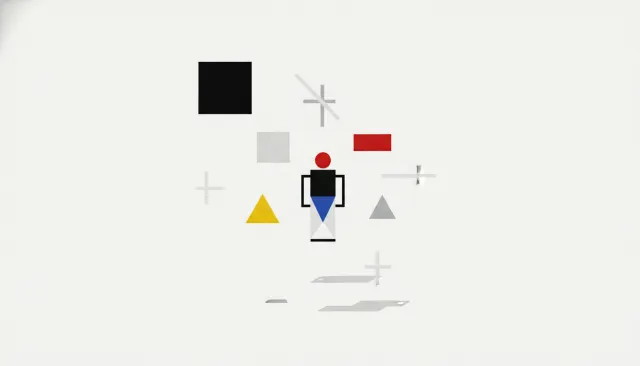
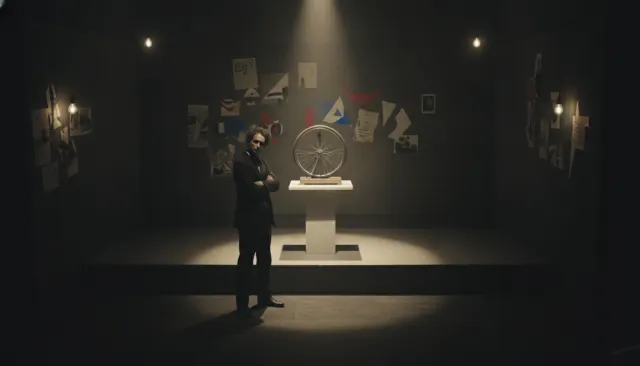
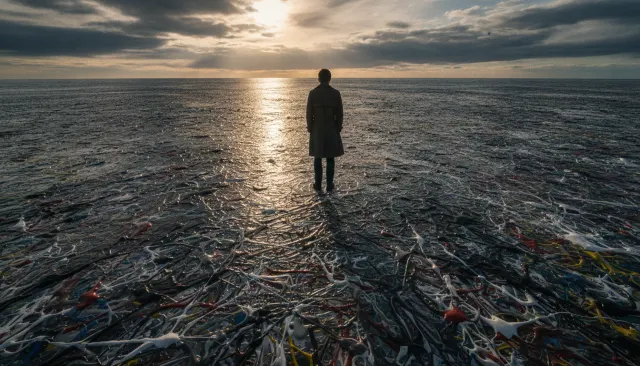
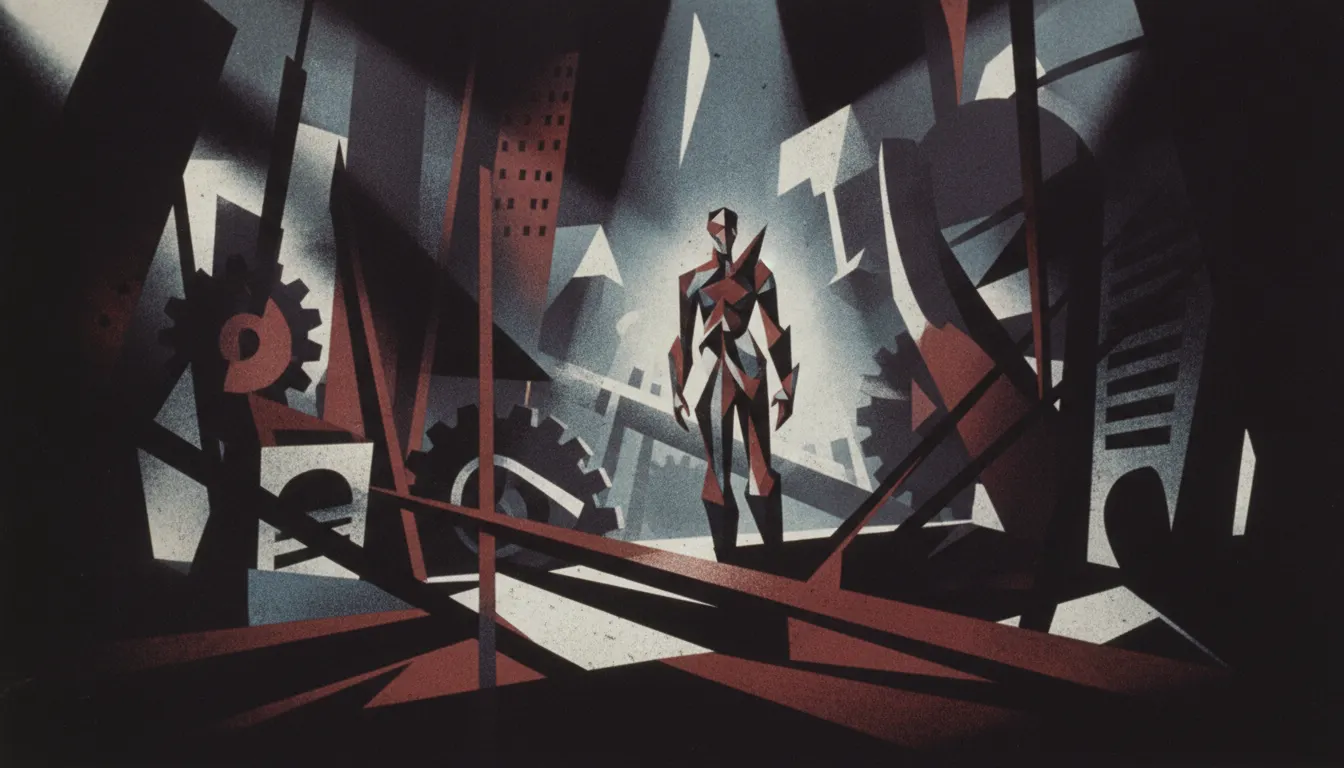
Wyndham Lewis Vorticism BLAST magazine. Sharp mechanical diagonal, angular fractured figure, British modernist machine-age violence.
The moves a human crew would use to get here. Cue applies them for you, and knowing their names is how you ask for a change.
forms broken into interlocking wedges and parallelograms without organic curves
grey, brown, black, with rare cold accent colors (deep red, steel blue)
human anatomy replaced by geometric force-vectors
enormous display text adjacent to tiny body text as visual collision
crowds, factories, ships, machinery as positive subject rather than threatening backdrop
no negative space, the composition packed with interlocking geometric pressure
Vorticism was Britain's only homegrown avant-garde movement, declared by Wyndham Lewis (1882–1957) in the pages of BLAST: Review of the Great English Vortex - a magazine so aggressively typeset that it qualifies as a visual artwork in itself. The first issue appeared in June 1914; the second ("War Number") in July 1915. The movement was effectively destroyed by World War I, which took many of its participants and made the celebration of machine-force feel grotesque.
BLAST was designed by Lewis himself and printed in a large format (12×9.5 inches) on cheap pink paper. Its typography alternated between tiny body text and enormous bolded single words - BLAST and BLESS lists that "blasted" sentimentality, humidity, Victorianism, and academic convention while "blessing" technology, machinery, the sea, and energy. The layout was itself Vorticist: diagonal force, violent contrast, text-as-image. Among the contributors to the first issue: Ezra Pound, Henri Gaudier-Brzeska, C.R.W. Nevinson, and Edward Wadsworth.
Lewis's own paintings, produced 1912–1915, apply the vocabulary of Cubist fragmentation and Futurist dynamism to characteristically British coldness. Where Italian Futurism celebrated speed with warmth and nationalist passion, Vorticism is colder, harder, more mechanical. The Crowd (1914–15, Tate) organizes tiny angular human forms into geometrically structured masses - individuals become machine components. Workshop (c. 1914–15, Tate) fragments an industrial interior into overlapping wedges of grey, brown, and black. Red and Black Vorticist Composition (c. 1915) works purely with interlocking geometric forms and has no representational content at all.
Henri Gaudier-Brzeska (1891–1915) brought Vorticism into sculpture with works like Bird Swallowing a Fish (1913–14) and Hieratic Head of Ezra Pound (1914) - marble carved in a jagged, angular style that felt genuinely like abstracted machine component. Gaudier-Brzeska was killed at the Battle of Neuville-Saint-Vaast at age 23, removing one of the movement's most vital voices.
Wadsworth's Dazzle-Ships woodcut series (1919) applied Vorticist geometry to camouflage design: the Royal Navy's wartime "razzle dazzle" camouflage (bold angular patterns that disrupted U-boat targeting) was Vorticism with a military purpose. Wadsworth documented these painted ships in a series of woodcuts that constitute some of the most striking prints of the period.
Vorticism lasted barely two years as an active movement but influenced British graphic design, industrial photography, and the typography of the 1920s–1930s. Its cold machine aesthetic reappears in cyberpunk visual design, industrial music typography, and contemporary brand identities for technology companies that want to signal raw computational force.
BLAST: Review of the Great English Vortex, No. 1 (June 1914)
BLAST No. 2 War Number (July 1915)
The Crowd (1914–15, Tate Modern)
Workshop (c. 1914–15, Tate Modern)
Red and Black Vorticist Composition (c. 1915)
1914
Hieratic Head of Ezra Pound
1919
Dazzle-Ships woodcut series
Returning to the Trenches (1914–15, National Gallery of Canada)
A Look is not a filter. It is a set of stored decisions the pipeline reads before it makes a single frame, so two videos in the same Look actually match.