Parts Unknown - Beirut
Anthony Bourdain / CNN · 2013
The season one episode that established the show's tone; Lebanese food as political statement, Zach Zamboni cinematography
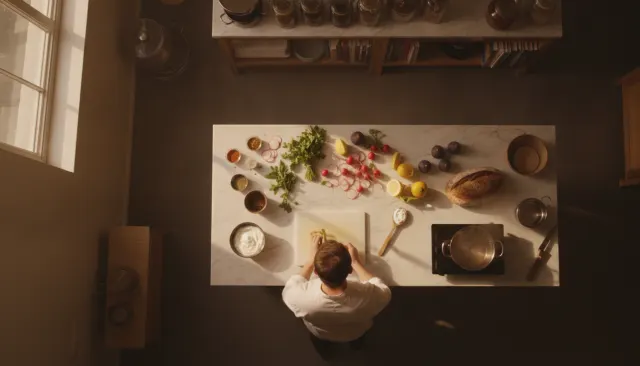
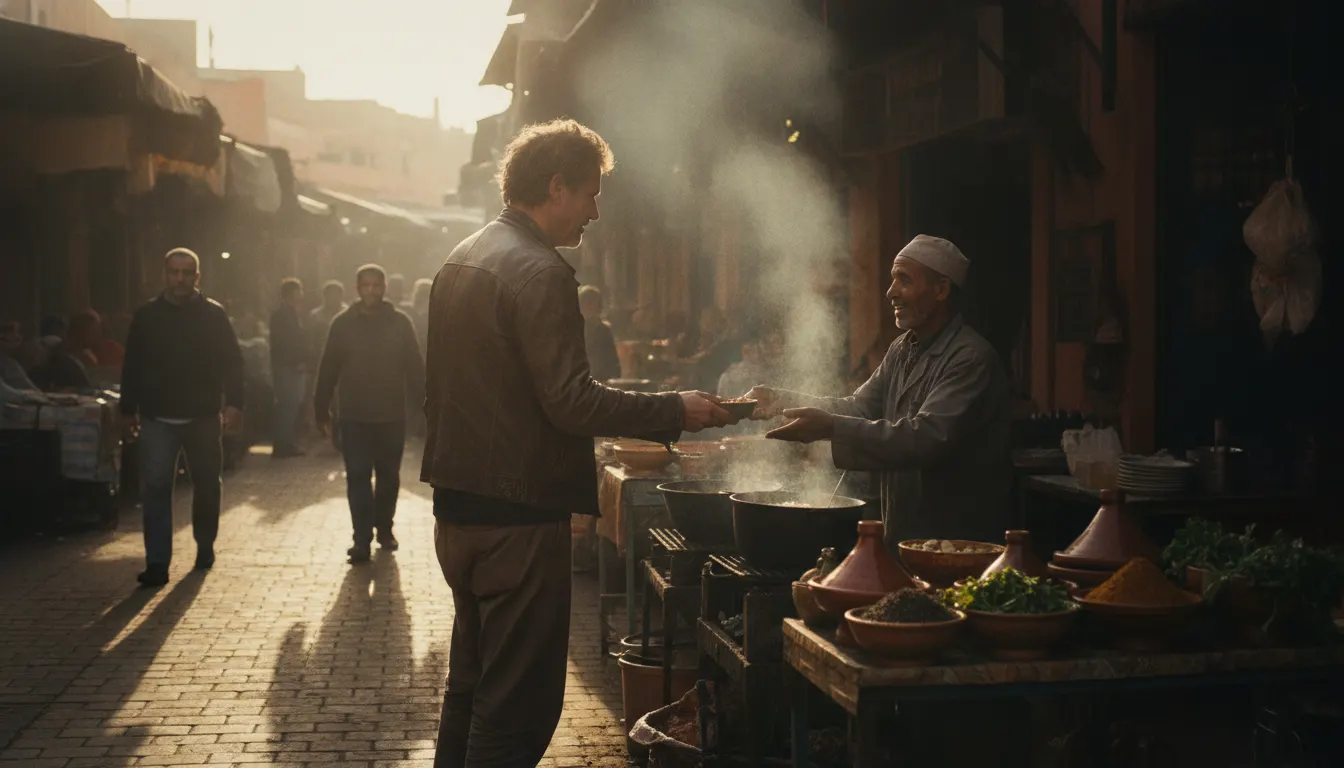
Anthony Bourdain Parts Unknown street-food warmth. Handheld kitchen counter, golden-hour market, host-and-local meal, intimate over-shoulder.
The moves a human crew would use to get here. Cue applies them for you, and knowing their names is how you ask for a change.
Street market or outdoor kitchen filmed in late afternoon light, with warm backlight through produce stalls creating natural beauty.
Camera placed behind and beside the host looking across a table or counter at the subject, with intimacy that suggests accidentally witnessed conversation.
Shadows pushed amber-gold rather than cool blue, creating a global warmth across the image that communicates hospitality and openness.
Small-crew handheld shooting at kitchen counter level, following hands and faces with the access that only minimal crew allows.
Quick cutting between chopping, cooking, and plating close-ups, communicating culinary energy and the forward momentum of preparation.
Extended close framing on a subject's face as they speak or eat, giving their words space and communicating that their perspective matters.
The food-and-travel documentary aesthetic associated with Anthony Bourdain's Parts Unknown (CNN, 2013-2018) and the Vice Munchies YouTube channel represents a mature synthesis of gonzo travel journalism, culinary storytelling, and genuinely beautiful cinematography. It is a look built on warmth - literal golden light, warm color grading, and an emotional temperature of openness, curiosity, and respect for local food culture.
Parts Unknown was shot by a rotating team of cinematographers - Zach Zamboni, Todd Liebler, and others - under the direction of producers who understood that the show's visual grammar needed to match Bourdain's writing: literary, generous, not-condescending. Unlike most food television, which shoots kitchens under controlled studio light with a primary focus on the food itself, Parts Unknown treated the meal as a social and political document. The camera was as interested in the face across the table as in the dish between them.
The cinematography favored handheld work in moving vehicles, markets, and restaurants - small crews allowing access to kitchen counters, market stalls, and domestic dining rooms that a full broadcast crew would have been denied. Golden-hour exterior shooting in locations from Beirut to Hanoi to the Congo produced images of extraordinary beauty that served as implicit arguments: these places are worth knowing, these people are worth listening to.
The color treatment across both Parts Unknown and Vice Munchies content leans warm. Shadows pull amber rather than cool blue; skin tones are flattered; food is grade toward rich gold. This warmth is not simply flattery but a philosophical commitment: the world of food and human generosity is warm, and the grade should say so. The practice contrasts explicitly with the cold, desaturated palette used in prestige drama or investigative documentary.
The Vice Munchies channel (launched 2012) applied a slightly more casual version of the same grammar to YouTube's platform constraints. Segments are shorter, the correspondent often younger and less famous, but the visual commitments - handheld kitchen work, golden-hour street markets, over-the-shoulder meal intimacy - are consistent. The Vice Munchies look added fast-cut editing between process shots: hands chopping, pans sizzling, plates assembling. The edit rhythm is warmer and more energetic than traditional food documentary.
The signature framing of the Bourdain/Munchies aesthetic is the over-the-shoulder medium shot across a table or counter: host visible at frame edge, subject fully framed, with an intimate geometry suggesting a conversation the viewer is privileged to witness. This framing is the antithesis of the interview setup - it communicates that food is the real subject and the conversation is something that happened naturally around it.
Anthony Bourdain / CNN · 2013
The season one episode that established the show's tone; Lebanese food as political statement, Zach Zamboni cinematography
Anthony Bourdain / CNN · 2016
The Obama-noodle-soup episode; street food intimacy and handheld market work at their most celebrated
Anthony Bourdain / CNN · 2015
The look's capacity for beauty within difficult contexts demonstrated at its most powerful
Anthony Bourdain / Travel Channel · 2006
The Travel Channel precursor establishing the warm handheld food-travel grammar
Vice Media · 2017
Munchies channel at its most produced; the warm grammar applied to American culinary history
David Chang / Netflix · 2018
Spiritual successor to Bourdain's grammar; warmer, faster edit rhythm, David Chang's direct camera address
A Look is not a filter. It is a set of stored decisions the pipeline reads before it makes a single frame, so two videos in the same Look actually match.