Raymond Briggs
The Snowman (1978, Hamish Hamilton)
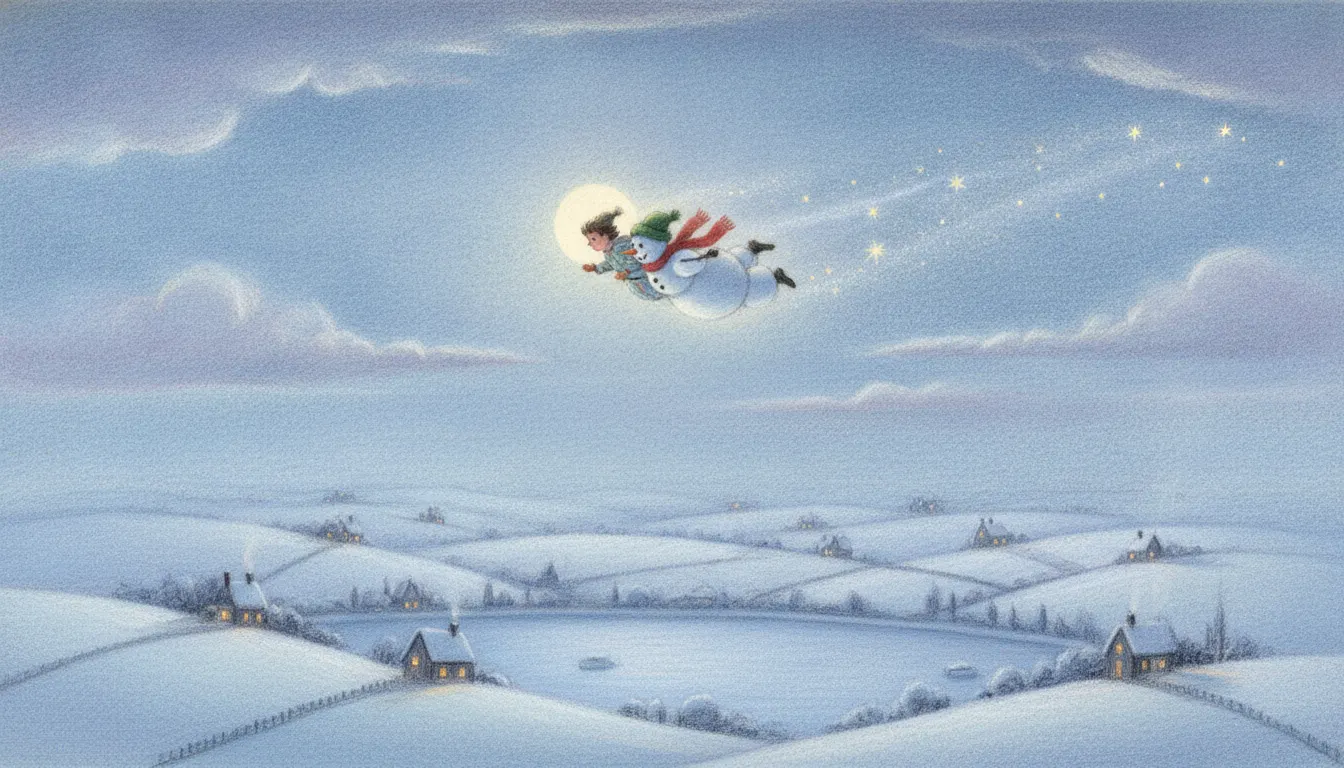
Raymond Briggs The Snowman crayon pastel. Soft-pencil glow, no dialogue, dreamy night-sky flight, melancholy tenderness.
The moves a human crew would use to get here. Cue applies them for you, and knowing their names is how you ask for a change.
slightly waxy, granular, never smooth or photographic
white winter exteriors warming to amber-gold interior lamplight - a palette of protection
strip grid, but with bleeding soft edges between them
all story information in gesture, expression, and environmental detail
insulating, light-diffusing, transforming the ordinary into the magical
no hard angular anatomy, bodies feel huggable
The Snowman (1978, Hamish Hamilton) by Raymond Briggs (1934–2022) is a 32-page wordless picture book in which a young boy builds a snowman who comes to life at night. The book was drawn entirely in wax crayon and colored pencil - media associated with children's own drawing - producing imagery of extraordinary warmth and delicacy. There is no text on any page. Narrative is carried entirely by a sequence of soft, glowing panels that feel both dream-like and tangible.
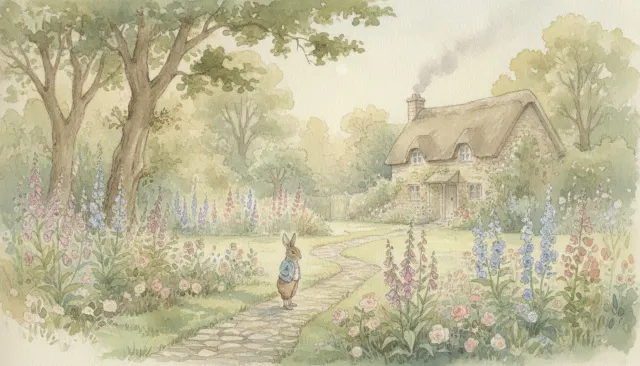
Briggs used a wax crayon overworked with colored pencil to build up soft, slightly waxy textures that resist photographic smoothness. The palette is dominated by cold whites and pale blues for the winter exterior, warming to amber and gold for interior lamplight scenes. Shadows are gentle, edges are soft, and there is an overall quality of being slightly out of focus - as if remembered rather than observed. The snowy landscape has the hushed, insulated quality of actual snowfall: sound dampened, light diffused, ordinary things made extraordinary.
Each page is composed as a grid of small sequential panels (Briggs's cartoonist training showing), but the panels bleed gently rather than being sharply delineated. The result sits somewhere between a comic strip and a watercolor sketchbook.
The Channel 4 animated adaptation (1982, directed by Dianne Jackson) faithfully translated Briggs's pastel palette into animation, with hand-drawn cel animation maintaining the soft, slightly granular texture of crayon mark. The film is 26 minutes and entirely wordless except for Howard Blake's orchestral score, which includes the soprano solo Walking in the Air (performed by choirboy Peter Auty on the original soundtrack). The film has aired on Channel 4 every Christmas since 1982, making it one of the most watched British animated works of all time.
Briggs's other major works extend the tender-melancholy register of The Snowman. Father Christmas (1973) portrayed Santa as a grumbling working-class man. Fungus the Bogeyman (1977) applied the same pastel technique to gross-out grotesque. When the Wind Blows (1982) - also adapted as a 1986 animated film - used the same cosy domestic visual register to depict an elderly couple's death from nuclear fallout, creating an unbearable emotional contrast between the sweet style and the harrowing content.
The Snowman's pastel look triggers an immediate emotional memory in most British, European, and North American viewers - it is the visual language of winter childhood wonder. As a look for video, it communicates warmth, innocence, magic, and bittersweet emotion simultaneously.
The Snowman (1978, Hamish Hamilton)
Father Christmas (1973, Hamish Hamilton)
When the Wind Blows (1982, Hamish Hamilton)
Fungus the Bogeyman (1977, Hamish Hamilton)
The Snowman animated film (1982, Channel 4)
1986
When the Wind Blows animated film
The Snowman and the Snowdog (2012, sequel)
A Look is not a filter. It is a set of stored decisions the pipeline reads before it makes a single frame, so two videos in the same Look actually match.