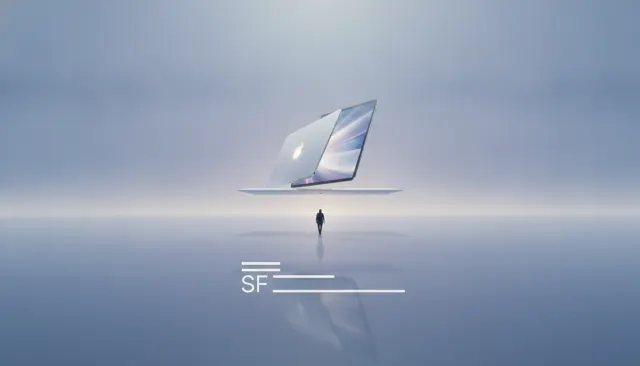
Twitter Explained by Common Craft
Lee LeFever / Common Craft · 2008
Paper-cutout whiteboard video that introduced Twitter to mainstream non-technical audiences
Clean isometric illustrations, single accent color, technical clarity over emotion.
The moves a human crew would use to get here. Cue applies them for you, and knowing their names is how you ask for a change.
Pain state introduced in first 15 seconds, product solution revealed at 20-30 seconds, how-it-works in the middle, CTA at end.
Simple character designs with minimal facial features, flat fills, and motion-graphics-style movement rather than squash-and-stretch.
System diagrams built element by element in synchrony with narration, preventing cognitive overload.
Real product interfaces replaced with animated simplified mockups that show key interactions without visual complexity.
Off-camera narrator in a friendly expert register, explaining the product as if talking to a curious friend rather than a prospect.
Product's primary brand color used as the dominant visual signature; white background with one or two accent hues.
The tech explainer is a video and animation genre that emerged from the intersection of enterprise software marketing, startup pitch culture, and motion graphics education between approximately 2007 and 2013. Its dominant visual language was established by the Explainer Video movement - companies like Epipheo, Common Craft, and Sandwich Video developed the templates that thousands of agencies subsequently adopted and iterated.
Common Craft (founded by Lee LeFever in 2007, Seattle) created the original whiteboard-and-paper-cutout explainer format. LeFever's early videos for Twitter, Dropbox, and Google Drive used a visible hand placing paper-cut character and product representations on a white surface while an off-camera narrator explained the service. The format's power was its literalism: abstract technology concepts were made concrete through physical objects. Twitter (2008) and Dropbox (2010) explainers by Common Craft are still cited as the founding examples of the genre.
Epipheo Studios (founded 2009, Cincinnati) refined the whiteboard format into character animation, adding color and more sophisticated production values while maintaining the conversational narrative structure. Their work for Google and other large technology clients established the format as a credible enterprise marketing tool rather than a startup novelty.
Sandwich Video (founded 2010, Los Angeles) by Adam Lisagor developed a live-action variant that combined product photography, character acting, and motion graphic callouts. Their videos for Slack, Square, and other startup clients in the early 2010s set the template for the more sophisticated live-action tech explainer.
The tech explainer visual language is built from several recurring elements. Motion graphics use flat 2D animation (after the shift away from 3D that occurred around 2011-2013) with simple character designs, bold icon sets, and kinetic typography. Color palettes align with the product's brand identity - typically a primary brand color against white with one or two neutral accents. Diagrams are animated step-by-step rather than displayed statically, revealing information in synchrony with the narration. Product UI is shown in simplified form - real interfaces are often too complex for explainer use, so simplified mockups emphasize the key interaction.
Voiceover is almost always present, delivered in a warm, mid-range register without regional accent - what might be called the Generic North American Friendly Expert voice. The narrative structure is formulaic: problem (pain) / solution introduction / how it works / call to action. Timing is tightly edited to 60-90 seconds for social distribution, up to 2-3 minutes for landing page use.
By 2016, the original flat-animation tech explainer had become so ubiquitous that it paradoxically signaled inauthenticity - the 'startup video' look became shorthand for a certain kind of venture-funded naivety. More sophisticated companies moved toward product demos, documentary-style customer stories, or minimal-motion design. However, the explainer format persists for complex B2B products, educational content, and contexts where narrative clarity is more important than aesthetic differentiation.
Lee LeFever / Common Craft · 2008
Paper-cutout whiteboard video that introduced Twitter to mainstream non-technical audiences
Common Craft · 2009
Video that contributed to Dropbox's early viral growth by explaining cloud storage to general users
Sandwich Video / Adam Lisagor · 2013
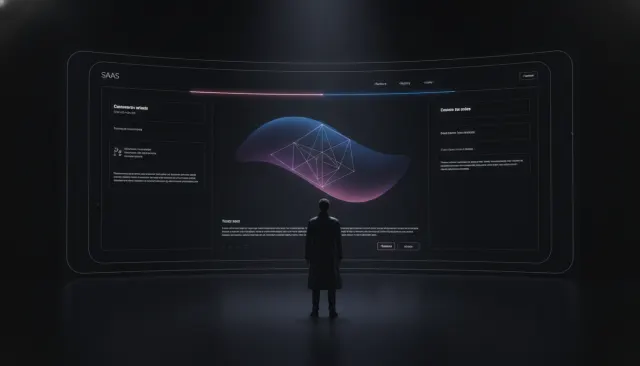
Live-action + motion graphic hybrid that set the template for startup SaaS explainer production quality
Sandwich Video · 2010
Early example of the live-action tech explainer applied to a payment technology product
Epipheo Studios · 2009-2012
Character animation explainers for Google products that brought the format to enterprise marketing scale
A Look is not a filter. It is a set of stored decisions the pipeline reads before it makes a single frame, so two videos in the same Look actually match.