GENRE NICHE · CONTEMPORARY · USA
SXSW Indie Showcase
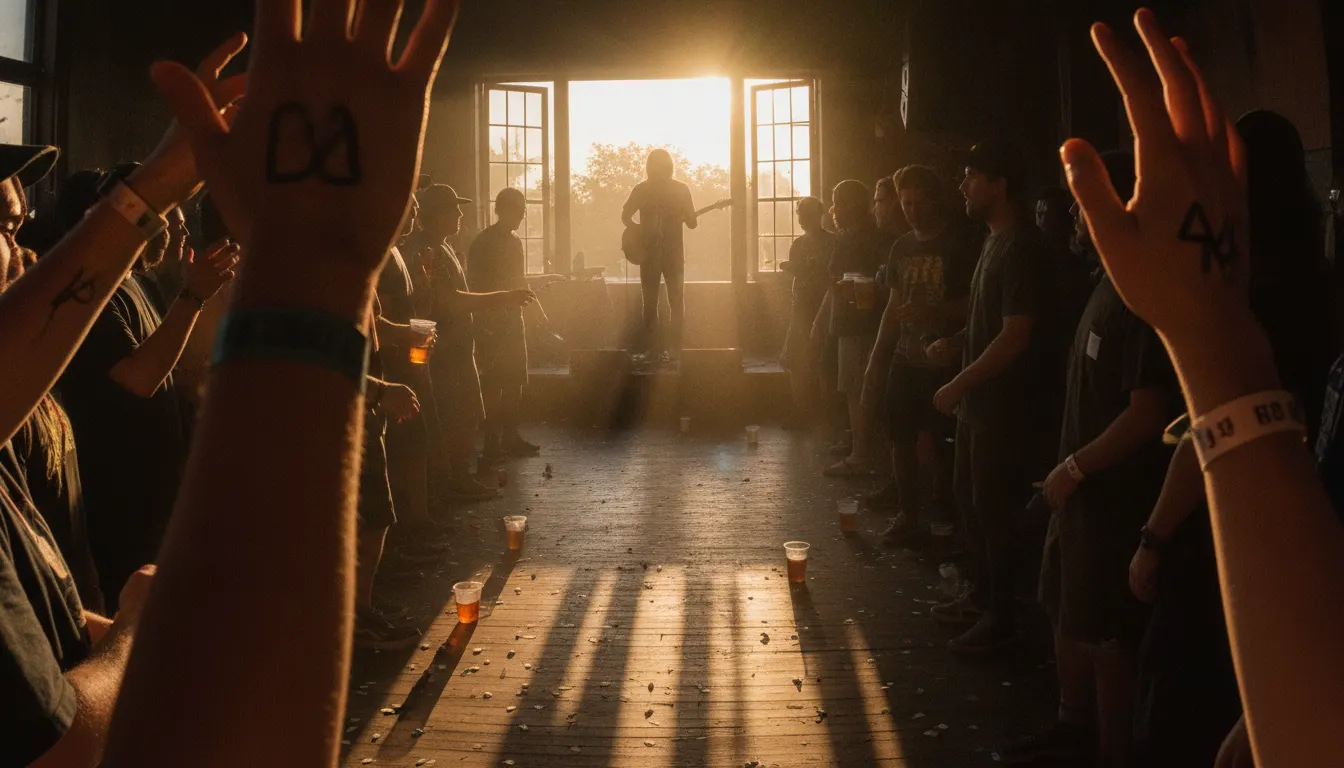
SXSW indie showcase capture. Austin bar venue, hand-stamped wristband audience, single-cam handheld, beer-soaked floor, day-party afternoon sun.
sxswindieshowcaseaustin
LUT sxsw-day-party
WHEN TO USE
- Independent music content that benefits from the discovery and community energy of festival culture
- Artist content that positions a performer as emerging rather than established - the SXSW moment
- Content for music industry audiences: A&R, booking agents, press, and tastemakers who read the aesthetic
- Brand content for music platforms, beer companies, or other SXSW sponsors that want authentic connection
- Content documenting live performance in conditions of genuine scarcity and energy
- Content referencing Austin or Texas music culture more broadly
WHEN NOT TO USE
- Artist content that positions a performer as established and headline-worthy - the aesthetic implies emerging
- Content that needs pristine audio visual production quality
- Brand content for luxury or prestige categories where small-venue informality conflicts with brand positioning
- Content for audiences outside the music industry who don't carry the SXSW cultural reference
SIGNATURE TECHNIQUES
How the look is made.
The moves a human crew would use to get here. Cue applies them for you, and knowing their names is how you ask for a change.
- 01Low
ceiling venue compression: performers visible at close range without screens or zoom
- 02Minimal stage lighting
two to four PAR cans, one or two floods, drummer in near-darkness
- 03Sweat and crowd energy
visible perspiration, crowd pressed to stage, physical intimacy
- 04Handheld phone and prosumer camera footage mixed with professional capture
- 05Afternoon outdoor stage blazing Texas sun
performers squinting, backlit by sun angle
- 06Between
set transitions: stage crew visible, quick changeovers, PA adjustments
- 07Wristband culture
performer and industry wristband shots as identity markers
- 08Austin exterior
Red River Street venues, Sixth Street signs, Stubb's Amphitheatre
HISTORY & CONTEXT
Where it comes from.
SXSW Indie Showcase Aesthetic
South by Southwest, the music conference and festival that has run in Austin, Texas since 1987, created a specific visual aesthetic that has become one of the primary templates for how independent music presents itself to industry audiences. The aesthetic is defined by its relationship to scale: these are small venues (100-500 person capacity), intimate enough that the performer is visible without a screen, loud enough that hearing protection is sometimes appropriate, and embedded in the daytime-to-nighttime rhythm of a city that has temporarily converted its entire entertainment district into a continuous music industry trade show.
The Founding and the Sixth Street Grammar
SXSW was founded in 1987 by Louis Black, Nick Barbaro, Roland Swenson, and others at the Austin Chronicle. Its founding premise was to bring the music industry to observe Texas-based and national independent artists performing in their natural habitat: the small club. The Sixth Street corridor in Austin had established its music venue density by the mid-1980s; SXSW effectively turned that existing infrastructure into a temporary music industry convention floor.
The visual grammar of SXSW derives from that infrastructure: low ceilings, stage heights of two to four feet, lighting rigs with minimal articulation (two PARs and a flood), PA systems that could be set up and struck in under 30 minutes between the 8-10 acts per venue per night that the festival format demands. The aesthetic is therefore one of energetic constraint: maximum musical expression within minimal production infrastructure.
The Evolution: Outdoor Stages and Corporate Presence
By the 2000s and 2010s, SXSW had expanded beyond Sixth Street to include outdoor stages, corporate showcases in hotel ballrooms, and daytime performances at venues converted from parking lots and parks. This expansion created a broader visual palette - the outdoor afternoon stage in Texas sun, the branded activation with LED walls and production crews - while the original club showcase aesthetic remained the soul of the festival. The most celebrated performances are still those in small rooms: Kanye West's 2011 surprise set at a small venue, Bruce Springsteen's 2012 keynote performance, Chance the Rapper's 2013 showcase.
Visual Identity: Maximum Variety, Minimum Production
SXSW's visual identity is defined by what it doesn't control: no house production aesthetic, no unified visual language imposed across 2,000+ acts. The look is the cumulative impression of 2,000 different bands in 100 different venues across five days - which produces an aesthetic of maximum variety constrained by minimum production values.
NOTABLE WORKS
Where you have seen it.
Kanye West surprise set at SXSW 2011 (small venue, industry audience)
Bruce Springsteen keynote performance, SXSW 2012
Chance the Rapper SXSW showcase, 2013 (pre-Acid Rap discovery moment)
The Strokes first US performances at SXSW 2001
Amy Winehouse SXSW showcase, 2007 (UK import breakout moment)
Arcade Fire SXSW showcase, 2004
Jack White solo SXSW performance, 2012
THE RECIPE
The exact knobs
the renderer turns.
A Look is not a filter. It is a set of stored decisions the pipeline reads before it makes a single frame, so two videos in the same Look actually match.
SettingValue
GradeColour LUT applied to every frame
sxsw-day-partyTransitionHow one shot becomes the next
hard cuts · 110ms · linearKen BurnsCamera move applied to stills
Static framesTypographyDisplay / body / mono pairing
Anton · Inter · JetBrains MonoMusic moodWhat the bed under the voice sounds like
indie-rock-day-party · garage-rockPrompt suffixAppended to every shot prompt in this Look
SXSW indie showcase music video, Austin bar venue, hand stamped wristband audience, single cam handheld, beer soaked floor, day party afternoon sunPALETTE
Primary
#F59E0B
Secondary
#7A1A1A
Accent
#1A1A1A
Text/Light
#2A1A05
Text/Dark
#FFE5C8
BG 900
#1A1005
BG 800
#2A1A08
RELATED LOOKS
Next to it on the shelf.
Your first cut
is on us.
+ New videoFree plan · no card · 1080p export