MV GENRE ALT ROCK · 1995-2020 · EUROPE
Radiohead Thom Yorke Melancholy
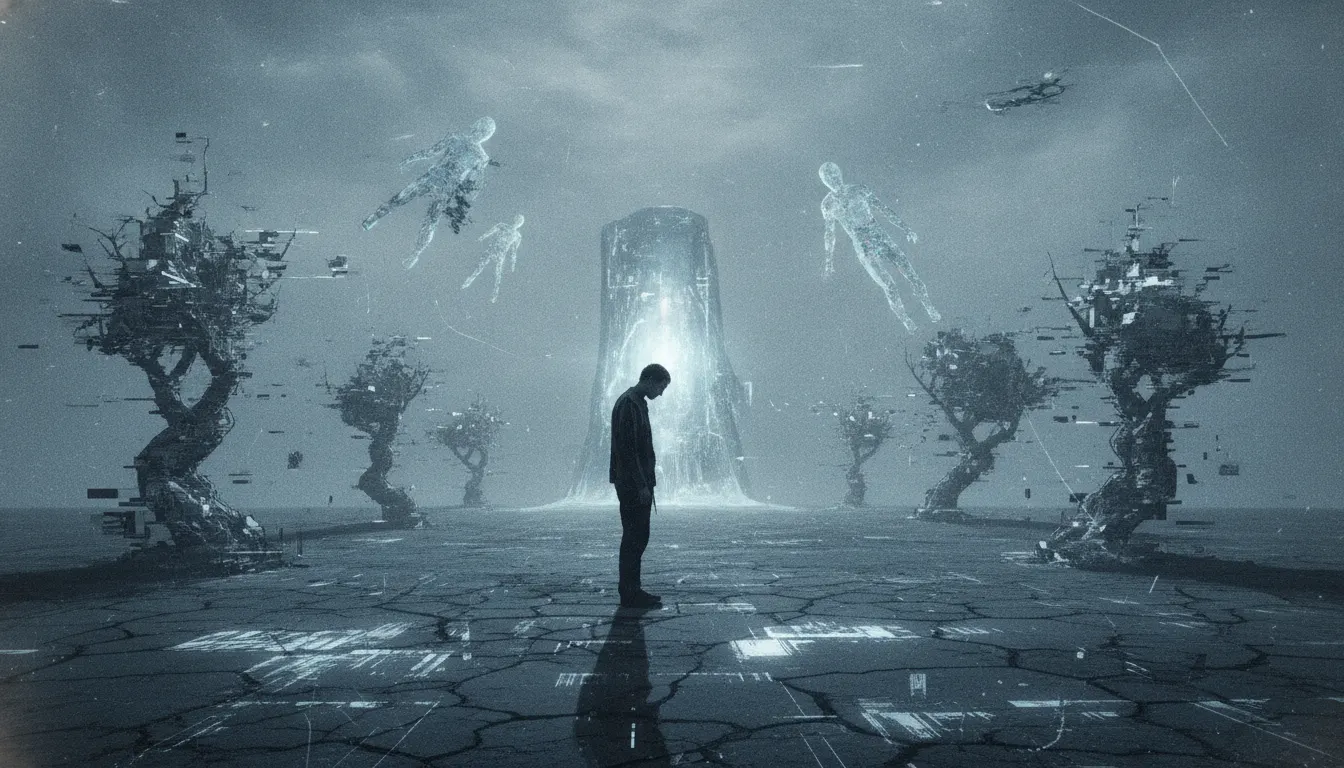
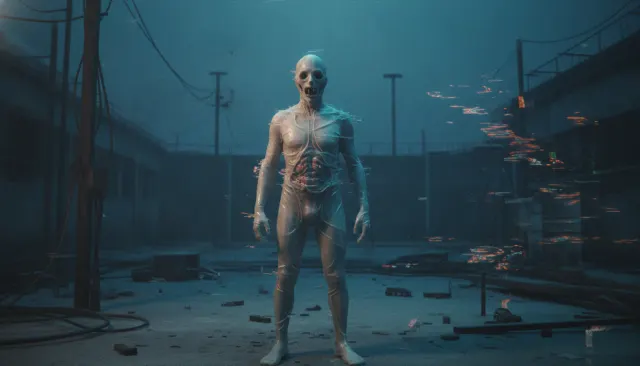
Radiohead Thom Yorke melancholy MV aesthetic. OK Computer through In Rainbows visual lineage, alienation-tech surreal imagery, desaturated blue-grey palette, Stanley Donwood art.
radioheadalt-rockmelancholysurreal
LUT radiohead-melancholy-cool
WHEN TO USE
- Art-rock or alternative content where conceptual rigor and emotional melancholy are primary values
- Content that uses formal constraints (single-take, withholding information) as expressive tools
- Music content for audiences who value directors' vision and art-film reference over commercial polish
- Documentary or meditative content where understated British naturalism is tonally appropriate
- Content that deploys genre conventions (children's TV, horror, realism) against their expected content
- Artist portrait content where intellectual seriousness and visual austerity signal credibility
WHEN NOT TO USE
- Commercial content where conceptual difficulty or withheld resolution would frustrate audiences
- Pop music content that requires aspirational visual warmth rather than melancholy restraint
- Content for audiences who read stillness and desaturation as low production value
- Content where the humor, optimism, or energy needs to be immediately accessible
SIGNATURE TECHNIQUES
How the look is made.
The moves a human crew would use to get here. Cue applies them for you, and knowing their names is how you ask for a change.
- 01Conceptual restraint
the video is built around one formal rule or one withheld piece of information
- 02Desaturated cool color grade with blue
gray cast: naturalistic London or studio light
- 03Single
take or minimal-edit structure that forces emotional accumulation rather than rhythm
- 04Extreme close
up of face during critical emotional moments (Glazer method)
- 05British naturalistic settings
London streets, industrial spaces, anonymous architecture
- 06Stop
motion animation deployed against tonally dissonant content (Hopewell method)
- 07Physical impossibility accepted deadpan without special effects emphasis
- 08Thom Yorke's physical idiosyncrasy
jerky movement, physical discomfort - as visual subject
HISTORY & CONTEXT
Where it comes from.
Radiohead Thom Yorke Melancholy Aesthetic
Radiohead's music video output represents one of rock music's most consistently art-directed bodies of video work. From the Bends era through to their most recent recordings, the band has worked with directors of exceptional caliber - Jonathan Glazer, Jamie Thraves, Chris Cunningham, Michel Gondry, Chris Hopewell - producing videos that function as complete artistic statements rather than promotional vehicles. The unifying sensibility is Thom Yorke's melancholy-to-existential register and the band's anti-commercial intellectual seriousness.
Jamie Thraves and the Mid-90s Language
Jamie Thraves directed two of the defining Radiohead videos. 'Just' (1995) is structured around a Hitchcock-style mystery: a man lying on a London sidewalk while passersby gather to discover why he won't get up. The entire video builds to a moment where he tells them, and the audience cannot hear what he says but sees the crowd respond by also lying down on the sidewalk. The absence of subtitles is the conceptual fulcrum: the joke requires you to accept that whatever he said was literally too true to be heard. The visual treatment is flat, slightly desaturated, naturalistic London in the mid-90s.
Jonathan Glazer and Conceptual Isolation
Jonathan Glazer, who went on to direct 'Sexy Beast' (2000) and 'Under the Skin' (2013), directed 'Street Spirit (Fade Out)' (1995) and 'No Surprises' (1997) for the Pablo Honey and OK Computer eras respectively. 'No Surprises' is a single-take extreme close-up of Yorke's face in a fishbowl-style helmet that fills with water until it covers his head, then drains. The conceptual simplicity - one static shot, one action, unbroken - creates an extraordinary tension. The desaturated blue-gray palette and deliberate pacing are quintessential Radiohead visual grammar.
Chris Hopewell and 'Burn the Witch' (2016)
Chris Hopewell's 'Burn the Witch' (2016) is stop-motion animation in the tradition of Rankin/Bass Christmas specials and BBC schools programming, with villagers and a wicker man performing what is clearly a pagan sacrifice. The horror is entirely contained within cheerful children's-television formal conventions: pastel colors, hand-crafted puppet figures, educational-programme visual grammar. The gap between form and content is the aesthetic's whole argument - Radiohead's critique of nationalism and mob behavior delivered through cheerful BBC folk-horror animation.
The Unifying Visual Sensibility
What connects the Radiohead video catalogue is deliberate conceptual difficulty: the videos reward attention and punish passivity. They use restraint where pop videos use spectacle, withhold information that pop videos would provide, and prioritize emotional precision over visual pleasure.
NOTABLE WORKS
Where you have seen it.
Jonathan Glazer dir., Radiohead 'Street Spirit (Fade Out)', 1995
Jonathan Glazer dir., Radiohead 'No Surprises', 1997 (fishbowl filling with water)
Chris Cunningham dir., Radiohead 'Rubber Ring' era promo, 2000s
Michel Gondry dir., Radiohead 'Knives Out', 2001 (Kubrick-referencing horror pastiche)
Chris Hopewell dir., Radiohead 'Burn the Witch', 2016 (stop-motion folk horror)
Rex Features / Paul Thomas Anderson dir., Radiohead 'Daydreaming', 2016
Chloé Zhao dir., Thom Yorke 'Unmade', 2019 (solo Yorke visual essay)
THE RECIPE
The exact knobs
the renderer turns.
A Look is not a filter. It is a set of stored decisions the pipeline reads before it makes a single frame, so two videos in the same Look actually match.
SettingValue
GradeColour LUT applied to every frame
radiohead-melancholy-coolTransitionHow one shot becomes the next
soft cuts · 320ms · ease-in-outKen BurnsCamera move applied to stills
Slow push · 0.015 · centerTypographyDisplay / body / mono pairing
Inter · Inter · JetBrains MonoMusic moodWhat the bed under the voice sounds like
radiohead-art-rock-pad · thom-yorke-falsetto-electronicPrompt suffixAppended to every shot prompt in this Look
Radiohead Thom Yorke melancholy MV, OK Computer through In Rainbows visual lineage, alienation tech surreal imagery, desaturated blue grey palette, Stanley Donwood artPALETTE
Primary
#3A5A78
Secondary
#1F3048
Accent
#C8C8C0
Text/Light
#0F1F2A
Text/Dark
#E8E8E0
BG 900
#08101A
BG 800
#0F1F2A
RELATED LOOKS
Next to it on the shelf.
Your first cut
is on us.
+ New videoFree plan · no card · 1080p export