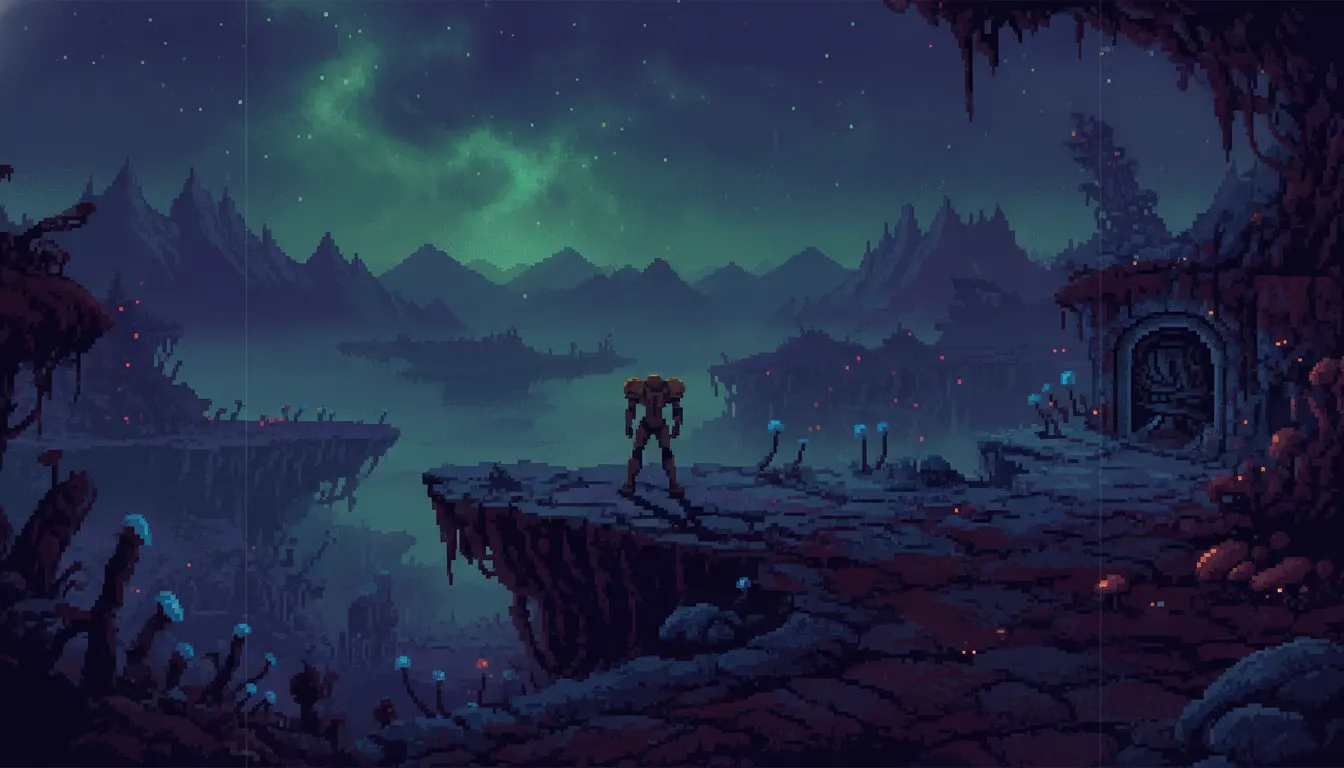
Super Metroid (Nintendo R&D1, 1994)
the defining atmospheric pixel masterpiece
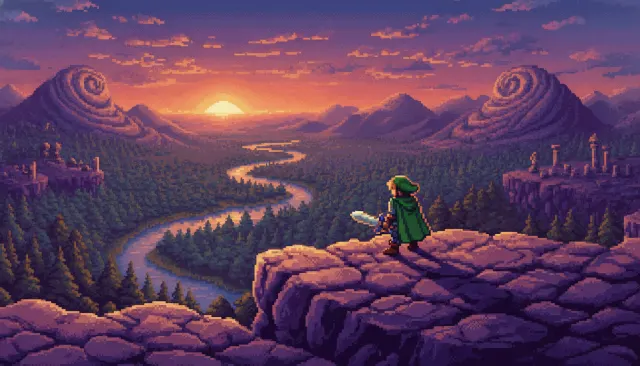
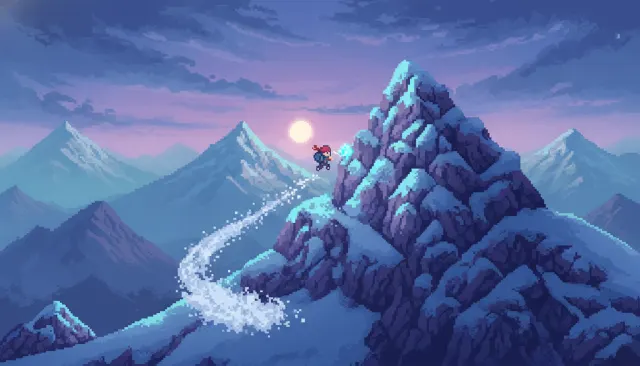
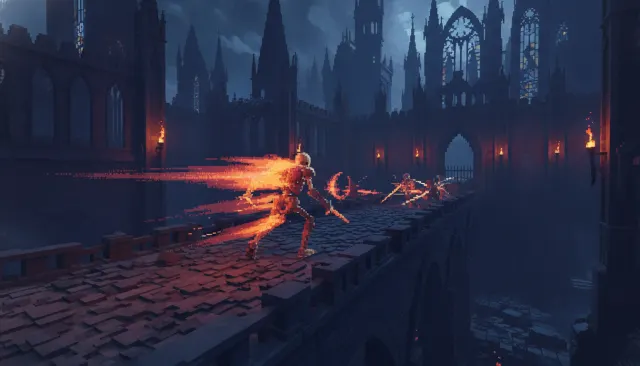
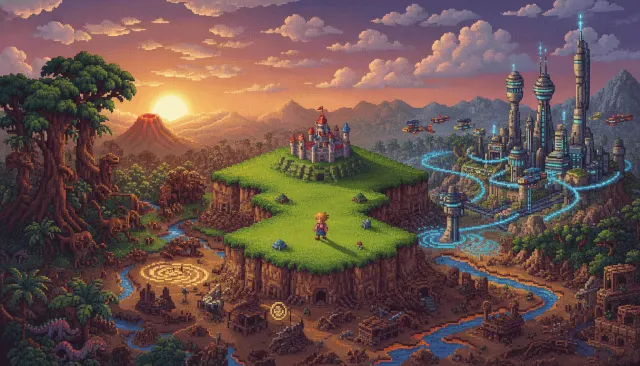
Super Metroid atmospheric 16-bit aesthetic. Moody alien planet Zebes, sparse Metroid color palette, eerie ambient parallax, isolation-horror pixel art.
The moves a human crew would use to get here. Cue applies them for you, and knowing their names is how you ask for a change.
specific palette shifting: each zone of Zebes has a distinct ambient color temperature
time palette cycling for environmental effects: lava glow, alarm lights, energy beam pulses
layer depth construction suggesting cave depth extending beyond the visible screen
Samus and enemies recognizable at any size by outline alone
level object placement rather than text exposition
synced palette pulses: music beats trigger color shifts in ambient lighting tiles
Super Metroid (Nintendo R&D1, 1994) is one of the most atmospherically accomplished games ever made, achieving a sense of alien isolation and oppressive environmental dread through pixel art techniques that defined the Metroidvania genre's visual vocabulary. Running on SNES hardware with 256 simultaneous colors, director Yoshio Sakamoto and lead artist Hiroji Kiyotake used palette manipulation, environmental lighting, and sound design in a coordinated campaign to make players feel genuinely alone on the planet Zebes.
The SNES PPU's palette system allowed developers to cycle colors in real time - replacing palette entries frame by frame to create effects impossible through traditional sprite animation. Super Metroid used this aggressively. The surface of Zebes uses a cold blue-grey palette with sparse warm accent tones (lava glow, red light pipes). Descend into Brinstar and the palette shifts to deeper greens and purples. Norfair's volcanic area uses deep red and orange palettes that make the environment feel genuinely hot.
This palette-as-environment technique meant Samus Aran's sprite, rendered in her suit's metallic orange and green, read differently in each area. The suit reflected ambient color, making her feel embedded in each environment rather than floating over it.
The four SNES background layers were deployed to create convincing cave depth. Background layer 4 (furthest) showed deep black with faint geological formations. Layer 3 showed distant cave walls. Layer 2 showed mid-distance rock formations. Layer 1 showed the foreground environment Samus moved through. This layering created a sense of three-dimensional space within 2D hardware constraints - you felt the cave extending beyond the screen in all directions.
Super Metroid's opening sequence - arriving on the Space Pirate station, retrieving the metroid, watching Ridley attack and escape - uses pixel animation cutscenes without text that convey narrative through sprite poses and environmental reading alone. The rain outside the station, the blood trail, Ridley's silhouette against the sky: these are storytelling achievements in 16x16 pixel increments.
Unlike contemporary linear games, Super Metroid's map was designed as an interconnected cave system with intentional backtracking routes. The visual design supports this - corridors have consistent color signatures that allow experienced players to navigate by palette memory, and secret passages are telegraphed through subtle environmental cues: a differently-textured block in a Brinstar wall, a suspicious ceiling depression in Maridia.
the defining atmospheric pixel masterpiece
spiritual descendant atmospheric pixel approach
direct Super Metroid homage
modern follow-up from the same lineage
SNES aesthetic in a different emotional register
independent atmospheric pixel platformer ancestor
A Look is not a filter. It is a set of stored decisions the pipeline reads before it makes a single frame, so two videos in the same Look actually match.