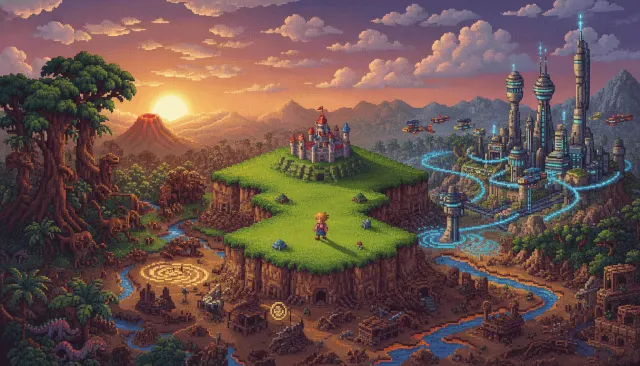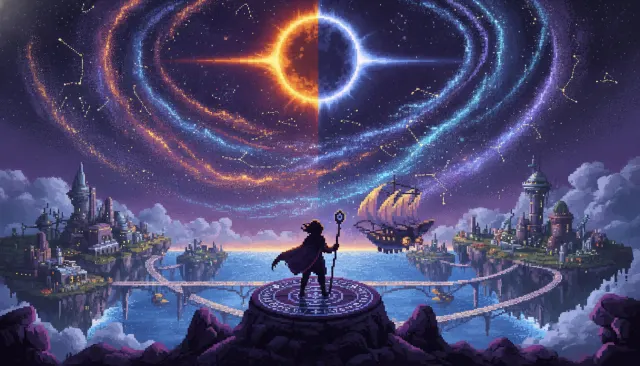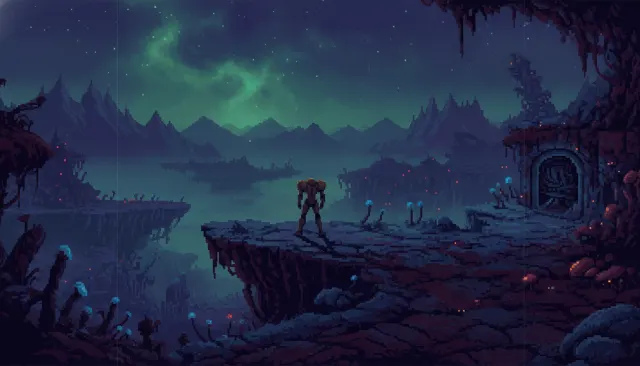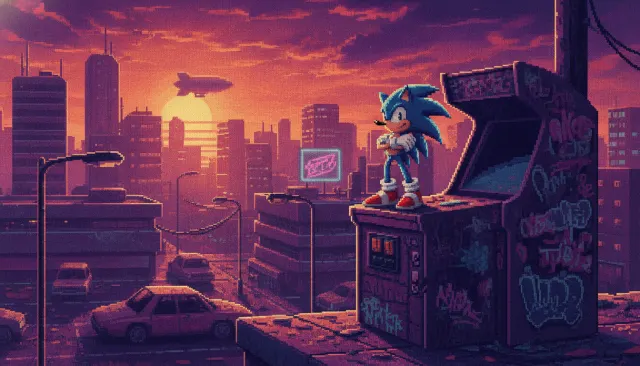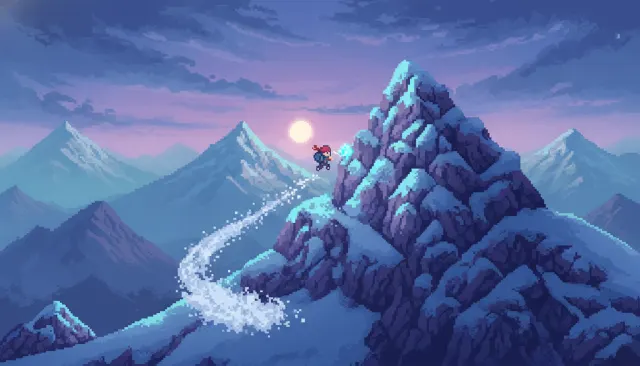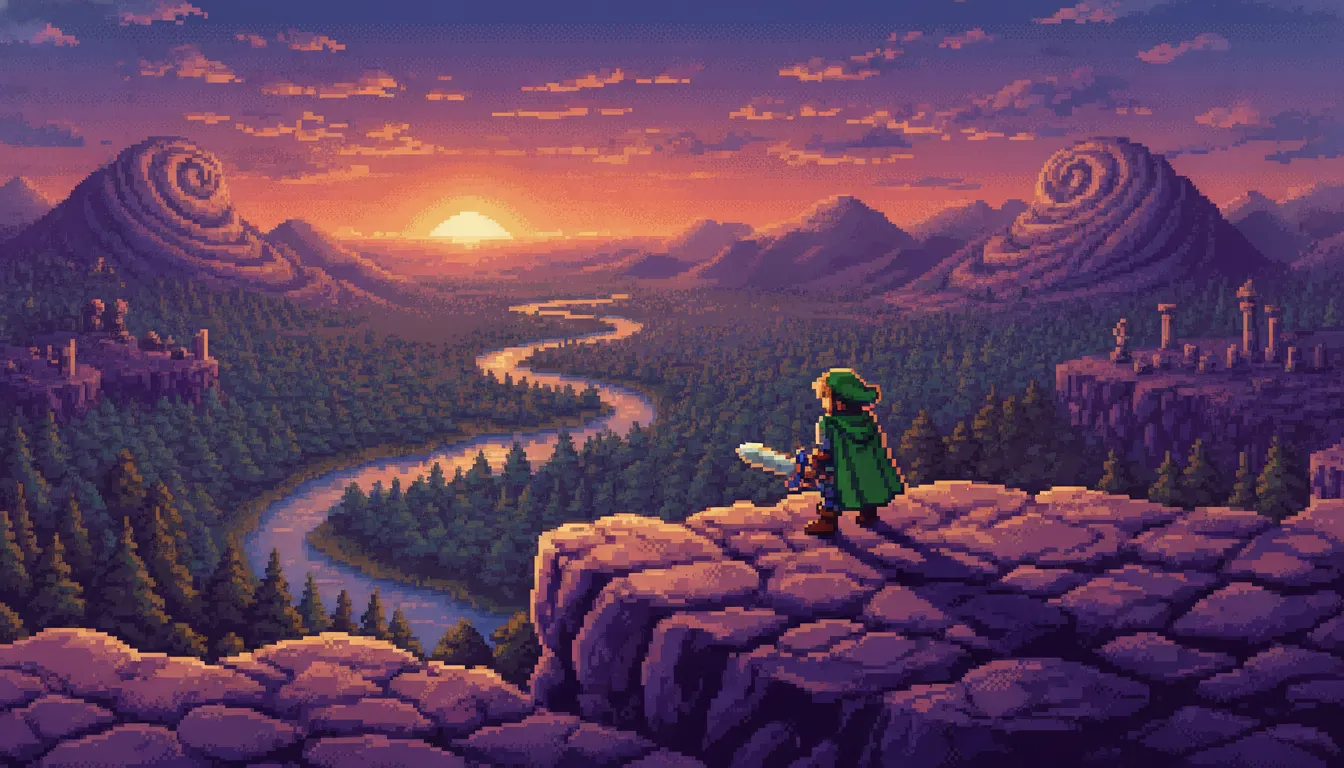
Chrono Trigger (Square, 1995)
the pinnacle of SNES JRPG pixel art
Super Nintendo 16-bit pixel art. Mode 7 background scaling, 256-color palette, Secret of Mana and Final Fantasy VI era detailed sprite work and parallax.
The moves a human crew would use to get here. Cue applies them for you, and knowing their names is how you ask for a change.
3D scaling and rotation effects
tones distinct from Genesis's cooler, higher-contrast look
The Super Nintendo Entertainment System (SNES, released 1990 in Japan, 1991 in North America) represented the zenith of hardware-constraint pixel art. With 256 simultaneous colors from a 32,768-color palette, the Mode 7 affine transformation engine, and four independently scrolling background layers, the SNES enabled a generation of artists to produce work that continues to serve as the aesthetic benchmark for 2D pixel art.
The SNES's 256 on-screen colors from 32,768 available (15-bit color) gave artists dramatically more range than the Genesis's 64 from 512. The SNES palette had a characteristically soft, slightly warm quality. Backgrounds could use separate palettes from sprites, and each of the four background layers had its own color allocation. This enabled lush, varied environmental color with rich gradients impossible on competing hardware.
The PPU (Picture Processing Unit) supported multiple background modes. Mode 0 offered four layers with 4 colors each. Mode 7 - the most famous - could only produce one background layer but applied full affine transformation to it: rotation, scaling, and shearing in real time. Final Fantasy IV (Square, 1991) used Mode 7 for its airship overworld. F-Zero (Nintendo, 1990) used it for pseudo-3D racing. Super Mario Kart (Nintendo, 1992) combined Mode 7 with multiple sprite layers for the defining SNES visual experience.
The SNES is home to the canonical JRPG sprite art library. Final Fantasy IV (Square, 1991), Final Fantasy VI (Square, 1994), Chrono Trigger (Square, 1995), Super Mario RPG (Square, 1996), and EarthBound (HAL Laboratory, 1994) collectively defined what "RPG pixel art" means. These games used the SNES's color capabilities to create richly detailed environments - cobblestone streets with individual pixel-level variation, forest tiles with 40+ color gradients, character portraits with subtle blush and highlight tones.
Yasunori Mitsuda and Nobuo Uematsu's soundtracks for many of these titles are inseparable from the visual experience - the SNES SPC700 sound chip and its 8-channel sample playback capability enabled music that matched the visual ambition.
Mode 7 became so associated with SNES quality gaming that "Mode 7" entered gaming vocabulary as shorthand for "impressive console effect." The rotating overworld maps in Final Fantasy IV and VI, the floor-perspective racing in F-Zero, and the rotating title screens in dozens of games are immediate visual triggers for SNES nostalgia.
the pinnacle of SNES JRPG pixel art
narrative and visual ambition defining the era
unique SNES palette used for suburban Americana
isometric 2.5D pixel pushing SNES limits
atmospheric SNES palette mastery
action-RPG SNES archetype
Mode 7 as technical and aesthetic spectacle
A Look is not a filter. It is a set of stored decisions the pipeline reads before it makes a single frame, so two videos in the same Look actually match.