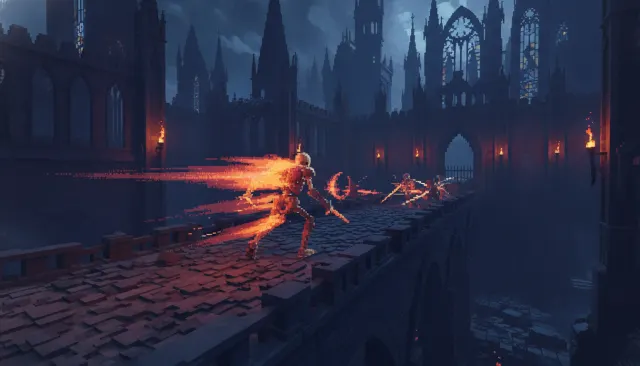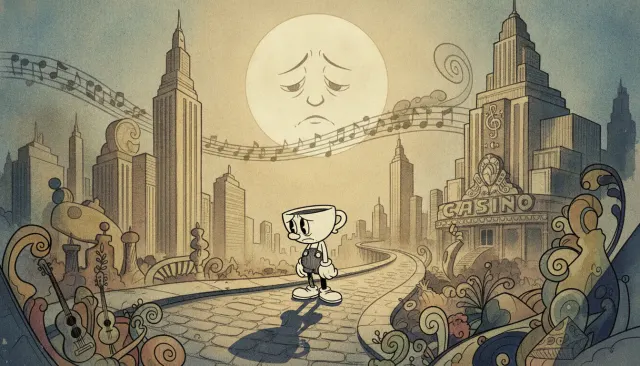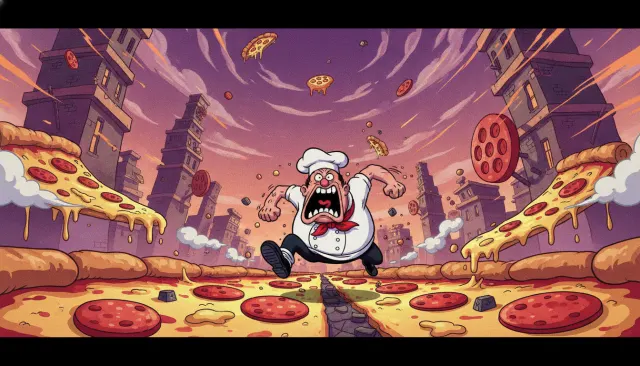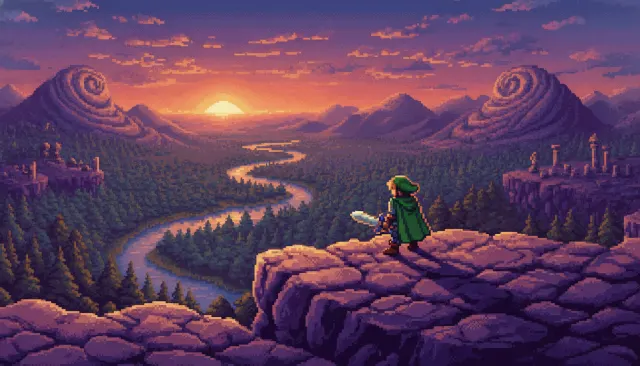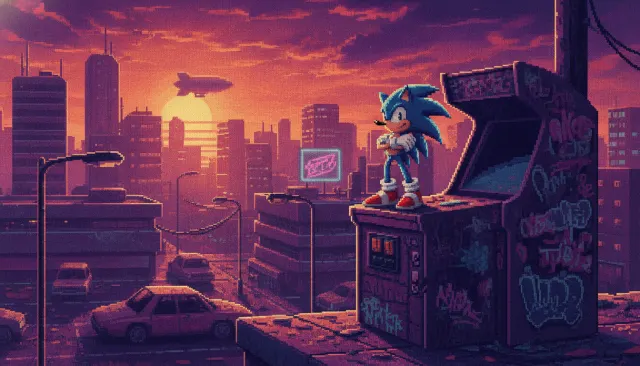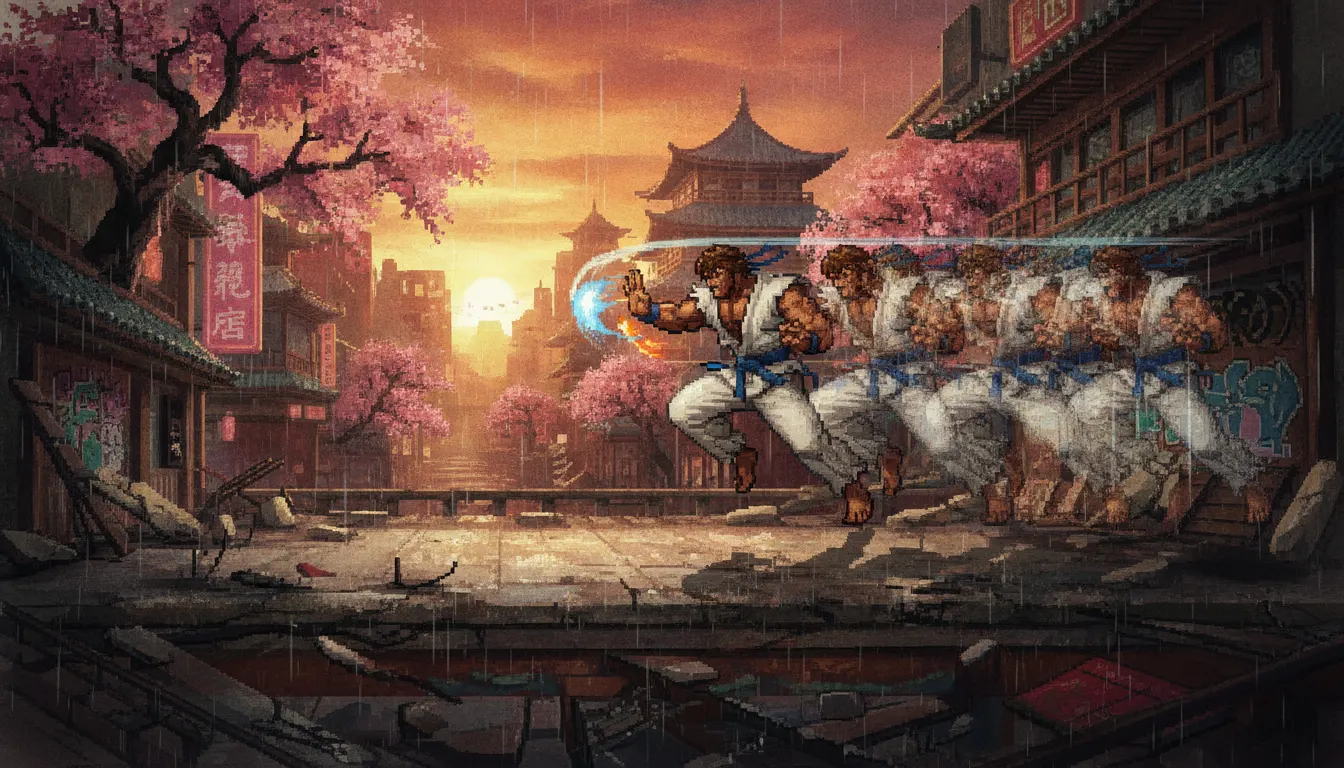
Street Fighter III: 3rd Strike (Capcom, 1999)
the pinnacle of 2D fighting game sprite art
Street Fighter III Third Strike Capcom CPS-3 detailed-sprite aesthetic. 100+ frame fighter animation, hand-painted urban stages, parry-mechanic precision combat.
The moves a human crew would use to get here. Cue applies them for you, and knowing their names is how you ask for a change.
resolution sprites (up to 180x180 pixels) with 20-50 unique hand-drawn frames per animation
5 shading tone layers per color region
specific hit sparks and parry flashes communicating mechanical states visually
muscular geometry with cartoon elasticity
crowds, weather, architecture in motion
swapped shadow pass under characters with soft contact darkening on floor
Street Fighter III: 3rd Strike - Fight for the Future (Capcom, 1999) represents the artistic apex of 2D fighting game sprite work. Running on Capcom's CPS-3 arcade hardware, 3rd Strike featured character sprites drawn at resolutions and animation frame counts that have never been surpassed in the genre - a labor-intensive achievement that cost Capcom enormously and contributed to the commercial failure that led them to abandon CPS-3 hardware. The resulting artwork is nonetheless revered as a technical and artistic masterpiece.
The CPS-3 (Capcom Play System 3, 1996) used a custom Hitachi SH-2 processor pair and a dedicated sprite scaling chip capable of displaying large, smoothly animated sprites without the pixel stepping common on cheaper hardware. The system used CD-ROM for game data storage, enabling the vast sprite data sets that 3rd Strike required. Character sprites could be up to 180x180 pixels, with some super arts and throw animations occupying nearly half the screen.
Where typical fighting game characters have 4-8 frames per animation state, 3rd Strike characters have 20-50. Ken's Shoryuken rises through eight frames of ascending arc motion, each frame a unique hand-drawn pose. Makoto's dash grab involves twelve frames of approach, fourteen frames of throw execution, and eight frames of aftermath. This density creates the distinctive "weight" and momentum that players associate with 3rd Strike - you can feel the characters' mass in the animation.
The game's most celebrated animation set belongs to Ibuki - a ninja character whose run cycle, parries, and special moves are drawn with a cartoonist's attention to cloth physics, hair movement, and secondary body motion that was unprecedented in fighting games.
3rd Strike's defining mechanic - the parry system, which allows players to deflect any attack by pushing forward at the exact moment of impact - required the animation system to support very precise timing feedback. Every hit, parry, and counter-parry has a visually distinct response. The parry flash, the hit spark, and the recovery animation must communicate clearly within two frames (at 60 fps) what happened mechanically. The visual design of these feedback moments is a masterclass in animation serving game design.
3rd Strike's art direction - the ink outlines over multiple shading passes, the exaggerated but anatomically serious character proportions, the New York hip-hop cultural influences in the character roster (Q, Dudley, Elena) - made it simultaneously the most technically accomplished and most culturally specific fighting game of its era.
the pinnacle of 2D fighting game sprite art
the same system's debut
intermediate iteration
peer title with comparable sprite quality
late-period 2D sprite work on successor hardware
the CPS-2 predecessor aesthetic
A Look is not a filter. It is a set of stored decisions the pipeline reads before it makes a single frame, so two videos in the same Look actually match.