Pizza Tower (Tour de Pizza, 2023)
the defining modern example
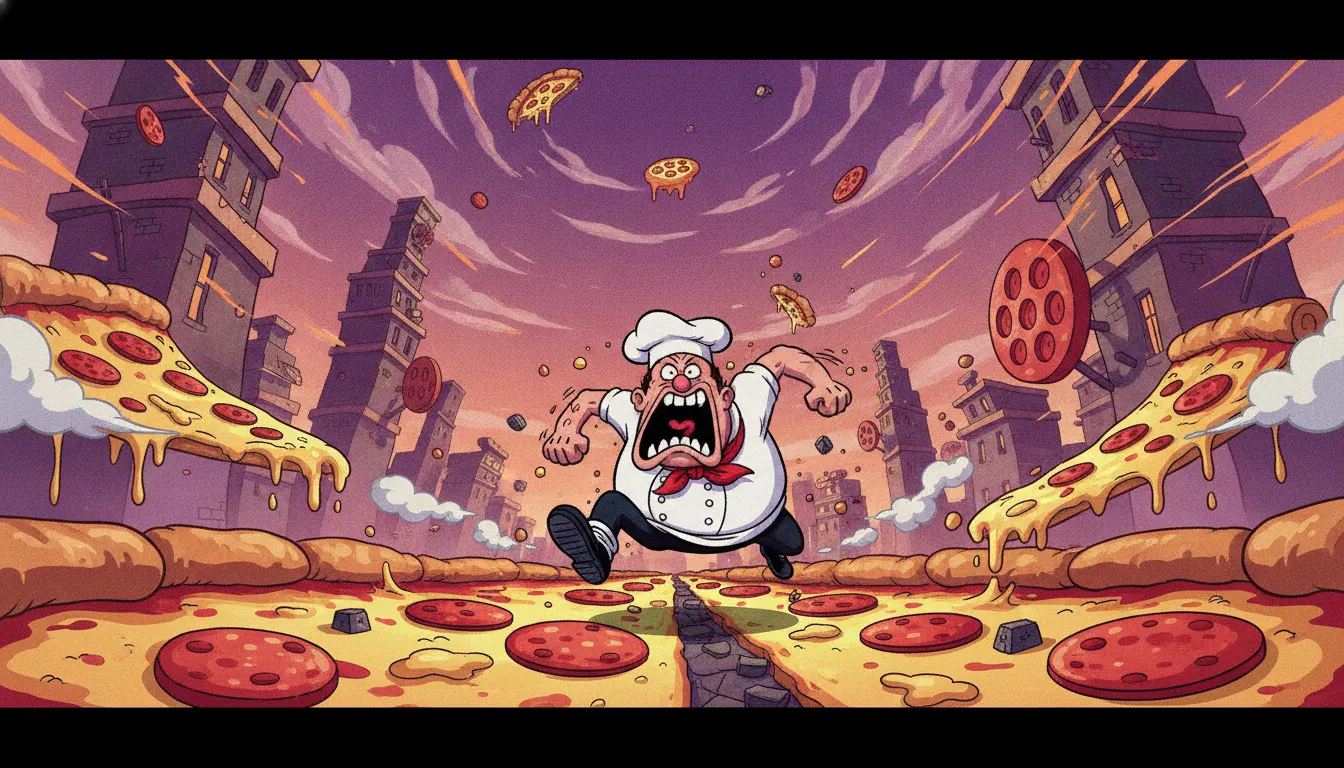
Pizza Tower Tour de Pizza rubber-hose frenetic aesthetic. Wario Land speedrun homage, 90s cartoon ugly-funny sprite, screaming Peppino chaos energy.
The moves a human crew would use to get here. Cue applies them for you, and knowing their names is how you ask for a change.
and-stretch on every impact, landing, and acceleration frame
frame facial expression cycling (anger, fear, mania) at 8-12 fps for comedic effect
tone shading
neighbor pixel scaling to preserve crisp sprite edges at any display size
intentional sensory overload
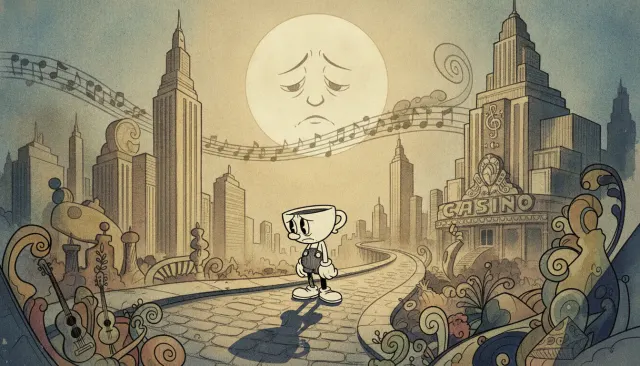
Pizza Tower (Tour de Pizza, 2023) exploded onto the indie scene as one of the most visually audacious platformers in years, dragging the rubber-hose animation tradition of 1930s Fleischer cartoons into a hyper-speed pixel-art blender. Developer Tour de Pizza drew heavily from Wario Land 4 (Nintendo, 2001) for its momentum-based movement, then applied a visual language that owes as much to John Kricfalusi's Ren & Stimpy as it does to classic 8-bit hardware.
Rubber-hose animation treats limbs as infinitely elastic tubes - no rigid skeletal constraints, no anatomical plausibility. Characters stretch into blurs during sprints, squash to flat pancakes on landings, and balloon into absurd shapes during panic states. Pizza Tower pushes this to an extreme: Peppino Spaghetti's face cycles through dozens of hand-drawn emotional states per second, each frame a grotesque exaggeration of terror, rage, or elation.
The pixel art itself is dense and busy. Foreground tiles compete with animated backgrounds, and enemies scroll past in waves of visual noise. Color is loud - saturated primaries with minimal shading. Outlines are thick and inconsistent in the Kricfalusi tradition, sometimes doubling in thickness to suggest weight or speed.
Nintendo's Wario Land series (1994-2008) pioneered the "enemy transforms you" mechanic and the aesthetic of a brutish cartoon character moving with surprising physical momentum. Pizza Tower inherits the chaotic tile-based level design, the wall-running speed mechanics, and the sense that every room is about to burst at the seams. The frenetic energy is intentional: levels escalate into a timed escape sequence backed by Jose Zegreda's jazz-fusion soundtrack, forcing players into a constant sprint that the visuals amplify perfectly.
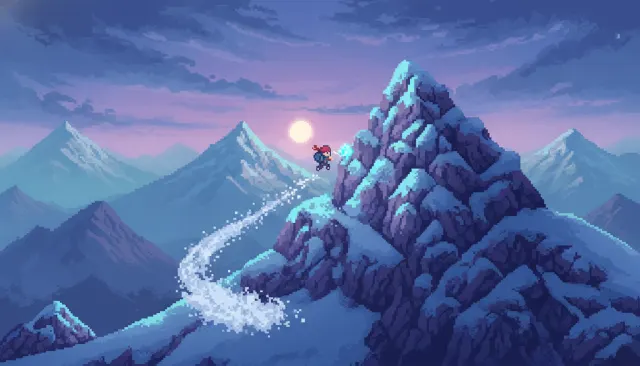
The game runs at a locked 60 fps with sprite animation ranging from 4 to 24 frames per second depending on action state. Character sprites are drawn at low resolution (roughly 32x48 base) and scaled up with nearest-neighbor filtering to preserve crisp pixel edges. Background layers use parallax scrolling at multiple speeds, creating depth without 3D geometry. The UI employs the same rubber-hose vocabulary as the characters - health meters distort and sweat, text wobbles, and the combo counter literally bounces.
the defining modern example
key mechanical and tonal ancestor
contemporaneous rubber-hose revival in a different register
foundational TV rubber-hose extreme
original rubber-hose tradition
similar indie frenetic pixel energy
A Look is not a filter. It is a set of stored decisions the pipeline reads before it makes a single frame, so two videos in the same Look actually match.