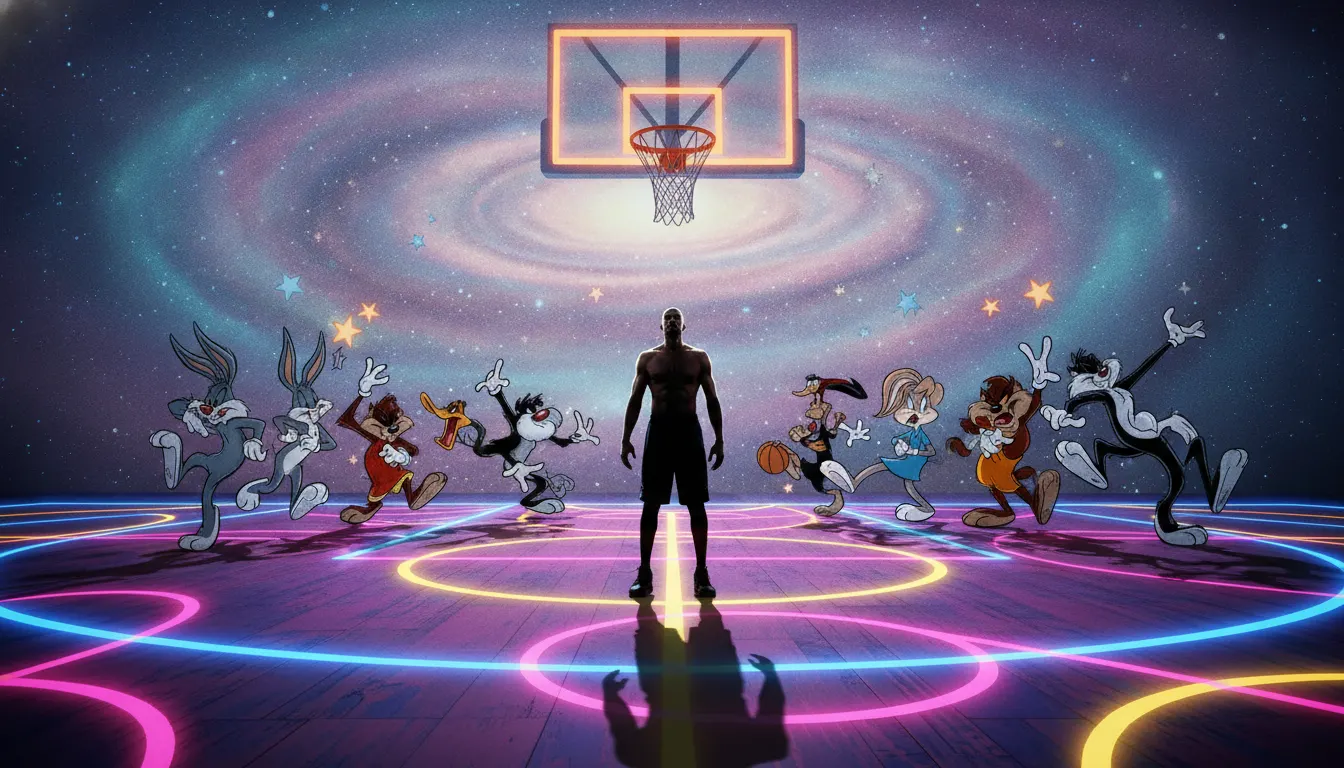
Joe Pytka (dir.)
*Space Jam* (1996, Warner Bros., Michael Jordan + Looney Tunes)
Space Jam 1996 cel-on-court hybrid. Live-action NBA athletes playing alongside hand-drawn Looney Tunes characters, saturated 90s commercial gloss, neon court palette.
The moves a human crew would use to get here. Cue applies them for you, and knowing their names is how you ask for a change.
line 2D cel-style animated characters with black outlines at unchanged opacity over live footage
squash-and-stretch, takes, and speed smears impossible in live video
animated character gripping live-actor hand or catching physical prop
set lighting designed to match the cartoon's direction and intensity
The Space Jam cel-on-court mix is the technique of compositing traditionally animated 2D characters into live-action sports and real-world environments, maintaining the visual contrast between photorealistic live footage and the flat, outlined character animation rather than attempting seamless integration. The live world and the animated world coexist as separate visual registers, with the cartoon characters bringing their medium's expressive physics into the documentary reality of the live-action space.
Director Joe Pytka and Warner Bros. Animation produced Space Jam (1996, Warner Bros.) with a production approach that leaned into visual contrast rather than attempting seamless blending. Michael Jordan – filming between his retirement and his return to the Chicago Bulls – performed his scenes on a dedicated Stage 23 at Universal Studios, a 4.5-acre stage that housed a full regulation basketball court. The set had no ceiling so the camera could shoot upward; lighting was designed to match the animation team's stylized illumination choices.
Warner Bros. Animation studios produced the Looney Tunes characters under animation director Tony Cervone. The characters were drawn in the classic Warner Bros. house style: black outline, flat fill colors, exaggerated takes, and squash-and-stretch physics. Bugs Bunny, Daffy Duck, Porky Pig, and the Tune Squad were composited into the live-action footage using traditional optical composite and early digital compositing (the industry was in transition – Who Framed Roger Rabbit (1988) had established optical methods, while Space Jam began adding digital compositing work).
The look works because it does not hide the seam: Jordan's photorealistic body and face contrast with Bugs Bunny's flat-colored, ink-outlined form. This contrast is the film's subject – the collision of two realities, two physical laws, two kinds of stardom. The animated characters interact with physical set elements (ball, floor, hands) through careful registration and shadow work, but they always look like what they are: drawings existing in a filmed world.
Space Jam: A New Legacy (2021, dir. Malcolm D. Lee) updated the format with CGI animation replacing cel drawing, losing some of the visual contrast that made the original's collision memorable. The original's cel-on-live aesthetic inspired countless music videos and brand campaigns through the late 1990s and 2000s.
The Gorillaz – virtual band created by Damon Albarn and Jamie Hewlett (formed 1998, debut album 2001) – extended the Space Jam cel-on-live grammar into long-form music video and live performance. Hewlett's character designs are explicitly 2D hand-drawn in a style influenced by his Tank Girl comic (1988–1995). In live concert performances (Demon Days Live at the Manchester Opera House, 2005; Glastonbury 2010), the Gorillaz appeared on screen alongside the live band, reviving the Space Jam hybrid as an ongoing concert format. Their approach demonstrated that the cel-on-live aesthetic could sustain a complete artist identity across a decade of releases rather than serving as a one-film special effect.
*Space Jam* (1996, Warner Bros., Michael Jordan + Looney Tunes)
*Who Framed Roger Rabbit* (1988, Touchstone/Amblin) – progenitor optical composite
Warner Bros. Animation Looney Tunes direction on Space Jam
*Clint Eastwood* music video (2001, dir. Pete Candeland, animated characters in live environments)
*Jordan vs Bugs* TV spot (1992, precursor spot that inspired the feature film development)
*Take On Me* (1985, dir. Steve Barron, rotoscope-in-live progenitor of the concept)
A Look is not a filter. It is a set of stored decisions the pipeline reads before it makes a single frame, so two videos in the same Look actually match.
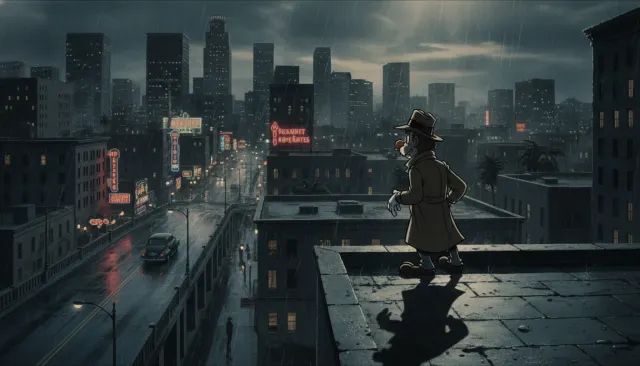 Live Animation HybridWho Framed Roger Rabbit Cel on Live
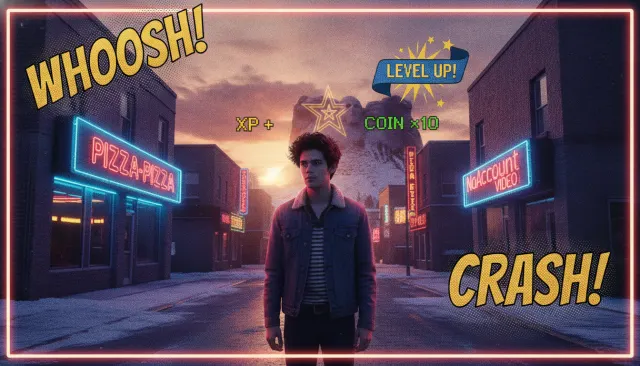 Live Animation HybridScott Pilgrim Comic Effect Live
 Live Animation HybridRotoscope Waking Life Painterly Hybrid
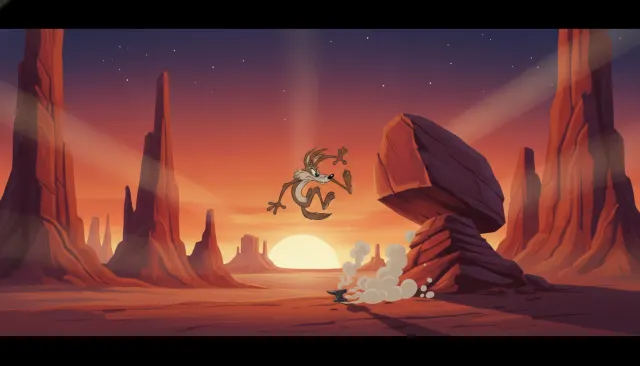 Classic Western CelLooney Tunes Tex Avery
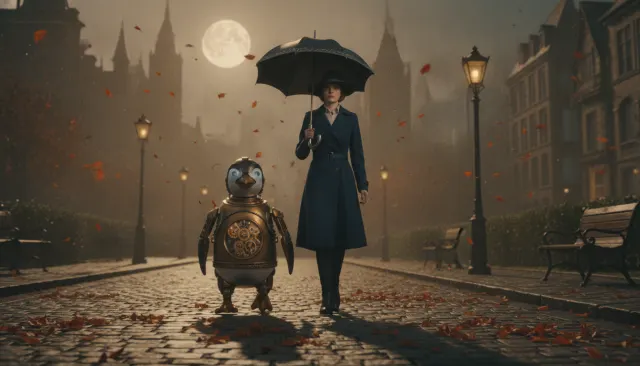 Mixed Media Stop MotionLive Action Stop Motion Hybrid
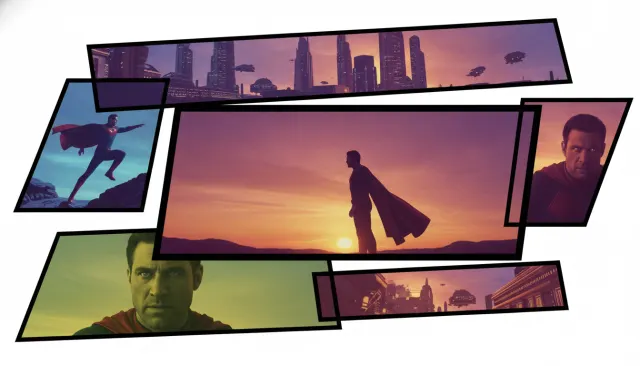 Live Animation HybridAng Lee Hulk Comic Panel Overlay