Sin City
Robert Rodriguez + Frank Miller, 2005 (primary film reference)
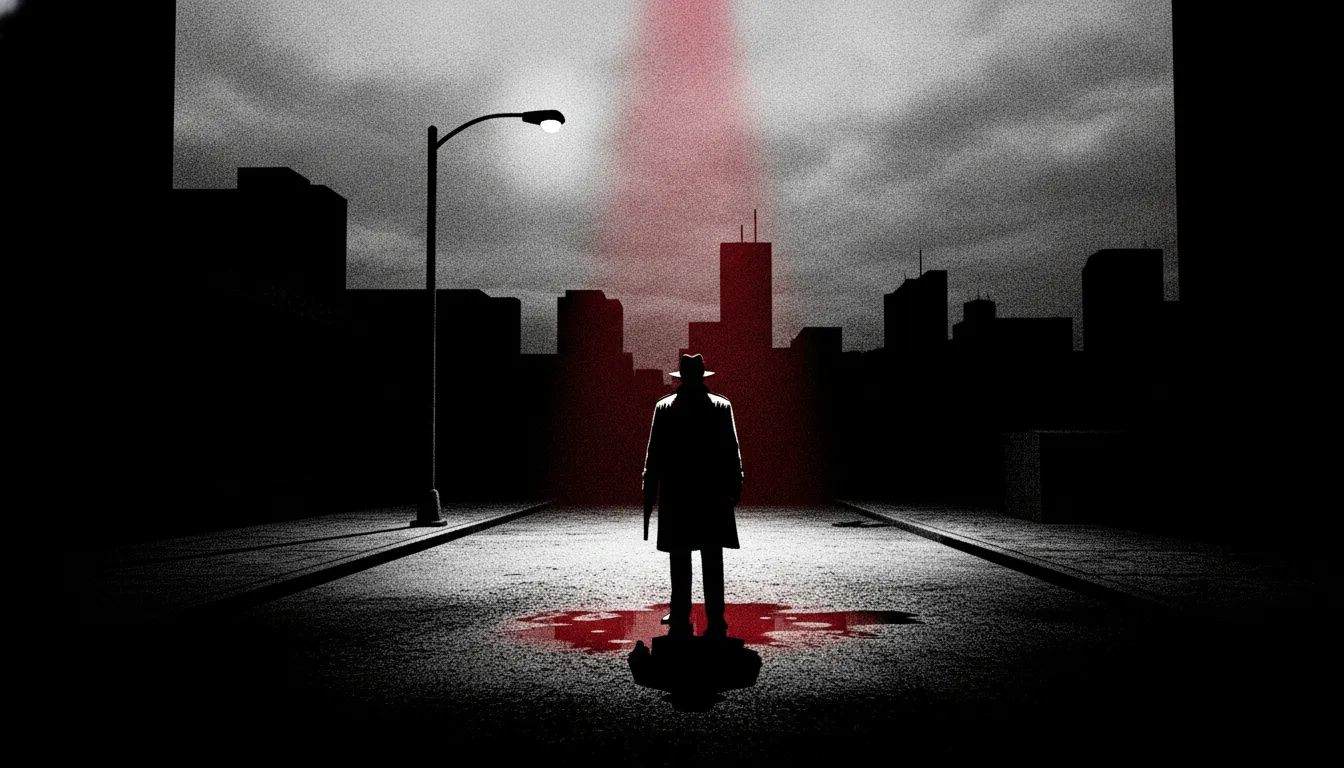
Sin City graphic-novel 3D stylization. Pure black and white with single color spot, hard ink shadow, noir comic panel.
The moves a human crew would use to get here. Cue applies them for you, and knowing their names is how you ask for a change.
binary contrast reduction: pure black shadows, pure white highlights, minimal midtone
outline edge detection on character and architecture geometry
key backlit silhouettes as primary character framing device
style composition with flat depth and dramatic negative space
Robert Rodriguez and Frank Miller's Sin City (2005) established a visual language for translating extreme comic-book graphic art directly into motion-image format. The technique - shooting actors against green screen, then compositing them into digital environments rendered to match Miller's original panel art - created a stylized 3D aesthetic that remains one of the most immediately recognizable neo-noir visual signatures.
Miller created the Sin City comic series beginning in 1991, publishing through Dark Horse Comics. His visual vocabulary was deliberately anti-naturalistic: pure black backgrounds with white silhouettes, or pure white fields with black shadows, and almost no intermediate grey. The technique recalled German Expressionist woodcuts and pulp crime novel covers. Faces were rendered as stark masks, shadows fell as geometric shapes, and the city itself was an abstract plane of darkness punctuated by light sources.
Rodriguez's adaptation shot in extreme high-contrast digital, then pushed contrast in post to eliminate midtones entirely. Most frames are binary: pure black shadows and bright whites. The selective color exceptions - yellow Goldie, red blood, blue Wendy's gun - are not photographic colors but saturated graphic marks, calling attention to themselves as deliberate color choices against the monochrome field. The effect reads as a moving panel from Miller's comics rather than a filmed scene.
The Sin City look translates into 3D animation and real-time rendering through: hard-edge shadow calculations that cast flat black shapes rather than soft gradients; threshold-based ink outline shaders; and selective color saturation masks applied to specific objects or characters while the rest of the scene remains greyscale. It is structurally similar to cel-shading but with the color step reduced to near-binary rather than the multi-tone anime palette.
Robert Rodriguez + Frank Miller, 2005 (primary film reference)
Rodriguez + Miller, 2014 (continued visual language)
Dark Horse Comics, 1991-2000 (original visual source)
Zack Snyder, 2006 (related graphic-novel-to-film adaptation using high contrast and desaturation)
Frank Miller, 2008 (Miller directing his own noir visual language in film)
Miller, DC Comics, 1986 (precursor Miller black-and-white ink work)
A Look is not a filter. It is a set of stored decisions the pipeline reads before it makes a single frame, so two videos in the same Look actually match.