Silent Hill
Konami/Team Silent, PS1, 1999, dir. Keiichiro Toyama (originator)
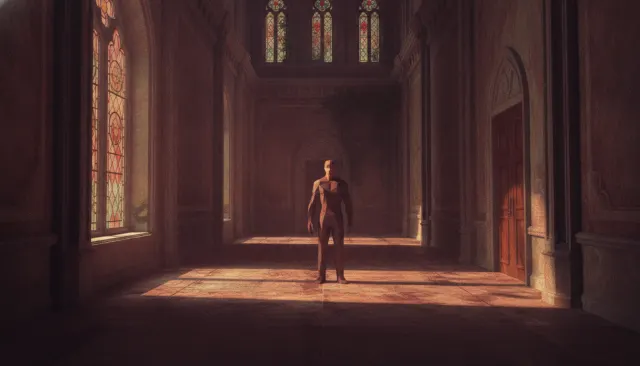
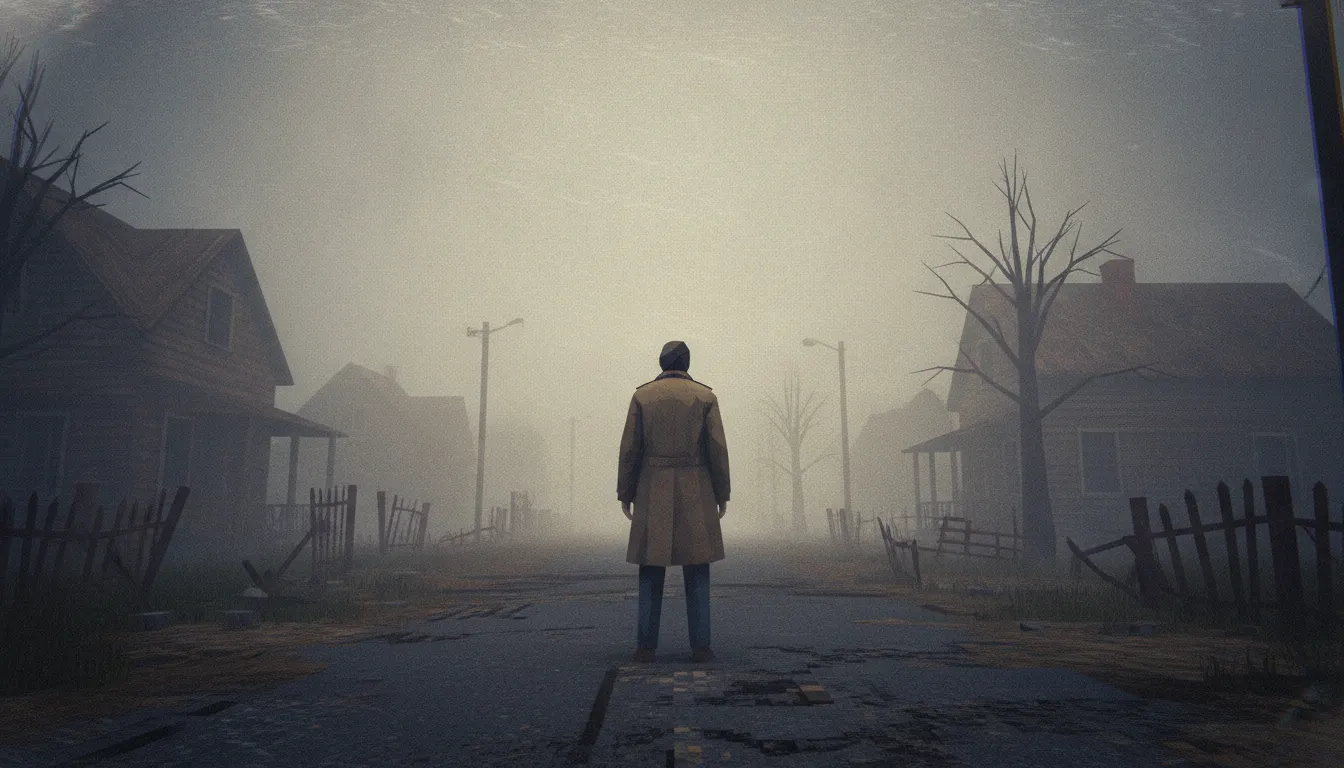
Konami Silent Hill 1999 PS1 fog-bound CGI. Distance-culling fog as artistic atmosphere, low-poly rural-American horror, radio-static encounter dread.
The moves a human crew would use to get here. Cue applies them for you, and knowing their names is how you ask for a change.
grey fog with sharp roll-off cutting visibility at roughly 15-20 meters
world pallor and Otherworld rusted industrial dark
diegetic fog-creature detection system
polygon environment geometry deliberately obscured by atmosphere to activate imagination
grey, rust, dried-blood brown - with no saturated color comfort
Konami's Silent Hill (1999, directed by Keiichiro Toyama, Team Silent) is the canonical example of a hardware constraint becoming an artistic signature. The PlayStation 1's GPU could not render more than roughly 20 meters of geometry without severe pop-in. Team Silent's solution - fill the void with dense white fog - created an accidental and then deliberate psychological horror tool that defined the series for two decades.
Director Keiichiro Toyama and art director Masahiro Ito described in interviews how the fog quickly stopped being a workaround and became a primary design element. Fog limits the player's horizon. It destroys environmental readability. It converts open streets into claustrophobic corridors where threat can materialize from any direction. Harry Mason's flashlight creates a cone of visibility in the fog, drawing the eye - and creatures like the Groan and the Mumblers emerge only when they're close enough to touch.
The fog also obscures the crude polygon geometry of the town - cracked sidewalks, parked cars, storefronts - behind a veil that the imagination fills with detail. Players report remembering Silent Hill's town as more detailed than it was; the fog did perceptual work.
The game's genius is the deliberate alternation: the fog-world of Toluca Lake is grey and almost peaceful despite its monsters. The "Otherworld" - the rusted, blood-soaked alternate dimension - strips the fog away entirely, revealing raw industrial geometry and absolute darkness pierced by Harry's light. The visual contrast between fog-obscured normalcy and claustrophobic Otherworld horror gave players no psychological safe ground.
Silent Hill's creatures were drawn by Masahiro Ito with deliberate anatomical wrongness: the Nurses with bent-back heads, Pyramid Head's massive helmet, the Grey Children who shamble with child-body proportions warped. In the fog, emerging toward the player, they read primarily as silhouette and movement - the low-poly geometry became invisible and the creature design spoke entirely through shape language.
Konami/Team Silent, PS1, 1999, dir. Keiichiro Toyama (originator)
Konami/Team Silent, PS2, 2001 (James Sunderland, Pyramid Head, fog retained as design)
Konami/Team Silent, PS2, 2003 (Heather Mason, fog-world transitions)
Remedy Entertainment, 2010 (flashlight mechanic and fog-adjacent atmosphere)
Bloober Team, 2021 (dual-world mechanic descending from the Otherworld concept)
Bloober Team, 2024 (fog recreated in modern real-time engine)
A Look is not a filter. It is a set of stored decisions the pipeline reads before it makes a single frame, so two videos in the same Look actually match.