Resident Evil
Capcom, PS1, 1996, dir. Shinji Mikami (originator of the look)
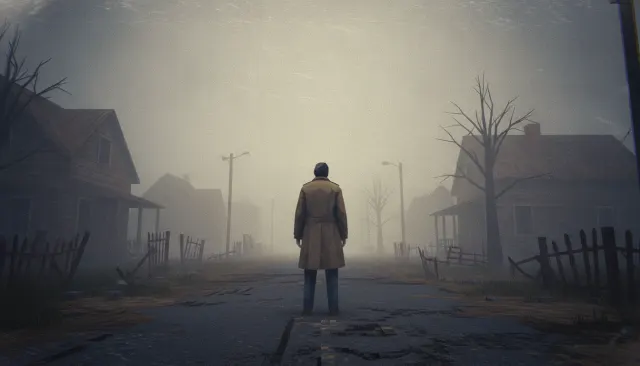
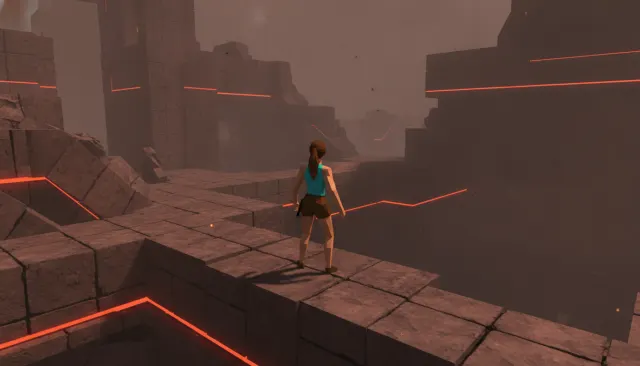
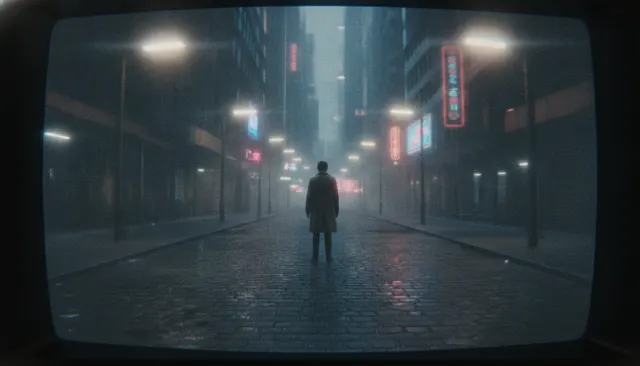
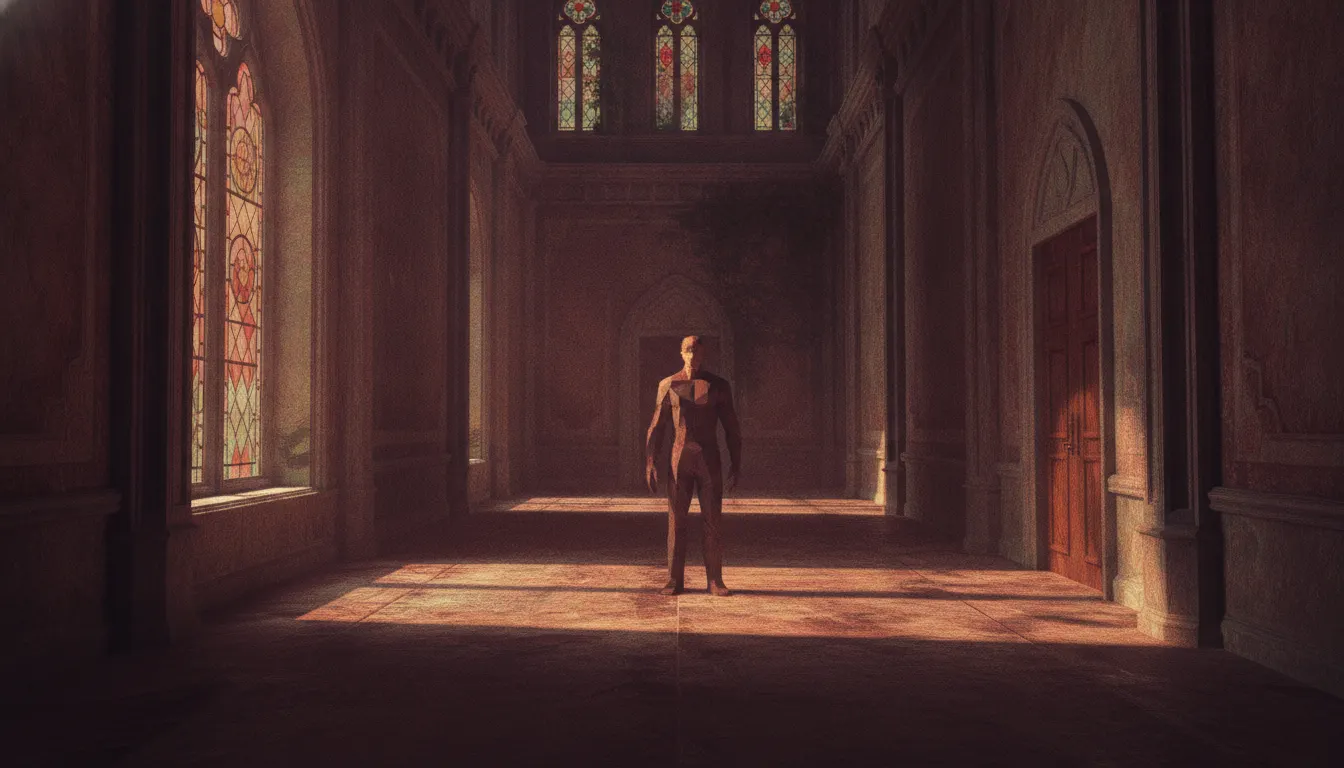
Capcom Resident Evil 1996 PS1 prerendered-room CGI. Fixed camera angles, baked-painting backgrounds, jagged polygon characters over hi-res mansion backdrops.
The moves a human crew would use to get here. Cue applies them for you, and knowing their names is how you ask for a change.
rendered bitmapped backgrounds with Caravaggio-style baked chiaroscuro
polygon real-time character sprites composited over static room renders
candle, and putrid-green room palette
time and pre-rendered elements meet
diegetic save-room music as mood anchors
Capcom's Resident Evil (1996, directed by Shinji Mikami) on the original PlayStation solved a hardware limitation with an artistic choice that defined survival horror for a decade. Unable to render fully 3D environments at acceptable frame rates, Capcom pre-rendered every room as a static high-detail CRT bitmap - detailed enough to show dust on shelves, bloodstains on marble, and moonlight through shattered glass - then composited low-polygon, real-time character models on top.
The pre-rendered backgrounds carried more visual complexity than the PS1 could ever compute in real time: the Spencer Mansion's grand hall showed oil paintings, ornate staircase balusters, and stone gargoyles. But the fixed camera angles that this technique required became an accidental horror masterstroke. Angles were chosen to build dread: a camera above a doorway so you couldn't see the corridor; a low ground-level shot so approaching zombies appeared only as shuffling feet.
Character models were deliberately blocky - Jill Valentine's head was a rough polygon approximation - yet the contrast between the rich backgrounds and the crude sprites amplified uncanny unease. Players' minds filled in detail.
The pre-rendered rooms used a palette unavailable in real-time PS1 rendering: deep burgundies, putrid greens, and the specific amber-gold of flickering candles against stone. Shadow depth was baked into the renders, giving rooms a Caravaggio-like chiaroscuro. The PC versions (at higher resolutions) revealed how carefully art director Kazuhiro Aoyama composed each frame.
The RE1 pre-rendered look was used through Resident Evil 3: Nemesis (1999) before the series shifted to full 3D in Code: Veronica (2000) and Resident Evil 4 (2005). The aesthetic has experienced revival in indie horror and deliberate retro game design, and the 2002 GameCube REmake (also Mikami) translated all original backgrounds into real-time 3D while preserving the same camera angles and color palette.
Capcom, PS1, 1996, dir. Shinji Mikami (originator of the look)
Capcom, PS1, 1998 (Leon and Claire, police station pre-renders)
Capcom, PS1, 1999 (Raccoon City pre-rendered streets)
Infogrames, PC, 1992 (precursor to the pre-rendered room technique)
Squaresoft, PS1, 1998 (pre-rendered NYC rooms with RPG system)
Capcom, GameCube, 2002 (real-time 3D recreation of 1996 camera angles)
Human Entertainment, PS1, 1995 (fixed-camera horror predecessor)
A Look is not a filter. It is a set of stored decisions the pipeline reads before it makes a single frame, so two videos in the same Look actually match.