The Last of Us Part II
Naughty Dog, 2020 (benchmark PS4 fidelity, Joel and Ellie facial capture)
PlayStation 4 photoreal era. Horizon Zero Dawn, God of War 2018, Last of Us 2 photogrammetry, physically based rendering.
The moves a human crew would use to get here. Cue applies them for you, and knowing their names is how you ask for a change.
based rendering (PBR) with metallic/roughness workflow for realistic material response
space ambient occlusion (SSAO) creating contact shadows under objects and in creases
of-field during dialogue moments, racking focus between characters
processing stack: film grain, chromatic aberration, vignette, lens flare
capture performance driving blend-shape expressions frame-by-frame
time shadows, replaced baked-only approaches of prior gen
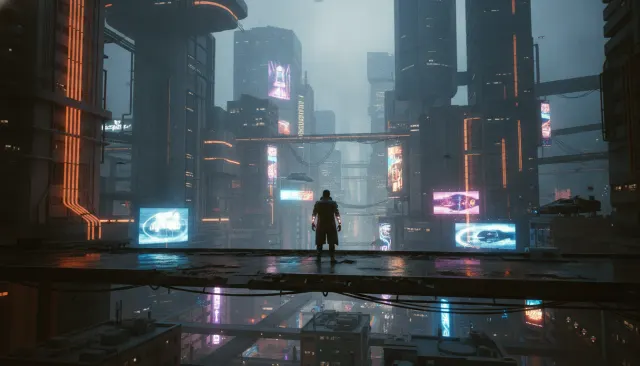
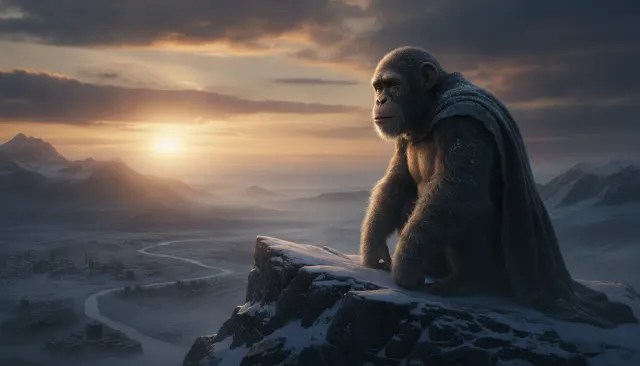
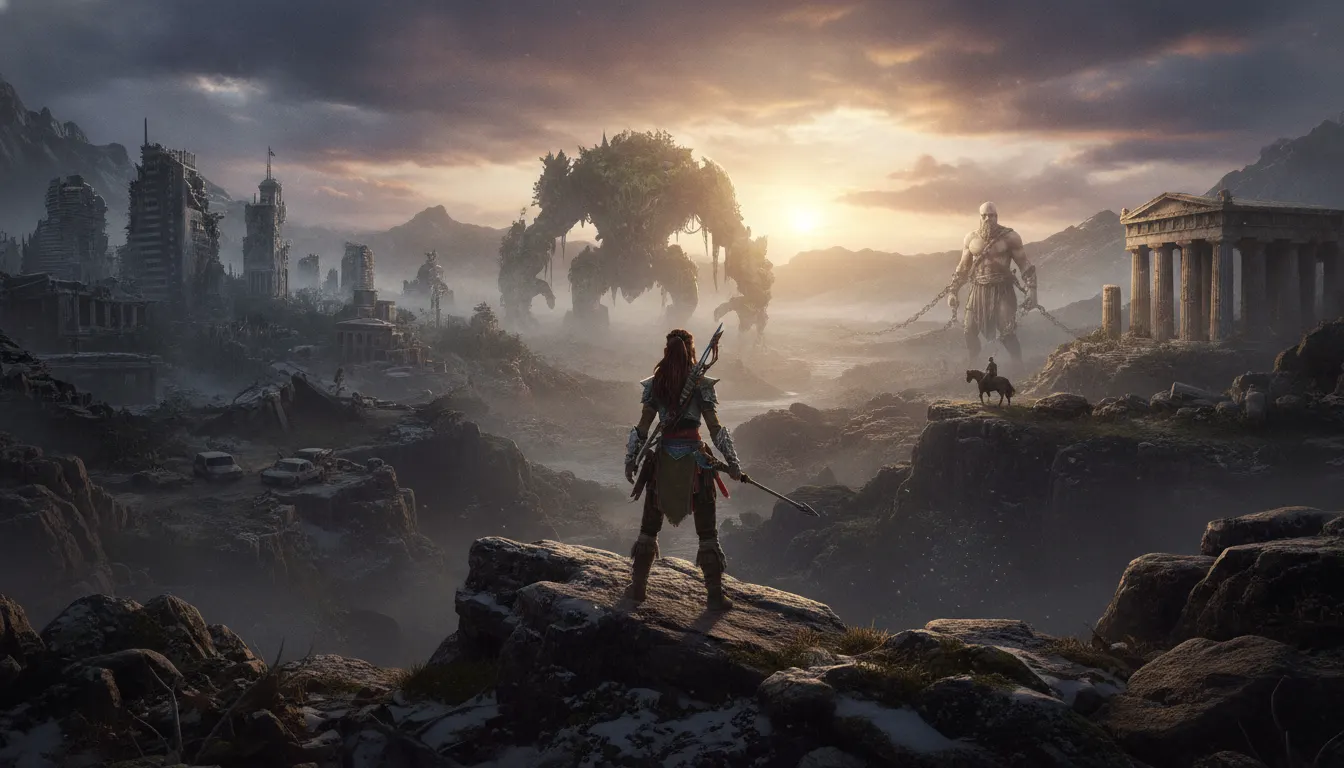
The PS4 era (2013-2020) defined a generation's understanding of "photorealistic" gaming. Titles from Sony's first-party studios - Naughty Dog's The Last of Us Part II (2020), Santa Monica Studio's God of War (2018), and Guerrilla Games' Horizon Zero Dawn (2017) - established a visual language built on physically-based rendering (PBR), dynamic global illumination, and aggressive depth of field during cutscenes.
The PS4 photoreal look sits at a specific tier of fidelity: not the ultra-sharp ray-traced clarity of PS5, but a lush, slightly soft-edged realism with pronounced chromatic aberration, screen-space ambient occlusion (SSAO), and heavy post-processing. Skin shaders captured subsurface scattering - light bleeding through fingertips and earlobes. Hair rendered as individual strand systems rather than flat polygons.
Cutscene direction borrowed heavily from prestige television and film: shallow focus, over-the-shoulder tracking shots, and performances captured via facial motion-capture with actors like Ashley Johnson (The Last of Us Part II) and Christopher Judge (God of War). The camera rarely cut; instead it held on faces through emotional beats.
PS4-era games favored desaturated cinematic grades with selective color pops - the grey-green wetlands of The Last of Us, the warm amber Norse forests of God of War. Post-processing stacked lens flare, film grain, and vignette to simulate camera imperfection rather than an omniscient eye.
The hardware ceiling (8GB GDDR5 shared memory, AMD GCN GPU) meant developers became master optimizers. Techniques like tiled rendering, texture streaming atlases, and baked ambient occlusion gave the era a specific look: high-resolution character models against slightly lower-resolution environments, a disparity invisible during play but visible in still frames.
This look shaped audience expectations of "AAA" quality across the 2010s, influencing streaming trailers, game cinematics, and product videos that wanted the feel of interactive prestige drama.
Naughty Dog, 2020 (benchmark PS4 fidelity, Joel and Ellie facial capture)
Santa Monica Studio, 2018 (single-shot camera, Kratos and Atreus performance capture)
Guerrilla Games, 2017 (open-world PBR landscapes, Aloy skin shaders)
Insomniac Games, 2018 (Manhattan photoreal traversal)
Quantic Dream, 2018 (David Cage cinematic ultra-realism)
Naughty Dog, 2016 (jungle rendering, cloth simulation)
Kojima Productions, 2019 (Norman Reedus face scan, Icelandic landscapes)
A Look is not a filter. It is a set of stored decisions the pipeline reads before it makes a single frame, so two videos in the same Look actually match.