Andy Warhol
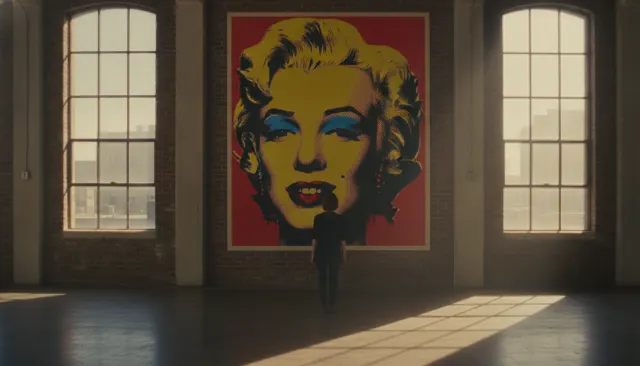
*Marilyn Monroe* diptych (1962, Tate Modern London)
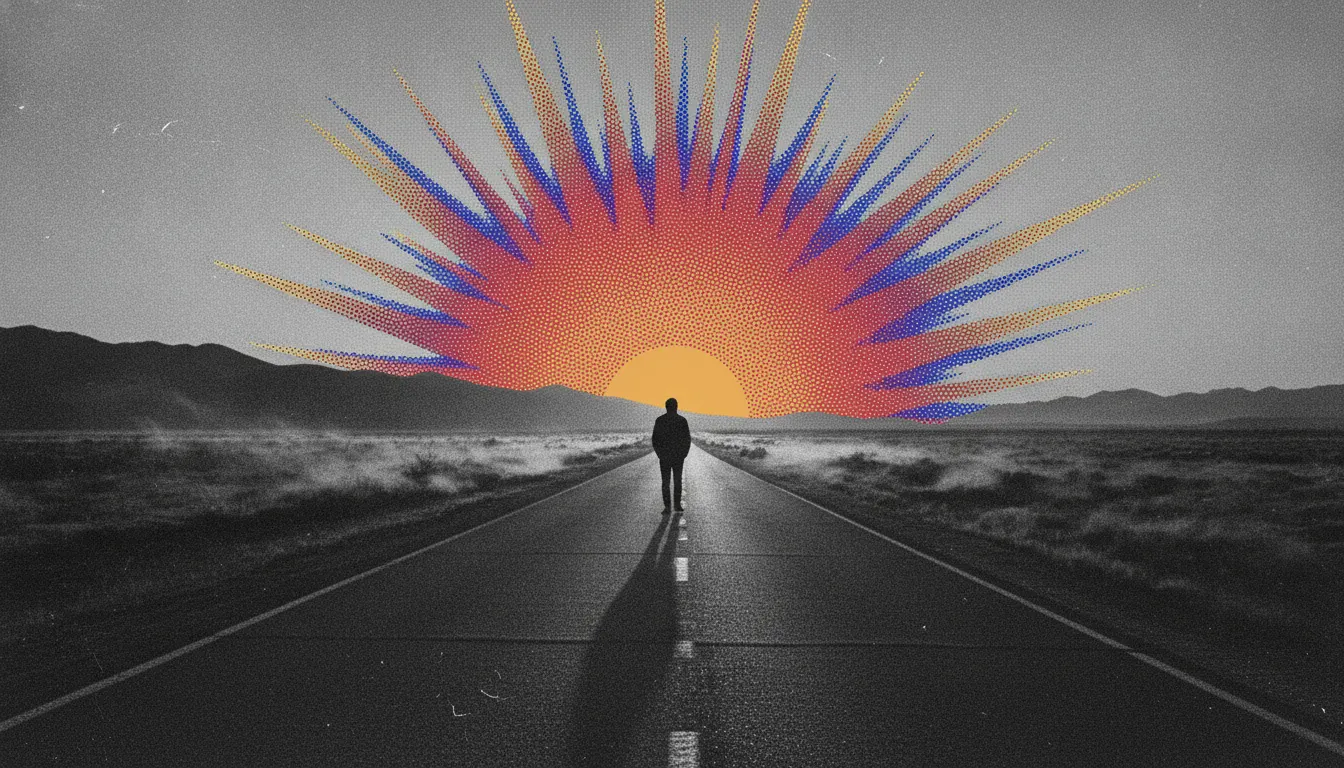
Screen-printed poster layered over photograph base. Bold flat color halftone graphic printed atop documentary photo, gig-poster meets photojournalism, mixed-process hybrid.
The moves a human crew would use to get here. Cue applies them for you, and knowing their names is how you ask for a change.
5 flat color layers, each applied with screen-print opacity
1–3 pixel offset creating chromatic fringing
photographic shadows simplified to solid black or single dark color
screen-print colors do not blend at edges, they abut
red over blue becomes dark purple-red
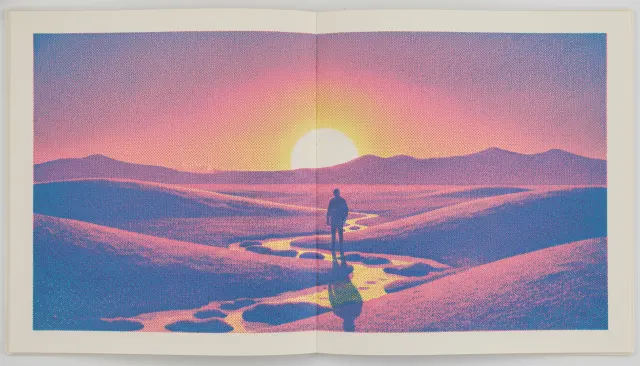
Screen printing on photo combines the photographic register of a real image with the graphic simplification of screen-printing: the halftone separation into distinct color layers, the slight misregistration between layers, and the flat, opaque ink character that gives screen prints their poster-like directness. The photo provides the reference reality; the screen-print treatment asserts artistic interpretation.
Andy Warhol's breakthrough with silkscreen photographic printing came in 1962. His Campbell's Soup Cans used photo-stencil silkscreen commercially; his Marilyn Monroe diptych (1962, Tate Modern) applied the technique to celebrity portraiture, using a promotional photograph of Monroe and printing it in multiple color variations across 50 panels. The photographic source is present but transformed by flat synthetic color, misregistration, and the mechanical repetition that questions the uniqueness of the celebrity image. Warhol continued the approach across Elvis (1963), Mao (1972), and the Death and Disaster series.
Robert Rauschenberg's Combine paintings from the same period also incorporated photo-silkscreen transfer; the techniques converged in the New York Pop Art scene around Leo Castelli's gallery (from 1958).
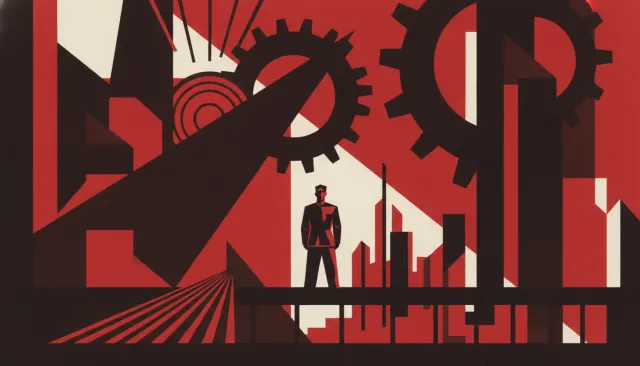
Shepard Fairey's Hope poster (2008, Barack Obama presidential campaign) was the most widely reproduced screen-print-derived political image of the 21st century. Fairey based it on an AP press photograph by Mannie Garcia (the subsequent copyright dispute reached federal court in 2011), converting it to a flat three-color screen-print aesthetic in red, cream, and blue with the word HOPE below. The poster's visual grammar drew on Constructivist political poster traditions (Rodchenko, Klutsis, 1920s) and Cold War propaganda imagery filtered through Fairey's streetwear-influenced OBEY Giant project (begun 1989, Andre the Giant stencil).
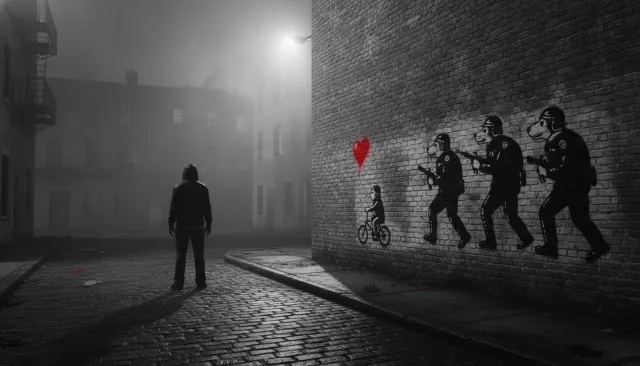
Banksy's stencil work on walls since the late 1990s applies screen-print visual logic to architectural surfaces – each work is a photographic-scale image reduced to one or two flat color stencil layers.
Warhol's production method at The Factory (231 East 47th Street, 1963–1968) made the screen-printing process explicitly collaborative and industrial. Assistants (including Gerard Malanga and Billy Linich) prepared screens and pulled squeegees; Warhol directed color choices and approved prints. The factory production methodology – treating artistic output as a production workflow rather than individual expression – was itself a comment on the photographic source material: both the celebrity photograph and the silkscreen multiple were products of systems, not individual genius. This conceptual layer is available to contemporary designers who deploy the screen-print-on-photo aesthetic thoughtfully: the technique embeds a critique of the unique photographic moment within its own visual language.
*Marilyn Monroe* diptych (1962, Tate Modern London)
*Campbell's Soup Cans* screen print series (1962, MOMA New York)
*Hope* Barack Obama poster (2008, stencil-derived screen print)
photo-silkscreen Combine paintings (1962–1965, Leo Castelli Gallery)
San Francisco psychedelic concert posters (1966–1967, Neon Rose series)
Black Panther Party newspaper graphics (1967–1980, screen-print aesthetic)
*Girl with Balloon* and street stencil works (1990s–present)
A Look is not a filter. It is a set of stored decisions the pipeline reads before it makes a single frame, so two videos in the same Look actually match.