DKNG Studios
concert poster series for major venue tours (2000s–present)
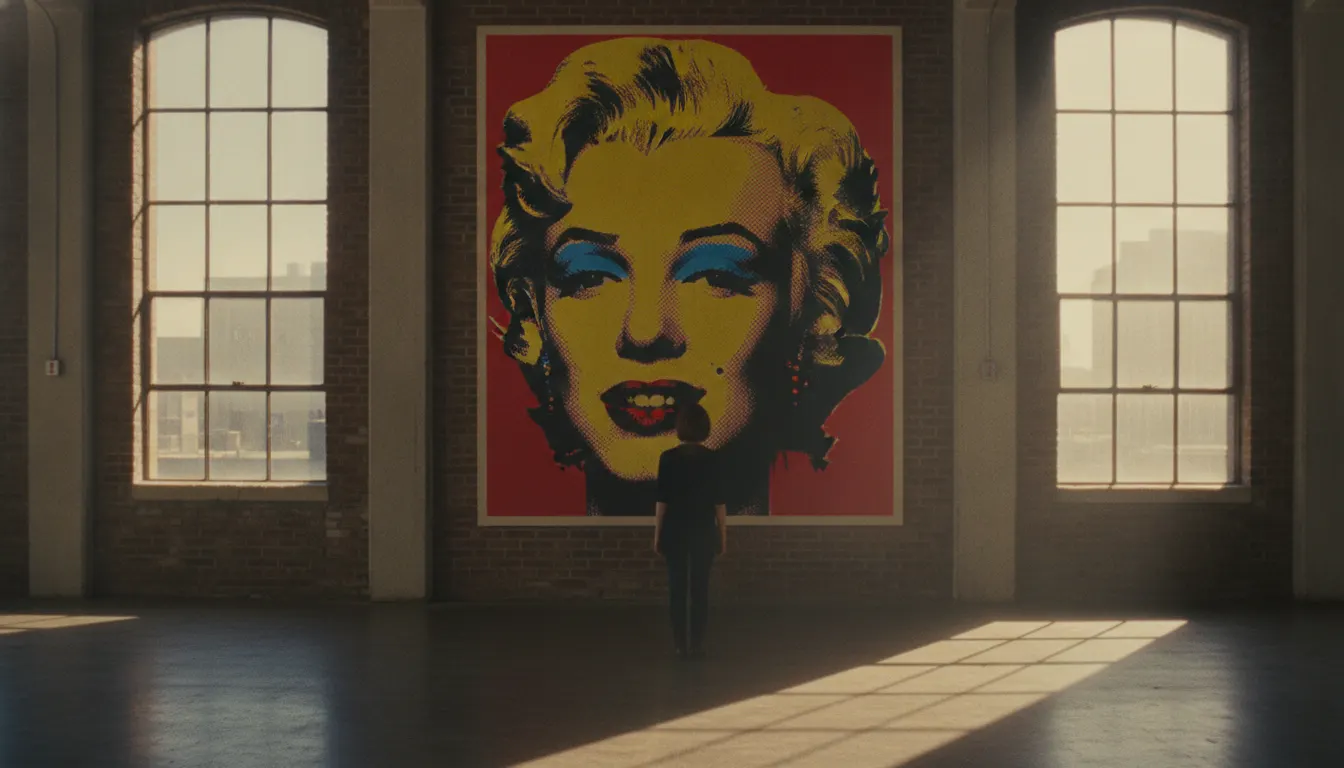
Warhol-style screenprint poster mixing flat saturated ink fields with retained photographic halftone face detail. Marilyn poster lineage, four-color silkscreen registration, pop-art portrait.
The moves a human crew would use to get here. Cue applies them for you, and knowing their names is how you ask for a change.
one zone at full photo resolution surrounded by flat color areas
color zones, not a gradual transition
4 flat Pantone-like colors matching the photographic palette
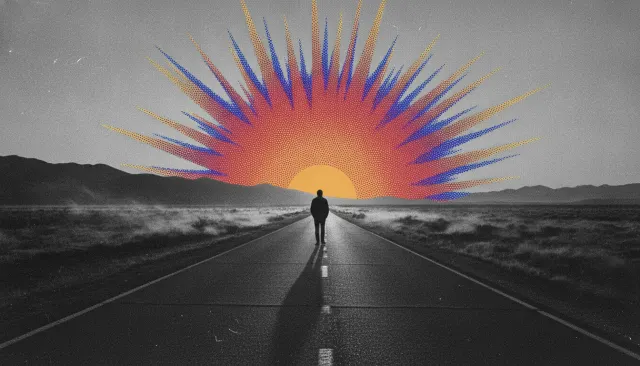
The screenprint poster with photo detail is a hybrid approach: the majority of the image is reduced to the flat, color-separated logic of screen printing, but specific areas – a face, a product, a key object – are preserved at full photographic resolution and tonal range. The contrast between the graphic areas and the photographic windows creates hierarchy and focal tension. The detailed area demands sustained attention precisely because everything around it is simplified.
Where the straight screen-print-on-photo look applies graphic simplification uniformly, this hybrid maintains selective photographic fidelity. It shares conceptual DNA with Gerhard Richter's Photo Paintings – where painted blurring attacks the photo except at focal points – and with commercial lithography that historically combined drawn illustration with halftone photographic insets (particularly in 1920s–1950s advertising and editorial).
The poster tradition with photographic insets is documented in the work of Jan Tschichold, whose New Typography (1928) explicitly theorized the integration of halftone photographs into graphic typographic layouts. International Style Swiss design of the 1950s and 1960s (Armin Hofmann, Josef Müller-Brockmann) refined the relationship between photography and flat graphic elements on the same surface.
Contemporary designers working in this mode include Aaron Draplin (DDC journal covers, 2000s–present), who places photographic spot elements inside flat graphic compositions. Concert poster designers in the gig poster revival (2000s–present, facilitated by letterpress/screen-print studios like DKNG, Stout, and Aesthetic Apparatus) regularly combine halftone photographic elements with flat areas and custom typography.
In video and motion design, the selective-detail approach is used in freeze-frame motion sequences where one area continues at full video fidelity while the surroundings simplify to flat color holds – a technique associated with Edgar Wright's editing style and certain genre film trailers from the mid-2010s onward.
The fundamental design principle of this hybrid is that simplification serves emphasis. When everything is equally detailed, nothing demands priority. By rendering background and context in flat graphic terms while preserving photographic precision on the subject, the designer creates a hierarchy impossible to achieve through conventional photographic composition alone. This principle was understood by commercial illustrators long before screen printing: Norman Rockwell's Saturday Evening Post covers (1916–1963) frequently placed photorealistic figures against flat painted backgrounds, using the same contrast principle.
The contemporary digital implementation uses masking to define the photographic zone precisely, threshold adjustments to convert photographic surrounding areas to flat tones, and careful color matching to ensure the flat graphic colors derive from the photographic palette – maintaining overall image unity despite the radical difference in rendering style between zones.
concert poster series for major venue tours (2000s–present)
*DDC* journal cover designs combining flat graphics with photographic insets (2000s–present)
screen-print poster studio, flat-graphic-with-photo-window approach (Minneapolis, 2000s–present)
*Die neue Typographie* (1928, theorizing photo-halftone in graphic layout)
Swiss International Style grid posters (1958–1978)
halftone photo-within-psychedelic-graphic concert posters (San Francisco, 1967)
1966
*Dylan* poster with flat graphic plus photographic source silhouette
A Look is not a filter. It is a set of stored decisions the pipeline reads before it makes a single frame, so two videos in the same Look actually match.