Beat the Whites with the Red Wedge
El Lissitzky · 1919
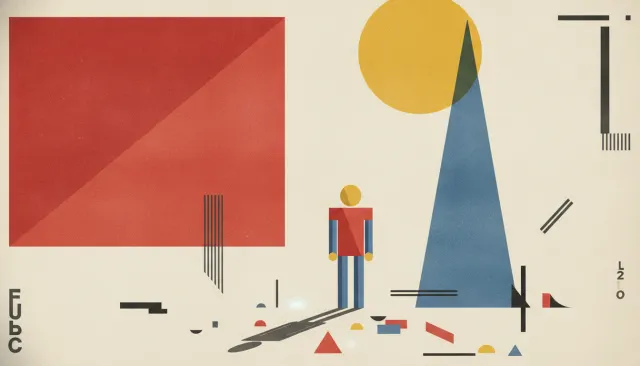
Red triangle entering white circle - the movement's single most iconic image
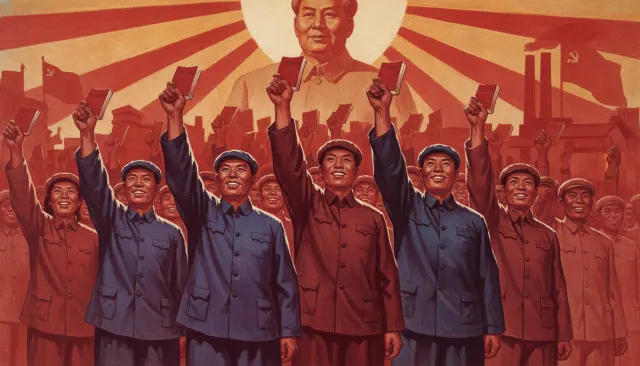
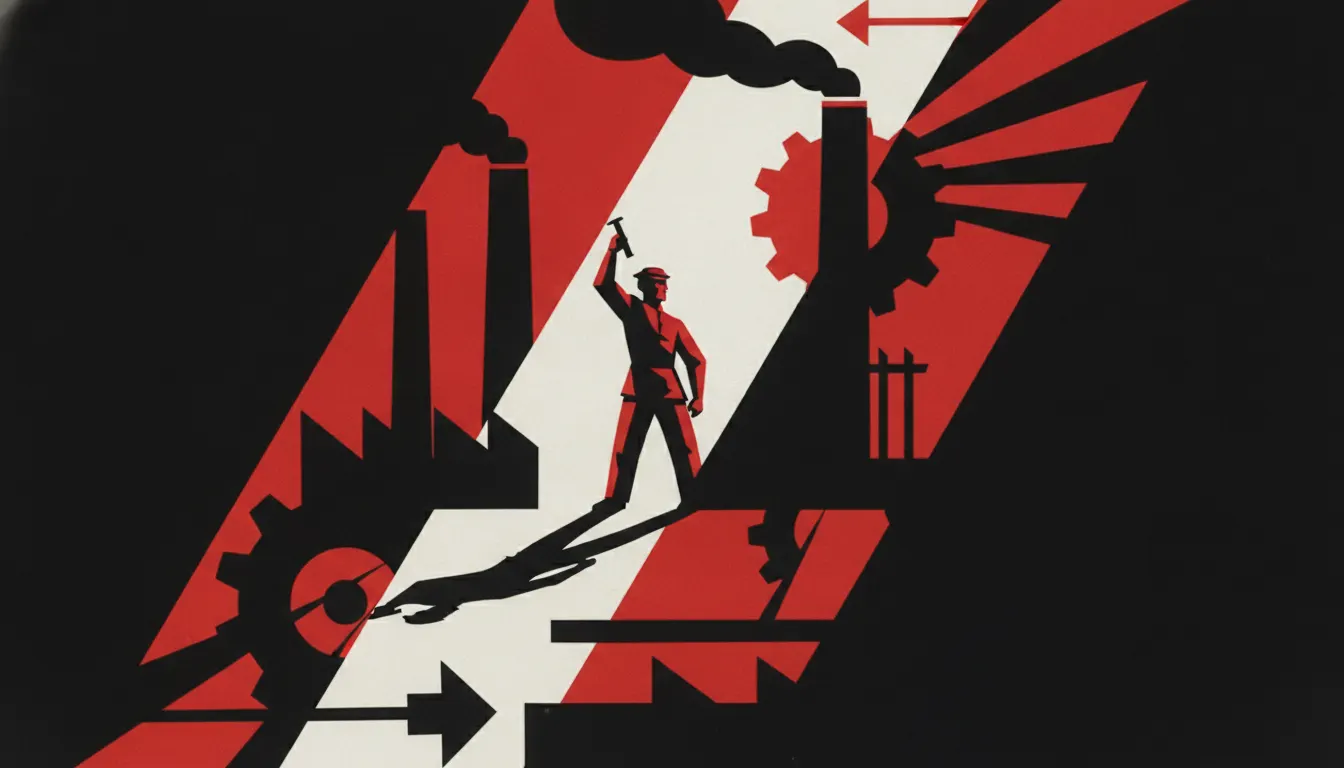
Russian Constructivist propaganda. Rodchenko and El Lissitzky diagonals, photomontage, red-and-black, Cyrillic block type, revolutionary geometry.
The moves a human crew would use to get here. Cue applies them for you, and knowing their names is how you ask for a change.
Almost exclusive use of revolutionary red, black, and paper white; yellow or ochre appears occasionally as a secondary accent.
Key visual elements set on diagonals to imply movement, force, and historical momentum rather than static stability.
Type set in bold condensed grotesques, often at 45 degrees, functioning as visual form as much as linguistic content.
Cropped high-contrast photographs combined with geometric shapes and type; Rodchenko's Lengiz technique.
Triangles, circles, and bars function as agents of meaning - El Lissitzky's red wedge is both form and revolutionary force.
No curves, flourishes, or decorative borders; every element is functional, every form carries meaning.
Russian Constructivism produced the most formally innovative propaganda art in history, and the years between the October Revolution (1917) and Stalin's consolidation of Socialist Realism as state doctrine (1934) represent one of the most compressed explosions of graphic invention in any medium. The designers of this period were not primarily commercial artists adapting to a political client; they were avant-garde artists who believed that the transformation of visual culture was inseparable from the transformation of society.
El Lissitzky (1890-1941) created the defining image of the movement in 1919: Beat the Whites with the Red Wedge (Klinom Krasnym Bei Belykh). A red triangle drives into a white circle on a white ground, the composition simultaneously abstract and violently clear as propaganda. Lissitzky called this approach Proun - short for 'Project for the Affirmation of the New' - and the visual language of geometric forms in dynamic tension became the template for Soviet graphic production for the following decade. His 1920s exhibition designs for the USSR pavilions at European trade fairs extended this language into three-dimensional space.
Aleksandr Rodchenko (1891-1956) brought photography into the Constructivist framework, producing the Lengiz book-cover series (1925) in which Lilya Brik's face is photographed and combined with bold sans-serif type in primary colors. The Lengiz poster with Brik shouting 'Knigi!' ('Books!') became the single most reproduced image of Constructivist photomontage. Rodchenko also designed covers for the magazine LEF (Left Front of the Arts, 1923-1925), which documented the movement's theoretical positions.
Varvara Stepanova (1894-1958) and Alexander Vesnin developed Constructivist principles in textile and exhibition design, respectively, extending the formal vocabulary beyond the poster.
Gustav Klutsis (1895-1938) pioneered photomontage propaganda posters from the mid-1920s onward, combining photographs of Lenin and Stalin with geometric compositions in red and black. He was later arrested and executed during the Great Purge in 1938.
Constructivist graphic design rests on a small set of repeated principles: the diagonal composition that implies movement and dynamism; the limited primary palette of red, black, and white with occasional yellow; bold geometric sans-serif type often set on diagonals; photomontage combining cropped photographs with geometric elements; and the complete rejection of decorative ornament in favor of functional visual logic. The grid is present but used as a dynamic framework rather than a static alignment tool.
Constructivism's political context was inseparable from its aesthetic. The designers worked for ROSTA (the Russian Telegraph Agency) producing window posters, for state publishing houses producing book covers and magazines, and for Agitprop trains that carried revolutionary graphics across the vast Soviet territory. The aesthetic was simultaneously utopian and functional, art as mass communication at a moment when a largely illiterate population was being addressed politically for the first time.
El Lissitzky · 1919
Red triangle entering white circle - the movement's single most iconic image
Aleksandr Rodchenko · 1925
Photomontage of Lilya Brik shouting 'Knigi!' - defining example of Constructivist photo-typography
Aleksandr Rodchenko · 1923-1925
Left Front of the Arts magazine covers that documented and embodied Constructivist graphic theory
El Lissitzky · 1919-1924
Geometric abstract compositions that theorized the visual language used in propaganda applications
Gustav Klutsis · 1927-1931
Photomontage propaganda posters combining photography with primary-color geometric compositions
Various, including Mayakovsky · 1919-1921
Hand-painted propaganda posters displayed in shop windows across Russia during the Civil War period
A Look is not a filter. It is a set of stored decisions the pipeline reads before it makes a single frame, so two videos in the same Look actually match.