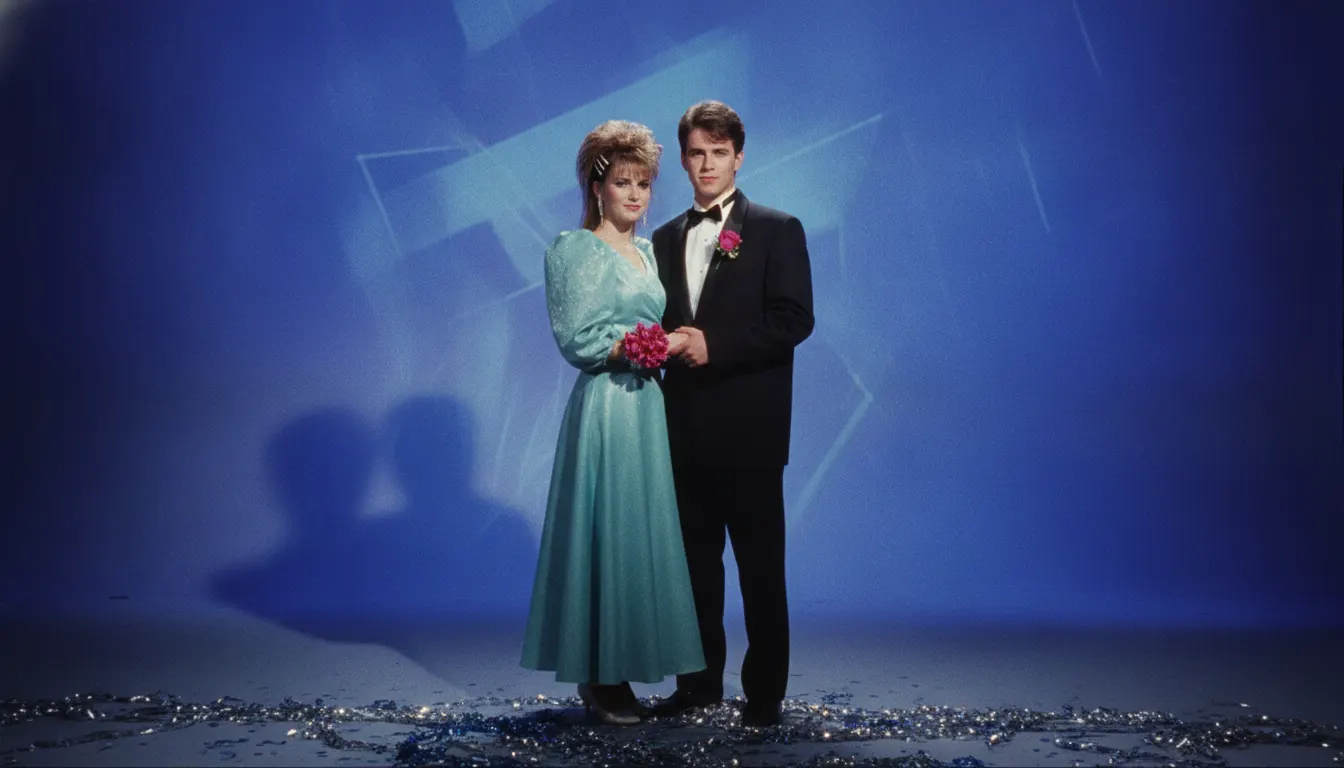
FAMILY EVENT CASUAL · 1980S · USA
Prom Glamour Shot 1980s
1980s high-school prom portrait. Laser-blue gradient backdrop, taffeta sleeves, mullet and Aqua-Net hair, corsage and boutonniere, awkward couple pose.
promeightiesglamourawkward-couple
LUT prom-1980s-gradient
WHEN TO USE
- Nostalgia content explicitly referencing 1980s or early 1990s American popular culture
- Prom season social content, yearbook, or retrospective portrait content invoking the era
- Comedic or satirical content deploying the glamour shot as camp cultural reference
- Costume party or themed event photography where period accuracy is part of the value
- Brand content targeting Gen X or older millennials with specific nostalgia for mall culture
WHEN NOT TO USE
- Contemporary portrait photography for clients wanting flattering, modern results
- High-fashion editorial where the deliberate softness and dated aesthetics undermine editorial positioning
- Journalistic or documentary content where the theatrical presentation conflicts with credibility
- Brand content for premium or luxury products where the mall-studio association conflicts with positioning
- Content for audiences younger than approximately 30 who have no personal nostalgia for the format
SIGNATURE TECHNIQUES
How the look is made.
The moves a human crew would use to get here. Cue applies them for you, and knowing their names is how you ask for a change.
- 01Extreme soft
focus diffusion: Cokin Diffuser filter, stretched stocking over lens, or Vaseline on UV filter creating full-frame glow
- 02Wraparound umbrella or large softbox lighting from front eliminating all facial shadows
- 03Starburst rim light in hair creating highlight sparkle from behind
- 04Hand
painted graduated backdrop: sky blue, lavender, or draped fabric in jewel tones
- 05Vigorous use of makeup
heavy foundation, contouring, frosted eyeshadow, large mascara
- 06Period
specific hair: high volume, curled, or blown out - reflecting 1980s convention
- 07Props
feather boa, off-the-shoulder gown, corsage, formal wear, class-year graphic
HISTORY & CONTEXT
Where it comes from.
Prom Glamour Shot 1980s
The 1980s portrait studio glamour shot occupies a unique position in American photographic history: it was the dominant commercial portrait genre of its decade, produced in the tens of millions across mall studios, prom night photographers, and high-street portrait franchises, and is now recognized as both a camp cultural artifact and a genuine reflection of aspirational feminine beauty ideals of the Reagan era.
The Glamour Shot Mall Studio
Glamour Shots, the franchise studio chain founded in Oklahoma City in 1988, was the industrialized apex of this aesthetic. At peak operation in the early 1990s they operated over 400 locations in shopping malls across the United States, offering hair, makeup, costume, and photography packages that transformed everyday women into their most glamorous selves for a two-hour session. The resulting photographs - distributed in multiple soft-focus formats including buttons, keychains, and poster prints - were the era's dominant personal portrait format.
Visual Characteristics
The 1980s glamour shot has an immediately recognizable signature: heavy soft-focus diffusion (achieved with Cokin Diffuser filters, stretched stockings, or Vaseline-smeared glass) that creates a glowing halo effect around the subject. Lighting is typically large front-fill with wraparound umbrellas or softboxes that eliminate shadows entirely. Backgrounds are hand-painted: graduated sky-blues, soft lavenders, warm ambers, and - for prom photography - formal draped fabric in burgundy, navy, or forest green. Hair is large, often with highlights catching starburst sparkle from a rim light. Formal wear, tuxedos, feather boas, and off-the-shoulder gowns are standard.
Prom Photography Specifically
High school prom photography added the ritual context of the school gymnasium or hotel ballroom setting, the corsage, the couple pose (taller male behind, female in front and slightly turned), and the class-year graphic overlay that dated the image precisely. Studio photographers working prom nights typically shot 200-300 couples per evening on assembly-line systems.
Cultural Legacy
The look now circulates as nostalgia, camp, and occasionally irony, with artists including Cindy Sherman invoking glamour shot conventions in her 1990s centerfold and fashion plate series.
NOTABLE WORKS
Where you have seen it.
Cindy Sherman, Untitled Film Stills and Centerfolds series (glamour conventions referenced), 1977-1981
High school yearbook photography documentation, nationwide, 1978-1995
People magazine 'glamour shots then and now' features, multiple years
Olan Mills portrait studio catalog photography, 1970s-1990s
THE RECIPE
The exact knobs
the renderer turns.
A Look is not a filter. It is a set of stored decisions the pipeline reads before it makes a single frame, so two videos in the same Look actually match.
SettingValue
GradeColour LUT applied to every frame
prom-1980s-gradientTransitionHow one shot becomes the next
dissolve cuts · 360ms · ease-in-outKen BurnsCamera move applied to stills
Slow push · 0.022 · centerTypographyDisplay / body / mono pairing
Cooper Hewitt · Inter · CourierMusic moodWhat the bed under the voice sounds like
power-ballad-80s · synth-pop-promPrompt suffixAppended to every shot prompt in this Look
1980s prom portrait, laser blue gradient backdrop, taffeta sleeves mullet Aqua Net hair, corsage boutonniere awkward couple posePALETTE
Primary
#1F6FB8
Secondary
#E8A8C8
Accent
#7AC95C
Text/Light
#0A1A2E
Text/Dark
#FBE0EC
BG 900
#0A1A2E
BG 800
#142A4A
RELATED LOOKS
Next to it on the shelf.

Your first cut
is on us.
+ New videoFree plan · no card · 1080p export