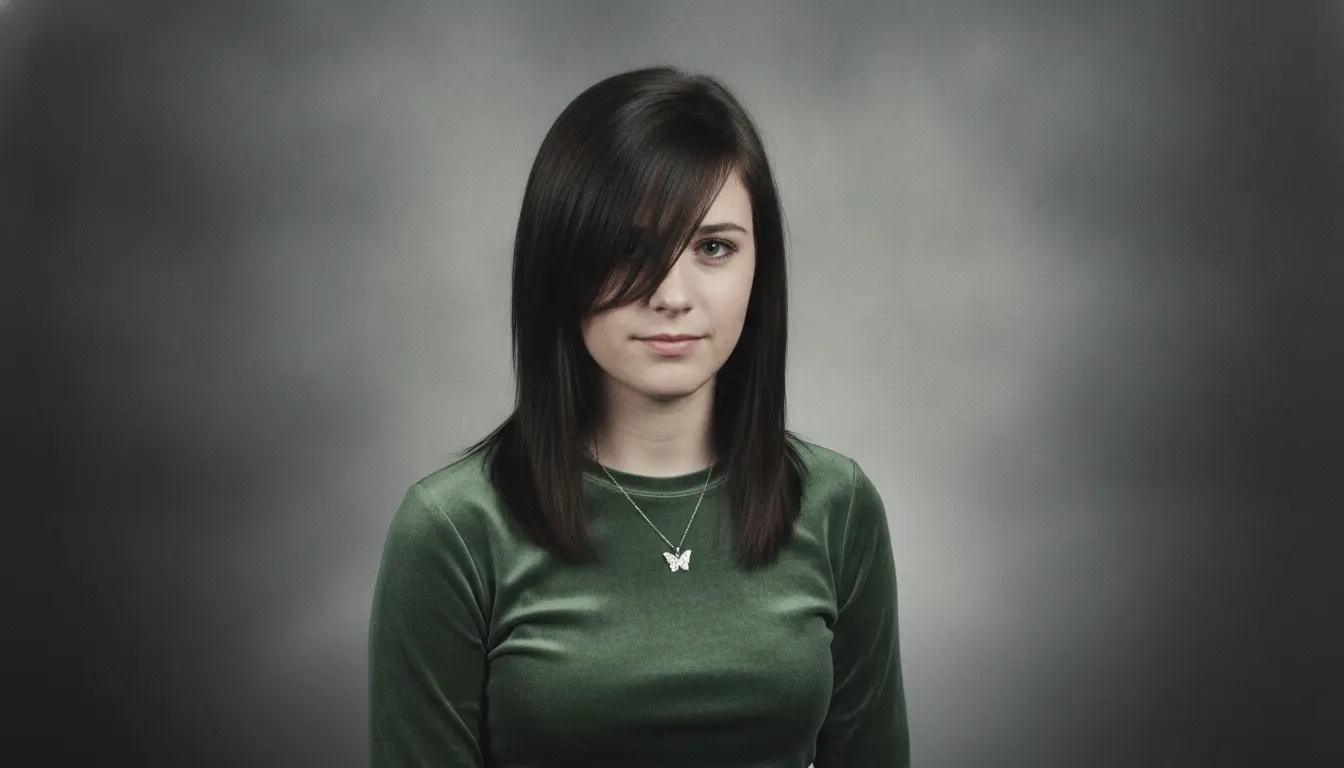
FAMILY EVENT CASUAL · 2000S · USA
School Yearbook 2000s
2000s American school-yearbook portrait. Sears-Portrait-Studio gradient gray backdrop, butterfly-key softbox, awkward smile, side-bang flat-iron hair.
yearbooksearsgradientawkward
LUT yearbook-2000s-gradient
WHEN TO USE
- Nostalgia content targeting millennials who attended high school between approximately 1995 and 2010
- Back-to-school brand campaigns or educational content invoking the school portrait tradition
- Satirical or comedic content about teenage experience, social class, or American educational culture
- Retro aesthetic content deliberately recreating the specific visual culture of the 2000s
- Corporate team or event photography where a yearbook-page grid format is used as a playful framing device
WHEN NOT TO USE
- Contemporary portrait sessions where clients expect flattering, technically polished results
- High-fashion or editorial photography where the mass-market production aesthetic conflicts
- Content for audiences outside North America where the yearbook tradition has no cultural resonance
- Fine art photography contexts where the commercial production association undermines artistic intent
- Brand content for premium or luxury products where the middle-market school-portrait association conflicts
SIGNATURE TECHNIQUES
How the look is made.
The moves a human crew would use to get here. Cue applies them for you, and knowing their names is how you ask for a change.
- 01Painted muslin backdrop
sky-blue graduated or marbled grey-blue, one of approximately 40 standard options
- 02Large frontal lighting
umbrella or softbox from slightly above, providing even flat illumination
- 03Three
quarter turn pose: shoulders angled 30-45 degrees from camera, face turned back toward lens
- 04Subtle soft
focus filtration: present but more restrained than 1980s glamour convention
- 05Cool
to-neutral color grading: slight blue cast in shadows, clean neutral mids
- 06Fixed camera position and focal length (approximately 85mm equivalent) for consistent framing across subjects
- 07Slight head tilt
camera-side shoulder slightly dropped, creating diagonal energy in the composition
HISTORY & CONTEXT
Where it comes from.
School Yearbook 2000s
The American high school yearbook portrait of the 2000s is among the most extensively produced portrait formats in photographic history. Companies including Lifetouch (founded 1936, acquired by Shutterfly in 2018), Prestige Portraits (a Lifetouch division), and Jostens operated mobile portrait studios that visited tens of thousands of schools annually, photographing each student in a standardized format for the yearbook page and for family portrait packages.
The Production System
Portrait day was a structured assembly-line operation. Photographers arrived at schools with backdrop stands, portable lighting rigs, and camera systems connected to immediate review screens. Each student had approximately 90 seconds: sit, face forward, face slightly to the right, tilt, three-quarter turn, look here - done. Multiple packages (small prints, composite sheets, wallet-size) were sold to families through pre-order and post-shoot catalog. At peak, Lifetouch photographed approximately 30 million students per year in the United States alone.
Visual Characteristics
The 2000s yearbook portrait differs from the 1980s glamour shot primarily in its reduced diffusion and more neutral color grading. Backgrounds are painted muslin in sky-blue graduated patterns, marbled grey-blue, or abstract landscape motifs ('Autumn Leaves,' 'Lakeside,' 'Sunset') - the Lifetouch catalog offered approximately 40 background options. Lighting is large and frontal with minimal shadow, creating even facial illumination appropriate for reproduction in the yearbook's often low-quality offset printing. Soft-focus filtration is present but subtler than the 1980s, and by the mid-2000s some packages offered 'natural' (unfiltered) options. Color is cool-to-neutral with slightly blued skin tones in the mass-market version.
Digital Transition
The 2000s represent the decade of digital transition in yearbook photography. Early 2000s sessions often still used film (Fuji Reala or Kodak Portra) while late 2000s sessions were fully digital with immediate LCD preview. The transition slightly changed the color characteristics: film versions have warmer, slightly grainier qualities while digital versions are cooler and technically cleaner.
Cultural Legacy
The yearbook portrait is a universal shared experience for American students of this era, creating strong nostalgia responses. Its conventions are now widely parodied and recreated as retro aesthetic content on TikTok and Instagram.
NOTABLE WORKS
Where you have seen it.
Prestige Portraits package options documentation, annually
Jostens yearbook photography guidelines, 2000-2010
The 'Bad Yearbook Photo' internet meme genre, 2010-present (documenting the format's cultural resonance)
Sears Portrait Studio school-adjacent portrait photography, 1980s-2010
THE RECIPE
The exact knobs
the renderer turns.
A Look is not a filter. It is a set of stored decisions the pipeline reads before it makes a single frame, so two videos in the same Look actually match.
SettingValue
GradeColour LUT applied to every frame
yearbook-2000s-gradientTransitionHow one shot becomes the next
hard cuts · 220ms · ease-in-outKen BurnsCamera move applied to stills
Static framesTypographyDisplay / body / mono pairing
Inter · Inter · CourierMusic moodWhat the bed under the voice sounds like
pop-punk-2000s · emo-acousticPrompt suffixAppended to every shot prompt in this Look
2000s American school yearbook portrait, Sears Portrait Studio gradient gray backdrop, butterfly key softbox, side bang flat iron hairPALETTE
Primary
#7A7060
Secondary
#5C5040
Accent
#C8302E
Text/Light
#1F1A14
Text/Dark
#F0E8DD
BG 900
#1A1410
BG 800
#2A2218
RELATED LOOKS
Next to it on the shelf.
Your first cut
is on us.
+ New videoFree plan · no card · 1080p export