Emulsion lift portrait series
Diane Varner · 1980s-1990s
Early pioneering work establishing emulsion lift as a fine art practice using Polaroid 669 film
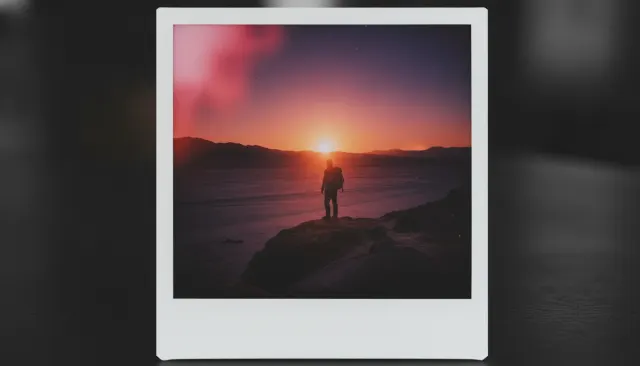
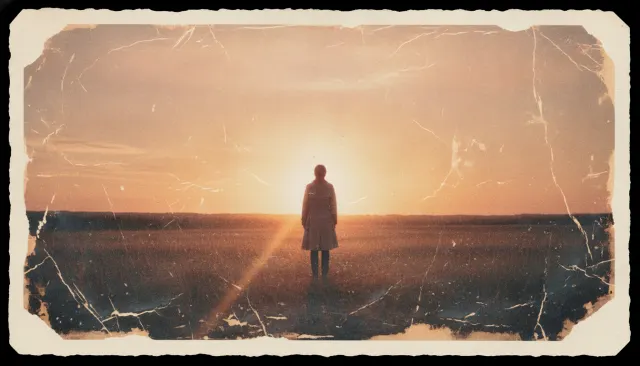
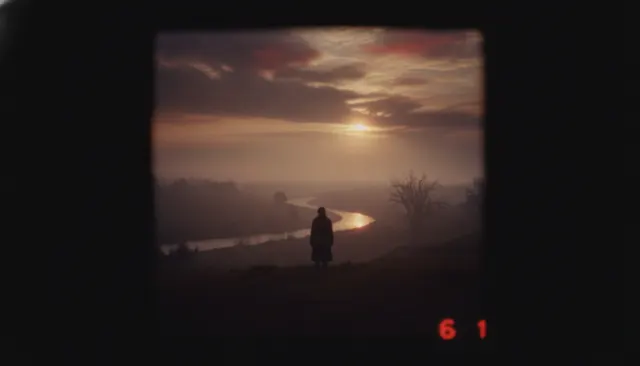
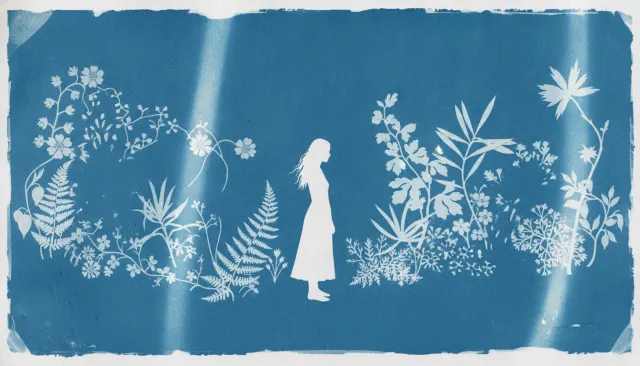
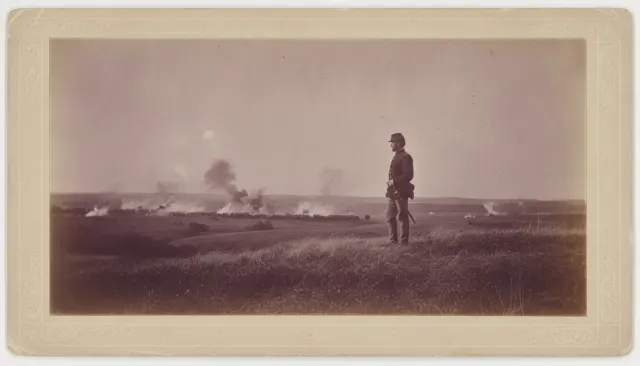
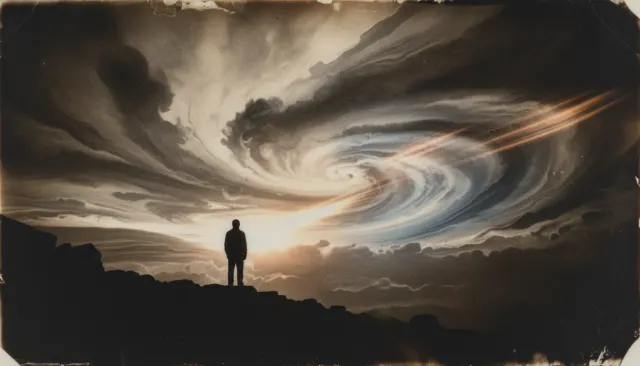
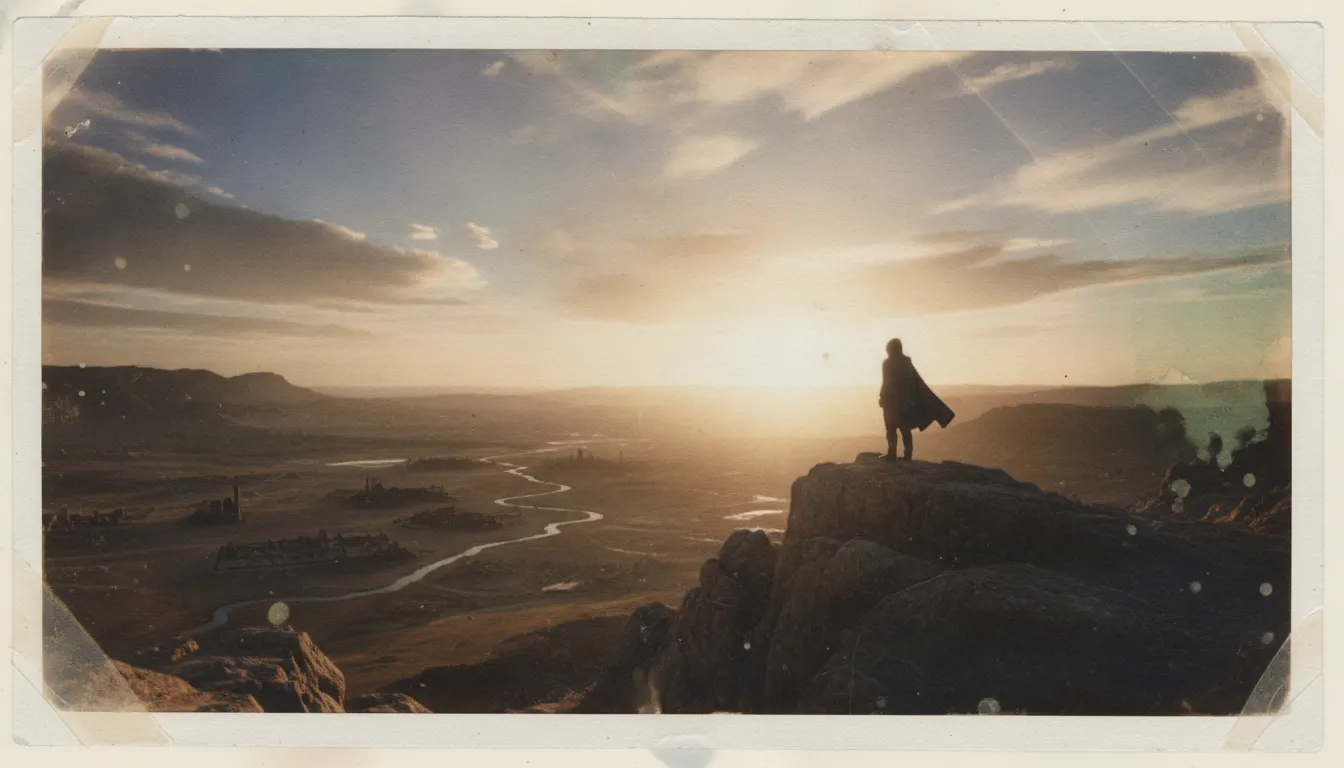
Polaroid emulsion lift transfer. Image floated off backing onto watercolor paper, wrinkled and torn edges, faded chemistry, hand-crafted decay.
The moves a human crew would use to get here. Cue applies them for you, and knowing their names is how you ask for a change.
The emulsion contracts asymmetrically as it dries, creating irregular ridges and troughs that catch light differently at different viewing angles.
Deliberate tearing at the emulsion edges creates ragged, organic borders that break the rectangular frame format.
Inherent color shift from the peel-apart chemistry when emulsion is separated from its backing, producing warm, slightly sickly tones unlike normal print color.
Sections of the ultra-thin emulsion folded over themselves during transfer, creating opaque double layers that obscure parts of the image.
The emulsion is thin enough to take on the texture of watercolor paper, wood grain, or fabric beneath it, integrating the image with its new surface.
Areas where the emulsion tore or failed to adhere during transfer, leaving holes through which the substrate shows, treated as compositional elements.
Developer chemistry that bleeds from the print edges into the transfer area, creating dark stains and fog that frame the image irregularly.
Polaroid emulsion lift is a darkroom technique that physically separates the image-bearing emulsion layer from its paper backing, then transfers it to a new substrate - watercolor paper, wood, glass, fabric, or skin. The transferred emulsion is paper-thin, elastic, and impossible to reattach precisely, so it wrinkles, tears, folds, and distorts in ways that make each transfer a unique artifact.
The technique was developed using Polaroid peel-apart pack films, specifically Polaroid 669 (3.25 x 4.25 inch, 100 ISO) and Polaroid 690 (3.25 x 4.25 inch, 80 ISO), both manufactured from the 1960s until production ceased in 2008. These films were used in Polaroid 100-series land cameras and professional pack-film backs for medium-format cameras including the Mamiya and Hasselblad.
To make an emulsion lift, the developed print is soaked in hot water (approximately 37-40°C) until the emulsion releases from the paper backing, typically two to five minutes depending on the film batch and water temperature. The floating emulsion sheet is then guided onto the new substrate while still submerged, lifted carefully, and allowed to dry - during which it contracts, wrinkles, and permanently bonds to its new surface.
Photographers including Diane Varner, Holly Roberts, and later Julia Fulton popularized the technique in the 1980s-1990s. Robert Hirsch's textbook Photographic Possibilities (1991) documented the process in detail and standardized it as a fine art practice.
The distressed variant specifically emphasizes damage, tearing, extreme wrinkling, and partial transfer - treating incompleteness as a compositional element rather than a failure. Artists deliberately tear the emulsion during transfer, fold it over itself, layer multiple emulsions, or leave sections of the backing paper exposed. The result reads as a photograph that has been through time, water, or physical trauma.
The color shift is inherent to the chemistry: peel-apart Polaroid emulsions produce warm, slightly desaturated tones with lifted shadow bases and yellow-green color casts that intensify when the emulsion is separated from its intended backing. These color characteristics cannot be reproduced by scanning and filtering a regular print.
Fujifilm FP-100C (discontinued 2016) was the last widely available peel-apart film that supported emulsion lift. The New55 project attempted to revive 4x5 peel-apart film. The Polaroid Lab (2019) allows digital images to be output to new Polaroid i-Type integral film, but integral film does not support the classical emulsion lift process. Contemporary practitioners work with stockpiled expired film or use digital emulsion transfer simulation via texture overlays and deformation filters.
Diane Varner · 1980s-1990s
Early pioneering work establishing emulsion lift as a fine art practice using Polaroid 669 film
Robert Hirsch · 1991
First comprehensive documentation of emulsion lift as a reproducible darkroom technique, standardizing the process for fine art photographers
Holly Roberts · 1990s
Emulsion transfers layered with oil paint on wood panels, treating the photographic emulsion as a drawing ground
Fujifilm · 2016
Last commercial peel-apart pack film production run, driving collectors and practitioners to stockpile material for continued practice
various / Polaroid Corp galleries · various 1990s-2000s
Touring exhibition of experimental Polaroid manipulation work that defined the aesthetic vocabulary for a generation
various / Flickr expired film community · 2010s-present
Online community documentation of emulsion lift using expired 669 and 690 stock, showing characteristic color degradation in aged emulsions
A Look is not a filter. It is a set of stored decisions the pipeline reads before it makes a single frame, so two videos in the same Look actually match.