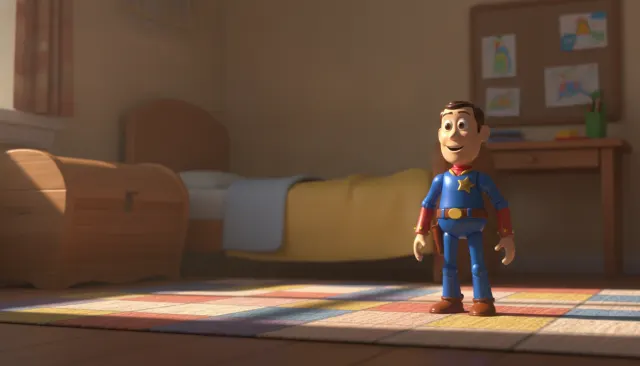
Toy Story
1995
Pixar Animation Studios; foundational plastic toy CG aesthetic
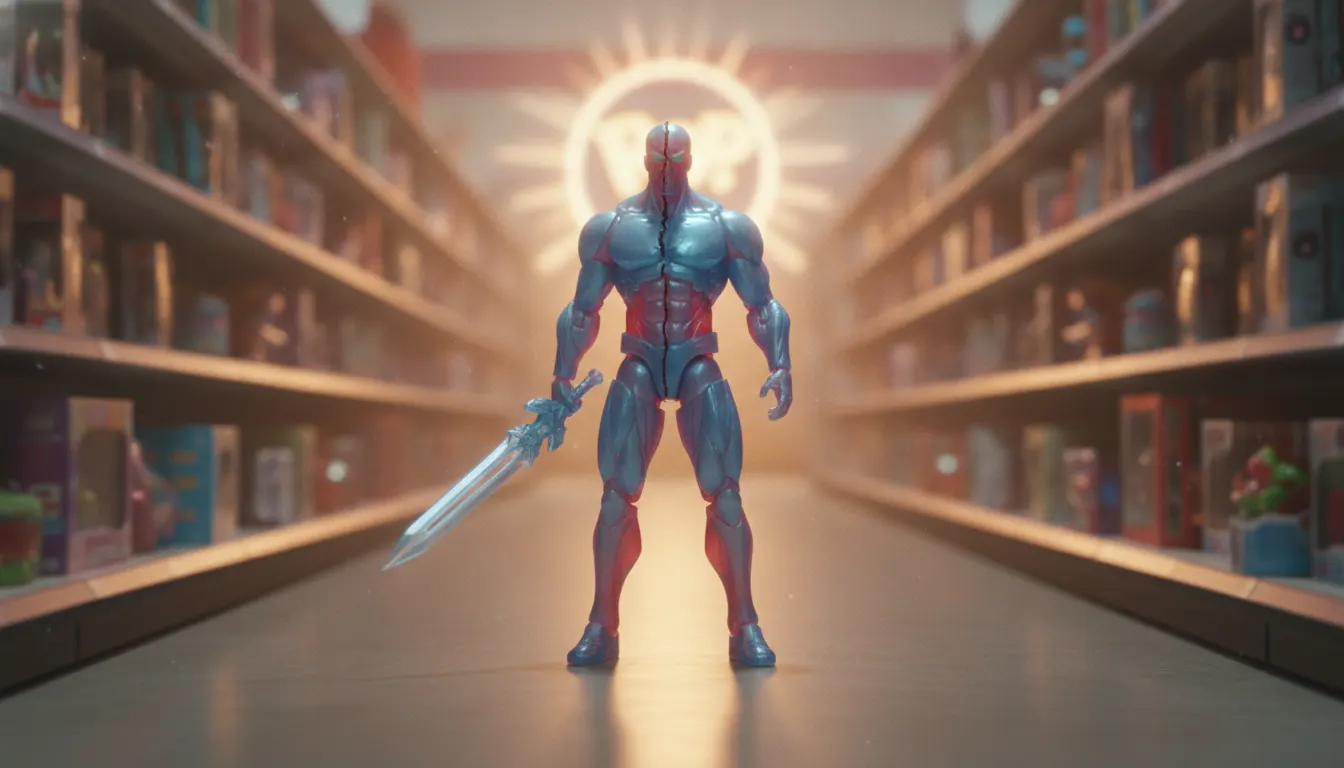
Plastic toy product 3D render. Glossy plastic material with seam-line visible, action-figure proportion, toy-aisle marketing pop.
The moves a human crew would use to get here. Cue applies them for you, and knowing their names is how you ask for a change.
gloss or semi-gloss injection-molded plastic
style matte contrast to glossy primaries)
range color fills with clean edges and no organic variation
joint areas simulating physical toy assembly clearances
The plastic toy render aesthetic systematizes the visual properties of mass-produced plastic toys into a distinctive 3D rendering approach. Unlike photorealistic or painterly CG, this look embraces hard specular reflection, clean manufactured geometry, visible seam lines, and the flat-color matte surfaces of injection-molded ABS and polypropylene that characterize consumer toy production.
Manufactured plastic toys have a specific visual language that combines machine precision with mass-production character. Surfaces are either high-gloss (action figures, die-cast vehicles) or matte-flat (LEGO, wooden toy approximations in plastic). Specular highlights are clean and hard, not the broad soft highlights of organic materials. Colors are saturated and primary-leaning - the result of injection-molded pigmentation rather than painted finishes.
Seam lines - where mold halves meet - are a signature of the aesthetic, visible as faint ridges on character limbs, vehicle bodies, and object surfaces. They carry a semantic content: this thing was made in a factory, not grown or hand-crafted. This quality simultaneously distances plastic toys from nature and anchors them in a familiar, trusted childhood materiality.
The toy aesthetic in 3D rendering was legitimized by Pixar's Toy Story (1995, John Lasseter), which made injection-molded plastic surfaces the default material for its primary characters. The look has since been developed in commercial advertising (toy product photography and animation), brand mascot design, and art direction for children's media.
LEGO's move into animation - The LEGO Movie (2014, Lord/Miller) and subsequent productions by Animal Logic - developed the plastic toy render into a full cinematic aesthetic. Every surface in the LEGO universe is injection-molded ABS plastic with the specific reflectance properties of that material, including fingerprint-smudge normal maps on stud surfaces and microscopic mold-injection-point geometry. The result is a world that looks simultaneously like a photograph of LEGO bricks and a computer-generated scene.
Plastic as a material carries specific cultural freight. In toy form, it signals childhood, play, and affordable ownership - the democratization of creative objects. The plastic toy render aesthetic activates this cultural memory: a brand using it signals accessibility, playfulness, and a refusal to take itself too seriously. This is why the aesthetic appears frequently in brand campaigns for technology companies that want to position themselves as approachable and innovative rather than corporate and formal. The deliberate choice of plastic surfaces communicates the same values as the deliberate choice of a sans-serif typeface: modern, clean, and unthreatening.
1995
Pixar Animation Studios; foundational plastic toy CG aesthetic
2014
Animal Logic/Lord Miller; ABS plastic material benchmark
2017
Animal Logic; extended LEGO plastic world
2019
Pixar Animation Studios; modern plastic surface rendering evolution
1998
DreamWorks/ILM; toy-scale character live-action integration
2019
ON Animation Studios; brand-specific plastic aesthetic
A Look is not a filter. It is a set of stored decisions the pipeline reads before it makes a single frame, so two videos in the same Look actually match.