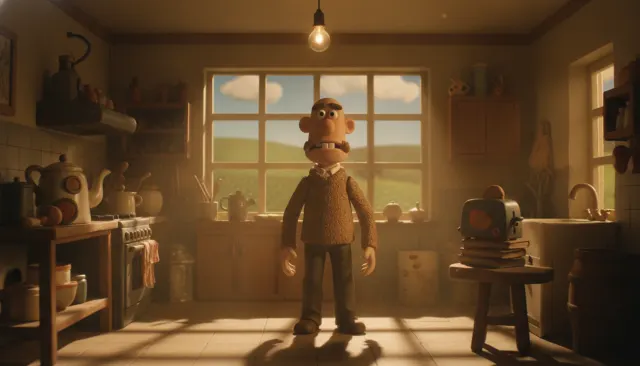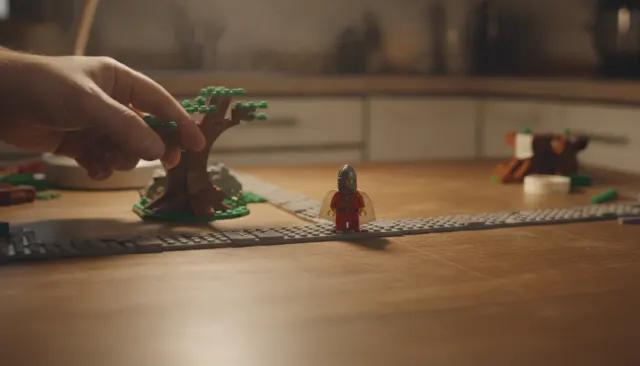
Paper Mario: The Origami King
2020
Nintendo; most literal papercraft game world
Papercraft folded-paper 3D render. Folded cardstock material, faceted polygonal shapes, craft-paper-texture surface, handmade origami feel.
The moves a human crew would use to get here. Cue applies them for you, and knowing their names is how you ask for a change.
on surface graphics rather than 3D material depth
inspired form vocabulary: triangulated faces, clean fold angles, geometric approximation of organic shapes
The papercraft 3D render aesthetic translates the physical constraints and visual character of paper folding, cardboard construction, and origami into digital geometry and lighting. The result is a visual language that feels simultaneously handmade and precisely engineered - the digital equivalent of a carefully constructed paper model.
The aesthetic is defined by flat faceted surfaces with hard edges, as though every form has been unfolded from a 2D sheet and refolded into three dimensions. Curves become approximated through multiple flat faces at angular increments. Materials read as white card, colored paper, or corrugated board, often with soft ambient shadows at fold lines that reveal construction logic. Textures, where they appear, are printed-on - surface graphics that respect the flatness of the substrate rather than simulating three-dimensional material depth.
The look gained visibility through Nintendo's The Legend of Zelda: The Wind Waker (2002) toon-shaded aesthetic (not strictly papercraft but related in flat surface philosophy), Paper Mario series (Nintendo, 2000-2021), LittleBigPlanet (Media Molecule, 2008), and a wave of motion design and advertising work in the 2010s that used physical paper models built for camera, later replicated digitally. Companies including Aardman, Buck Design, and various motion design studios developed papercraft digital aesthetics for television idents and advertising.
In commercial production, the papercraft render became a signature approach for brands wanting to signal craftsmanship, sustainability, and approachability: the visual metaphor of something hand-built from natural materials. Google Doodles, children's educational content, and retail holiday campaigns have used the aesthetic extensively. The constraint of flat surfaces and fold geometry creates an immediately legible visual system that works across scale - from a letterhead icon to a full animated environment.
Paper Mario: The Origami King (Nintendo, 2020) pushed the aesthetic to its most literal application: an entire game world constructed from paper, with enemy designs and environment elements that showed fold lines, creases, and paper grain as primary surface detail.
Media Molecule's Tearaway (2013, PS Vita) and Tearaway Unfolded (2015, PS4) represent the most fully realized integration of the papercraft aesthetic into an interactive experience. The game's protagonist is a letter delivered through a paper world, and the PS Vita's rear touchpad allowed players to push their fingers through the paper environment as a literal physical-digital interface. Every design decision extended the paper metaphor: clouds are cotton wool balls photographed from above, rocks are crumpled brown paper bags, and water is a reflective foil layer. The game received widespread design recognition as a demonstration that a single material constraint - paper - can unify an entire game's aesthetic, interaction design, and narrative metaphor simultaneously.
2020
Nintendo; most literal papercraft game world
2008
Media Molecule/Sony; mixed-material craft aesthetic
2013
Media Molecule/Sony; PS Vita papercraft world
2015
Good-Feel/Nintendo; related craft material aesthetic
2001
Intelligent Systems/Nintendo; series origin
2018
Nintendo; physical cardboard-to-game aesthetic extension
A Look is not a filter. It is a set of stored decisions the pipeline reads before it makes a single frame, so two videos in the same Look actually match.