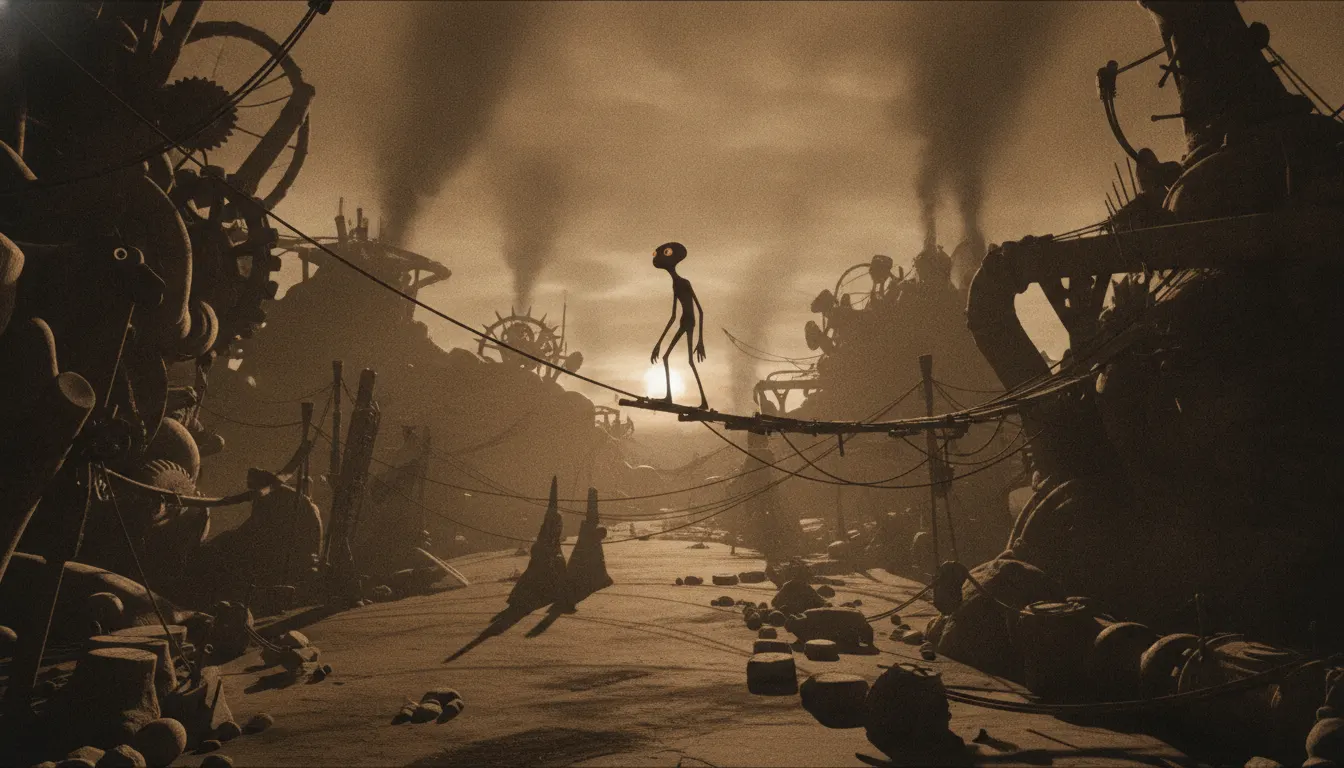
Oddworld: Abe's Oddysee
1997
Oddworld Inhabitants, Lorne Lanning; series debut
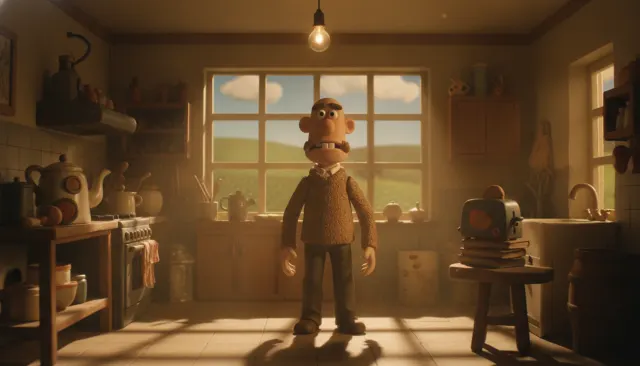
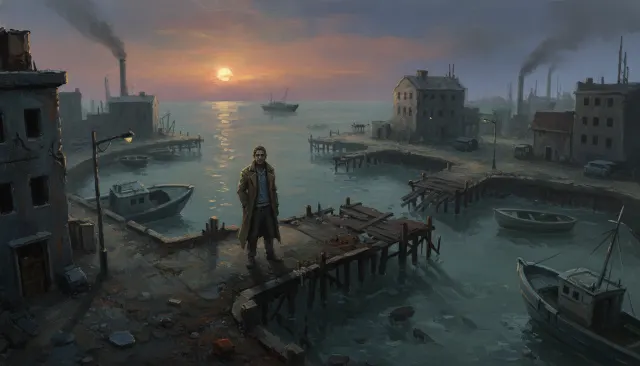
Oddworld Inhabitants CG with stop-motion-feel. Abes Oddysee era, alien biomechanical world, sepia industrial grit.
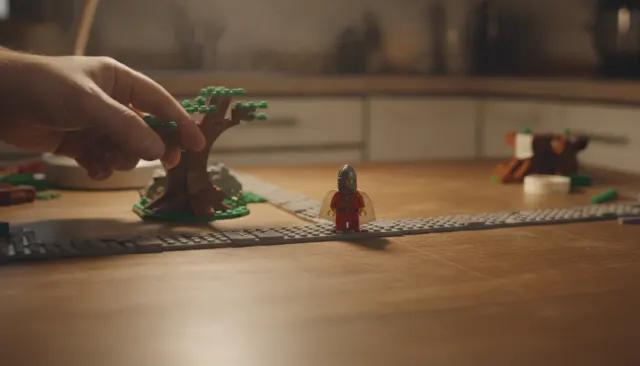
The moves a human crew would use to get here. Cue applies them for you, and knowing their names is how you ask for a change.
motion puppet mechanics
earth tones, clay reds, industrial grays, and biological greens
Oddworld Inhabitants, founded by Lorne Lanning and Sherry McKenna in 1994, developed a visual philosophy for their game series that deliberately evokes hand-fabricated, clay-based stop-motion animation within a 3D digital pipeline. The result is an aesthetic that feels grounded, physical, and slightly alien in a way that distinguishes it from the smooth, plastic-clean look that dominated 3D games of the same era.
Lanning drew explicit inspiration from practical creature effects in films like The Dark Crystal (Jim Henson/Frank Oz, 1982) and the stop-motion work of Jan Svankmajer - organic materials, visible seams, puppet-like joint articulation, and textures that read as clay, foam latex, or fabric rather than synthetic surface. The Mudokon slaves and Abe's design in Oddworld: Abe's Oddysee (1997) carry this throughout: stitched skin texture, recessed eyes, and proportions that suggest a handmade puppet enlarged to game scale.
Oddworld: Abe's Exoddus (1998) and Oddworld: Munch's Oddysee (Xbox, 2001) continued this vocabulary, with Munch's slick, organic, and slightly pathetic physical design - a fish-like creature with atrophied limbs - carrying the stop-motion-creature-shop quality into full 3D. Oddworld: Stranger's Wrath (2005) extended the aesthetic to environments: organic desert terrain, adobe-like structures, and creature fauna that read as built from natural materials rather than extruded from digital geometry.
The stop-motion feel serves Oddworld's thematic project. The games are satires of industrial capitalism, factory farming, and corporate exploitation. Characters who look handmade, vulnerable, and physically present underscore their status as living beings subject to industrial processes - the aesthetic argument mirrors the narrative one. Glukkon factory environments, with their worn pipes, organic grime, and visible mechanical fatigue, look like the products of a civilization that grew rather than designed its infrastructure.
Oddworld: Soulstorm (Oddworld Inhabitants, 2021) returned to the series' aesthetic roots with a modern rendering pipeline, preserving the organic texture quality and character design philosophy while updating lighting and geometry fidelity.
Lanning has spoken extensively in interviews about the deliberate choice to build Oddworld characters around vulnerability and imperfection rather than heroic idealization. Abe is weak, poorly-proportioned, and comically inadequate as a protagonist - his stop-motion-puppet quality is part of this. A buff, clean-surfaced hero would undercut the games' satirical argument that workers are disposable raw material within industrial systems. The aesthetic is the argument: handmade things that look alive and fragile should not be processed by machinery, and the visual language makes you feel that before you read it intellectually.
1997
Oddworld Inhabitants, Lorne Lanning; series debut
1998
Oddworld Inhabitants; expanded organic world
2001
Oddworld Inhabitants; Xbox 3D extension
2005
Oddworld Inhabitants; environment organic aesthetic peak
2021
Oddworld Inhabitants; modern rendering revival
1982
Jim Henson/Frank Oz; primary aesthetic influence
A Look is not a filter. It is a set of stored decisions the pipeline reads before it makes a single frame, so two videos in the same Look actually match.