Toy Story
1995
Pixar Animation Studios, John Lasseter; first fully CG feature
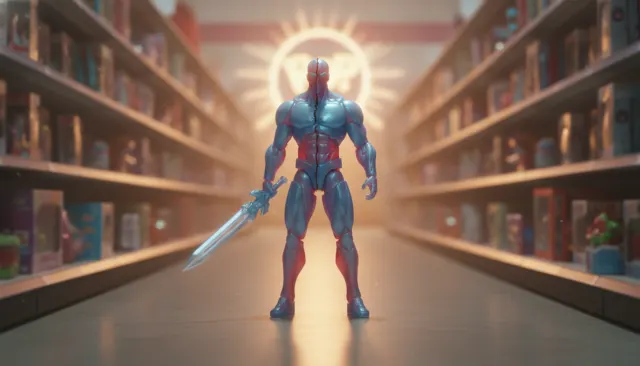
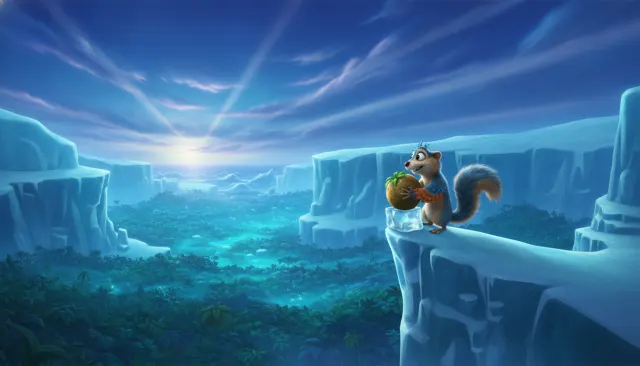
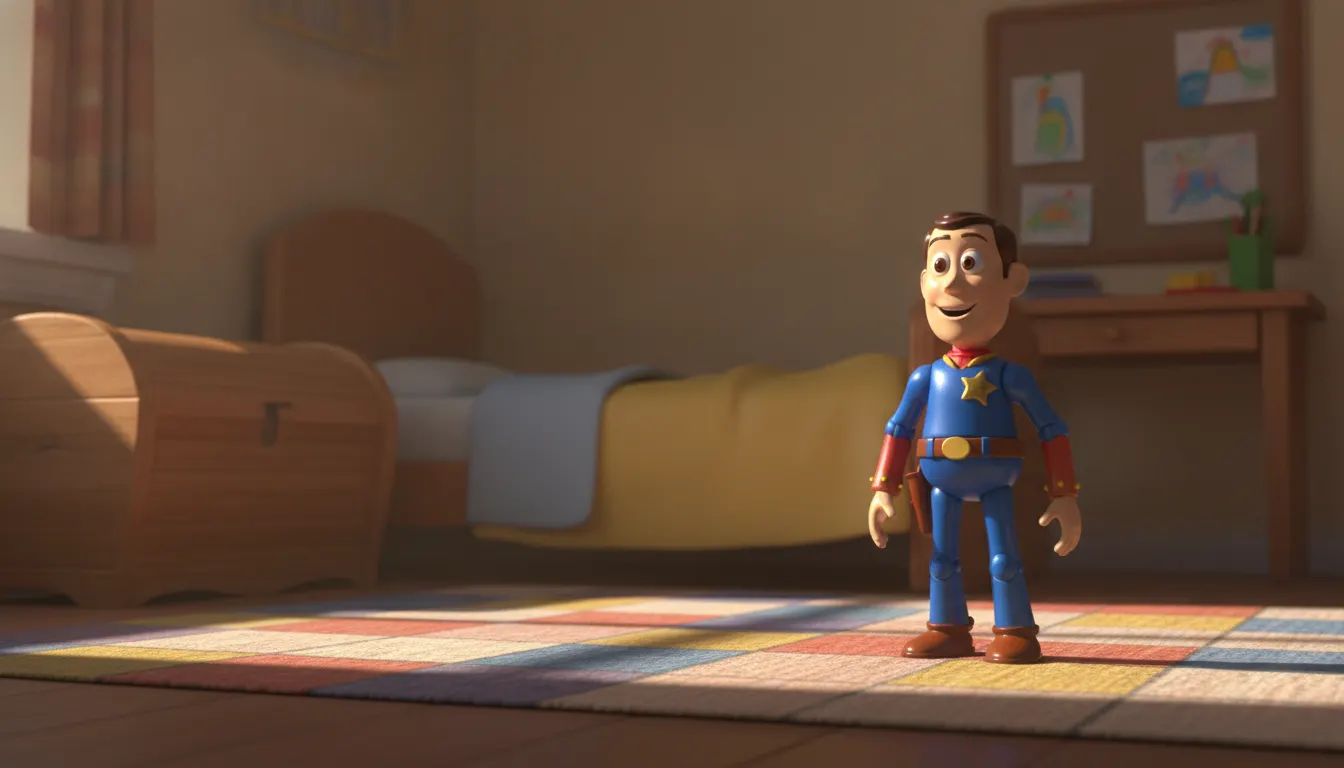
Pixar Toy Story 1995 first-feature CGI. Plastic-toy material limits, simple environments, expressive Woody and Buzz, RenderMan path-traced beginnings.
The moves a human crew would use to get here. Cue applies them for you, and knowing their names is how you ask for a change.
molded surface rendering with clean specular response and no SSS
based raytracing optimized for manufactured object geometry
stage cloth dynamics capability
surface facial features on character faces rather than geometric detail
Toy Story (Pixar Animation Studios, 1995), directed by John Lasseter, is the most historically significant film in computer animation history - the first fully computer-generated feature film, produced with a team of 27 animators and technical directors over four years, rendered on a RenderMan pipeline that required 800,000 machine-hours of computation. Its release on November 22, 1995 established that CG animation could sustain feature-length narrative and achieve mass commercial and critical success.
Lasseter and the Pixar team made a defining creative and technical decision that shaped the film's aesthetic: the primary characters would be manufactured toys rather than humans or organic creatures. This was not solely a creative preference - in 1993, Pixar had attempted to render the human character Sid's mother in a test sequence and found the result deeply uncanny. Hard plastic, injection-molded surfaces, and painted facial features were within the capabilities of 1990s RenderMan; skin, hair, and organic tissue were not.
The decision to populate the film with toys meant that the visual limitations of 1995 CG became thematic strengths. Woody's smooth painted face, Buzz's hard plastic visor, and Rex's rigid green plastic body all have a physical integrity appropriate to manufactured objects. The surfaces are clean specular plastic and fabric - the exact materials that 1990s rendering engines handled well.
The visual signatures of Toy Story reflect its era: no subsurface scattering on any surface (everything reflects rather than transmits), limited ambient occlusion creating flat shadows, and environment rendering that prioritizes architectural geometry over organic detail. Andy's room - the film's primary environment - is a masterclass in designing for the pipeline: simple rectilinear geometry, flat-painted wall surfaces, and a deliberate avoidance of complex organic elements like plants or food.
The film's aesthetic is often described as nostalgic by contemporary audiences, who read its limitations as period character. The slightly plastic quality of every surface, the pre-SSS flatness of skin in the human characters, and the simplified environmental geometry all signal a specific moment in computing history.
Lasseter's background as a Disney animator (fired in 1983 for pushing CG animation development) shaped the film's aesthetic priorities in a way that distinguished Pixar from technically-oriented CG competitors. The story department - Andrew Stanton, Pete Docter, Joe Ranft - drove the film's production design decisions from an animator's perspective: what shapes read well in motion, how characters communicate emotion through posture and body mechanics, and where technical limitations could be hidden or converted into strengths. The decision to light Andy's room from a single practical window source, for example, reduced computational shadow complexity while also creating more dramatically motivated illumination than a multi-source studio setup would have produced.
1995
Pixar Animation Studios, John Lasseter; first fully CG feature
1999
Pixar Animation Studios, John Lasseter/Ash Brannon; visual evolution
2010
Pixar Animation Studios, Lee Unkrich; modern-era revisit of same characters
2019
Pixar Animation Studios, Josh Cooley; photorealistic rendering contrast
1998
Pixar Animation Studios; second feature, organic material advances
1998
DreamWorks/PDI; contemporary early-CG comparison
A Look is not a filter. It is a set of stored decisions the pipeline reads before it makes a single frame, so two videos in the same Look actually match.