Toy Story
1995
John Lasseter; first fully CG feature
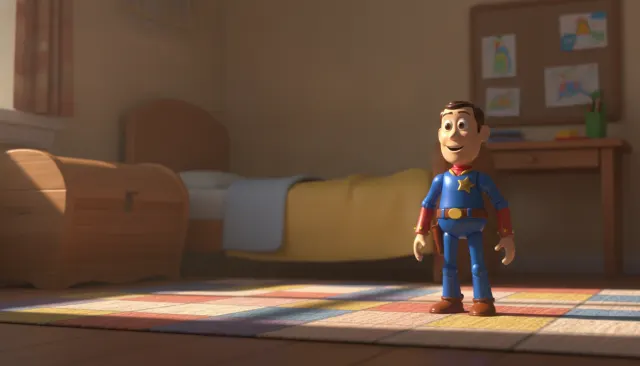
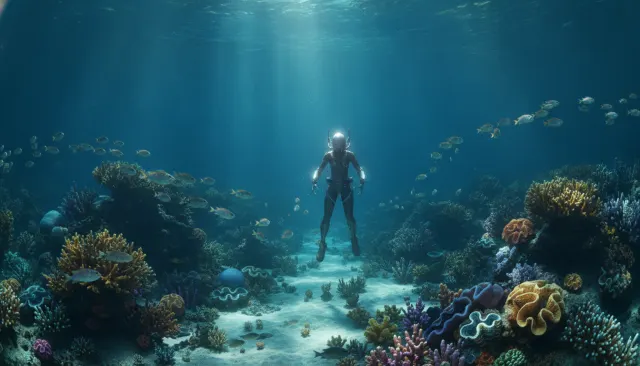
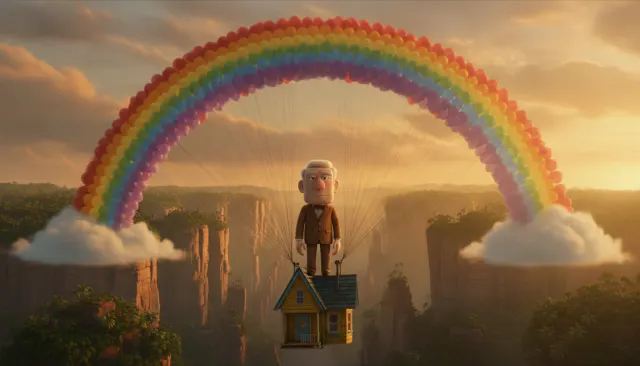
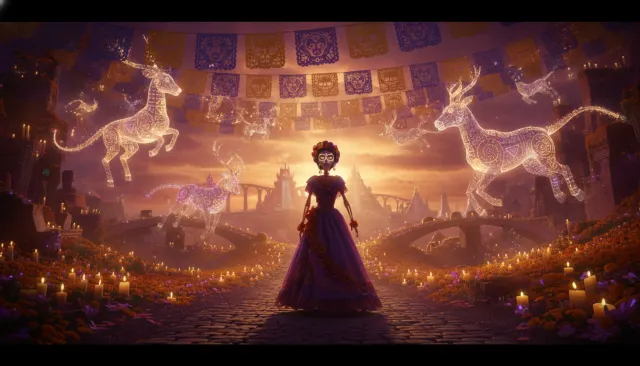
Pixar feature-film CG. Subsurface skin, ray-traced highlights, expressive cartoon proportions on photoreal materials, Toy Story to Inside Out.
The moves a human crew would use to get here. Cue applies them for you, and knowing their names is how you ask for a change.
directed lighting that prioritizes emotional storytelling over physical correctness
quality hair and fur simulation with per-strand dynamics
specific drape, collision, and folding behavior
Pixar Animation Studios' canonical feature 3D aesthetic represents the most studied and emulated standard in computer animation. Established through the studio's first decade of feature films - Toy Story (1995) through Ratatouille (2007) - and refined continuously since, this look is defined less by any single technical approach than by a consistent set of priorities: emotional legibility of character performance, physically grounded material rendering, and art-directed lighting that serves storytelling rather than technical demonstration.
Pixar's first film, Toy Story (1995, John Lasseter), established that computer animation could carry dramatic narrative. The studio's subsequent films each pushed a specific technical frontier in service of a specific story requirement. A Bug's Life (1998) demanded organic natural environments with translucent leaf materials. Monsters, Inc. (2001, Pete Docter) required Sully's 2.3 million-hair fur simulation, solved by Pixar's proprietary simulation software. Finding Nemo (2003, Andrew Stanton) necessitated subsurface scattering advances that made skin and scale tissue appear to transmit light rather than simply reflect it - the breakthrough that made CG characters feel physically present rather than plastic.
The Incredibles (2004, Brad Bird) demonstrated that superhero physics and human character animation could coexist. Cars (2006, John Lasseter) required painterly landscape backgrounds referencing Route 66 photography. Ratatouille (2007, Brad Bird) involved the most complex food and liquid simulation Pixar had attempted.
Post-2010, Pixar's aesthetic matured toward greater naturalism in environments (particularly lighting and atmospheric effects) while maintaining stylized character proportions. The studio adopted physically-based rendering (PBR) progressively, beginning with Monsters University (2013) and fully transitioning with The Good Dinosaur (2015) and Finding Dory (2016). Brave (2012) set a new benchmark for digital hair simulation that remained the industry reference for years.
What distinguishes Pixar's approach from technically comparable studios is the primacy of art direction over technical demonstration. When Pixar's rendering team develops a new capability - SSS, hair simulation, fluid dynamics - the capability is not displayed for its own sake but deployed where the story requires it. Ratatouille's kitchen sequences use fluid dynamics for sauce and broth at a level that would have been avoided for cost by most productions; the choice is justified because Remy's relationship to food is the film's emotional core. This philosophy means Pixar's aesthetic, across decades and technical generations, maintains a consistent emotional register: technically excellent but never cold.
1995
John Lasseter; first fully CG feature
2001
Pete Docter; fur simulation landmark
2003
Andrew Stanton; subsurface scattering breakthrough
2004
Brad Bird; human anatomy and superhero physics
2007
Brad Bird; food and liquid simulation
2012
Mark Andrews/Brenda Chapman; hair simulation benchmark
2015
Pete Docter; abstract world-design in photorealistic pipeline
A Look is not a filter. It is a set of stored decisions the pipeline reads before it makes a single frame, so two videos in the same Look actually match.