Up
2009
Pixar Animation Studios, Pete Docter/Bob Peterson
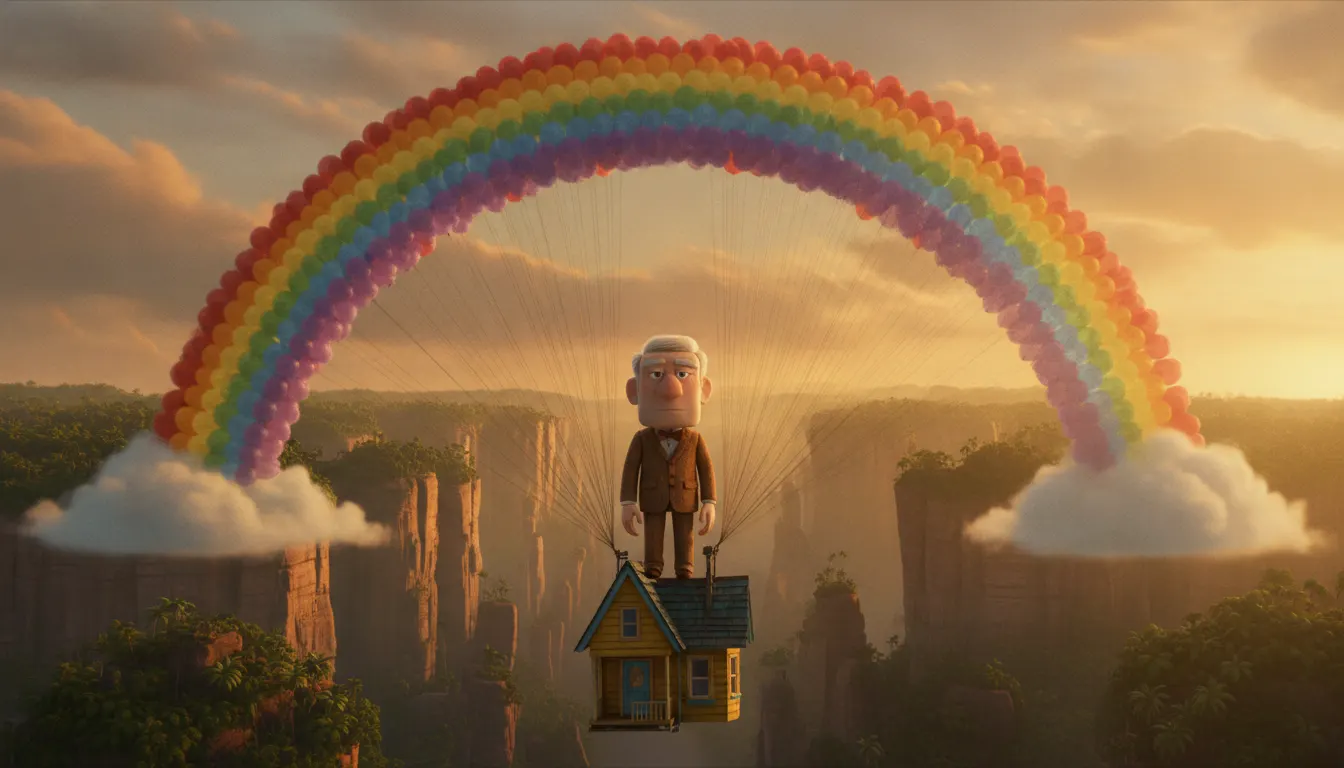
Pixar Up emotional-warm CGI. Square-jawed Carl puppet design, balloon-house surrealism, montage-driven storytelling, golden Paradise Falls palette.
The moves a human crew would use to get here. Cue applies them for you, and knowing their names is how you ask for a change.
saturated youth to warm amber adulthood to desaturated loss
hour interior lighting through practical window sources creating domestic warmth
the adventure book, the mailbox, the chair
Up (Pixar Animation Studios, 2009), directed by Pete Docter and Bob Peterson, is defined aesthetically by one of the most analyzed sequences in animation history: the four-minute opening montage of Carl and Ellie's life together. Without dialogue, using only Michael Giacchino's score and a sequence of wordless vignettes, the film establishes the entire emotional foundation of the story. The visual strategy of that sequence - and the warm, golden-hour palette that persists throughout the film - defines what 'emotionally warm Pixar' means as a specific aesthetic register.
Production designer Ricky Nierva and art director Don Shank built the opening montage around a progression from youth's saturated, primary-colored world to old age's softer, lower-saturation palette. Young Carl and Ellie's scenes use rich greens, bright yellows, and cloudless blue skies. The married years are rendered in warm amber and gold - the color of afternoon light through curtained windows, of well-used wood furniture, of a life accumulated in domestic objects. The hospital and funeral scenes use desaturated near-whites and grays, the first time the film withdraws warmth visually as it does narratively.
This color temperature progression - warm youth, warmer marriage, cold loss - is executed through lighting temperature shifts rather than color grading alone, making it feel internally motivated by the story's physics rather than applied from outside.
Carl's yellow house is the film's visual constant and color anchor. The saturated yellow against the blue sky of Paradise Falls, the warm interior light visible through the windows, and the house's rounded Craftsman architecture all signal emotional attachment through visual warmth. The contrast between the house's domestic scale and the vast natural landscape of South America creates the film's central visual tension between belonging and adventure.
The emotional impact of the opening montage is inseparable from Michael Giacchino's score 'Married Life', which was designed in close collaboration with the visual sequence. Docter and editor Kevin Nolting edited the montage multiple times to different versions of the music, and the final cut is timed to the score's phrase structure so precisely that visual and musical beats land simultaneously. This integration is visible in the color temperature transitions: each new life phase begins on a musical downbeat that corresponds to a shift in the ambient light palette. The result - color, music, and editing locked together - is one of the few instances in animation where the visual aesthetic's emotional effect cannot be separated from the musical context that activates it.
2009
Pixar Animation Studios, Pete Docter/Bob Peterson
2020
Pixar Animation Studios, Pete Docter; emotional Docter-directed successor
2021
Pixar Animation Studios, Enrico Casarosa; warm coastal-summer Italian palette sibling
2015
Pixar Animation Studios, Pete Docter; emotional-state rendering predecessor
1942
Walt Disney Studios; foundational emotional color-as-feeling animation precedent
1988
Studio Ghibli, Isao Takahata; warmth-as-memory color language
A Look is not a filter. It is a set of stored decisions the pipeline reads before it makes a single frame, so two videos in the same Look actually match.