Octopath Traveler
Square Enix / Acquire, 2018 (Switch); PS4/PC 2019 - the HD-2D technique debut
Octopath Traveler 2 Square Enix HD-2D pixel JRPG continued. Eight-traveler anthology, 2D sprite on 3D world tilt-shift, painterly HDR JRPG diorama.
The moves a human crew would use to get here. Cue applies them for you, and knowing their names is how you ask for a change.
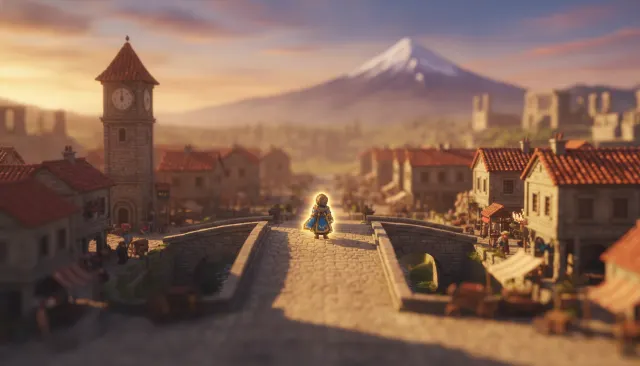
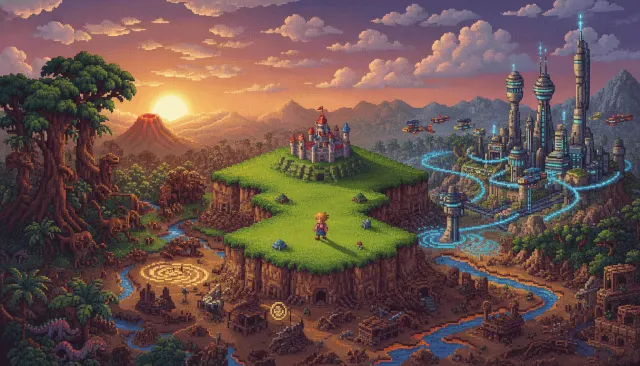
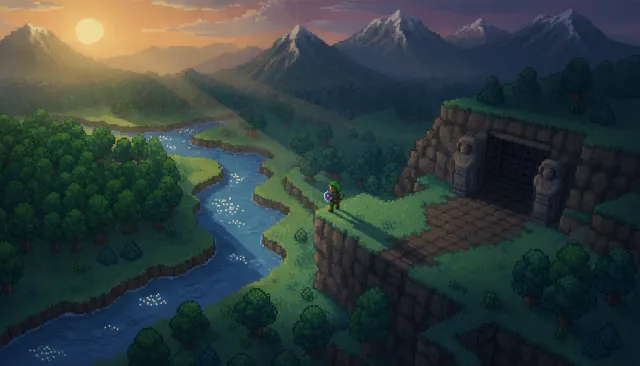
2D core: high-resolution pixel-precise 2D sprites placed in fully lit real-time 3D environments
shift depth of field: extreme foreground/background blur creating diorama or miniature-world perception
out-of-focus elements resolve into oval bokeh shapes referencing macro photography
resolution character sprite illustration with pixel-precise rendering on high-DPI displays
sun angle, moon light, torch flame with shadow casting
procedural rain ripples on water surfaces, snow accumulation on 3D geometry
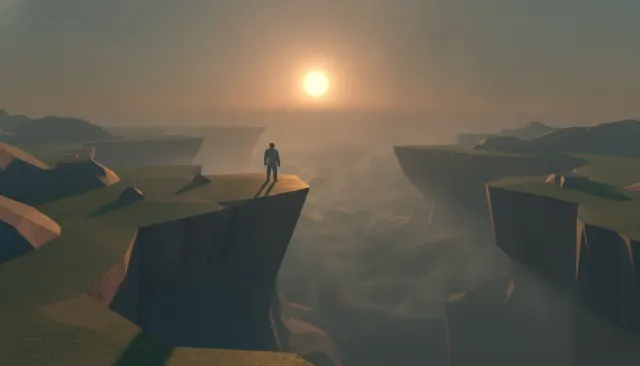
forest fog, dungeon dust motes, and mountain haze in 3D layered environments
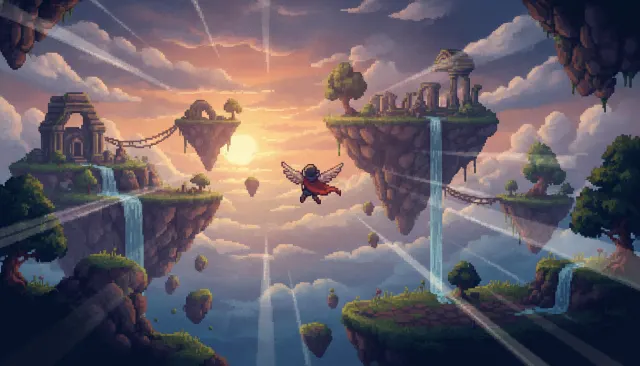
Octopath Traveler (Square Enix, 2018), developed by Acquire for Nintendo Switch, introduced the term and technique HD-2D - a rendering approach that places high-resolution pixel art 2D character sprites into fully three-dimensional environments rendered with contemporary lighting, depth-of-field blur, and atmospheric effects. The result was a game that felt simultaneously familiar to fans of 1990s Super Nintendo JRPGs and visually unprecedented.
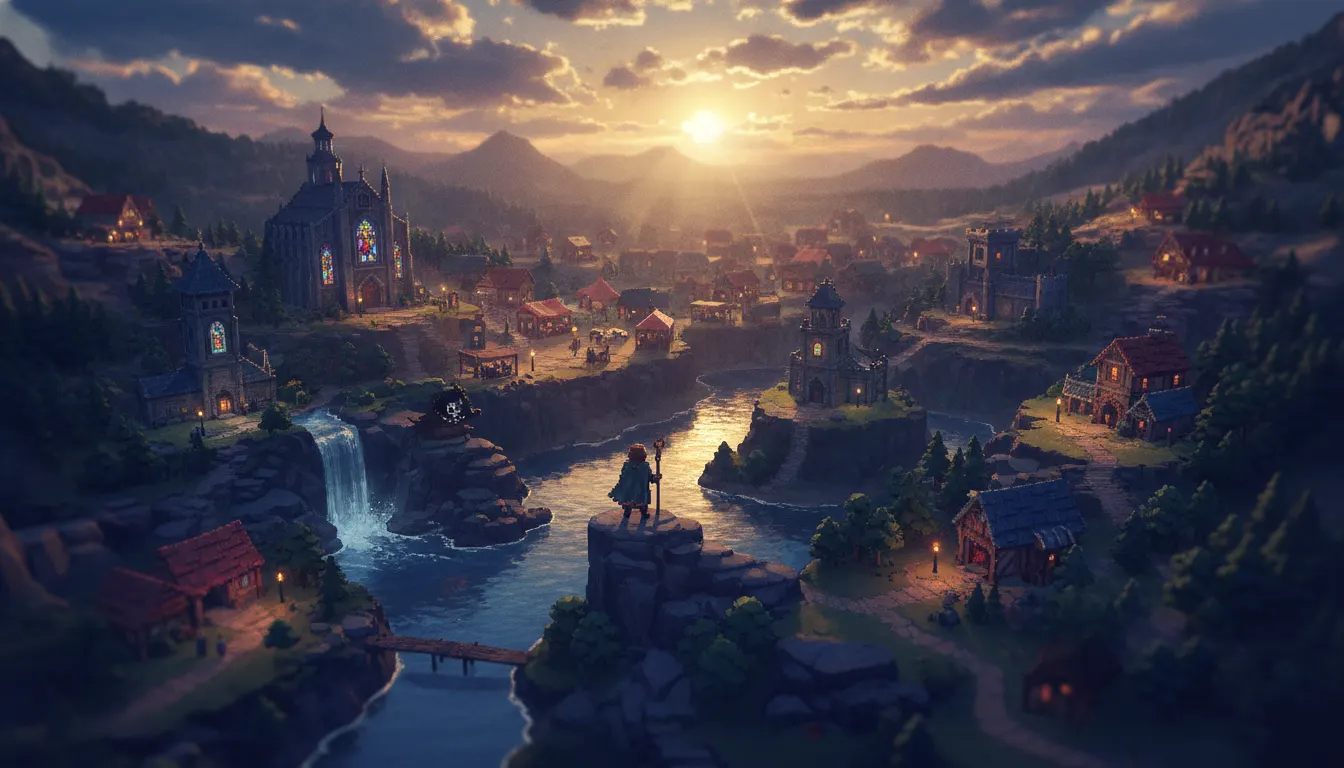
The core technique layers two different rendering paradigms. Character sprites are hand-drawn pixel art at a resolution resembling 16-bit SNES work, but displayed on a high-resolution screen without upscaling blur - each pixel is crisp and precise. The environment around them is full 3D geometry lit in real time, with specular highlights on cobblestones, volumetric fog rolling through forests, and physically based water reflection. The combination is cognitively striking: your brain processes the 2D sprite characters as '16-bit SNES game' while simultaneously processing the 3D environment as 'contemporary cinematic rendering.'
The visual signature most immediately identifiable in HD-2D is the tilt-shift depth-of-field effect: extreme foreground and background elements blur into soft bokeh shapes, while the midground playing field stays sharp. This effect - borrowed from tilt-shift macro photography and scale-model photography - makes the game world appear as a beautifully crafted diorama or miniature. The character sprites, being in the sharp midground, feel like figurines placed in a hand-painted stage set.
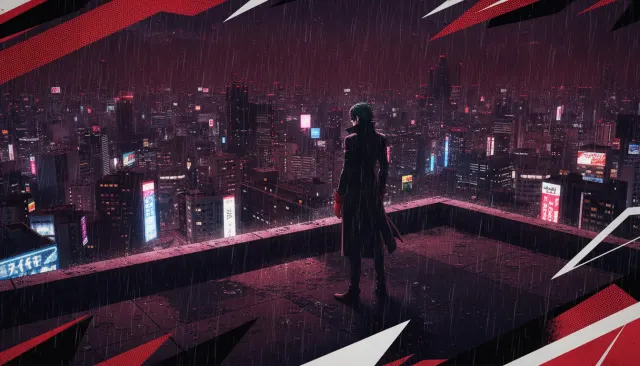
HD-2D environments feature dramatic directional lighting: warm orange afternoon sun casting long shadows through trees, cold moonlight on midnight mountain passes, torch light in dungeons casting dynamic shadows on 3D stone floors. Weather systems add rain drops with procedural ripple displacement on water surfaces, snow accumulation on static geometry.
HD-2D became Square Enix's house style for a generation of projects - Triangle Strategy, Live A Live HD-2D Remake, Octopath Traveler 2, and Dragon Quest III HD-2D Remake all employ the technique, making it one of the most influential single art-direction innovations in JRPGs of the 2020s.
Square Enix / Acquire, 2018 (Switch); PS4/PC 2019 - the HD-2D technique debut
Square Enix, 2023 - evolved sequel with day/night cycle and enhanced sprites
Square Enix / Artdink, 2022 - tactical RPG in HD-2D with political narrative
Square Enix, 2022 - retroactive application of HD-2D to a 1994 SNES game
Square Enix, 2024 - the franchise-pillar application of the technique
Square, 1995 - the spiritual SNES ancestor whose legacy HD-2D explicitly invokes
A Look is not a filter. It is a set of stored decisions the pipeline reads before it makes a single frame, so two videos in the same Look actually match.