Bloveslife mukbang channel
Bethany Gaskin · 2016
American mukbang creator who built a 7 million subscriber channel on seafood boil mukbang with ASMR-focused audio production
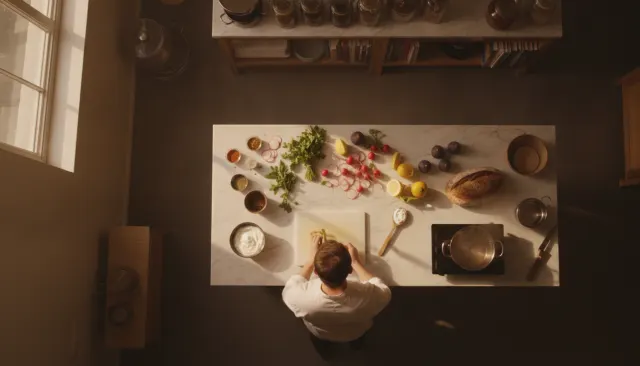
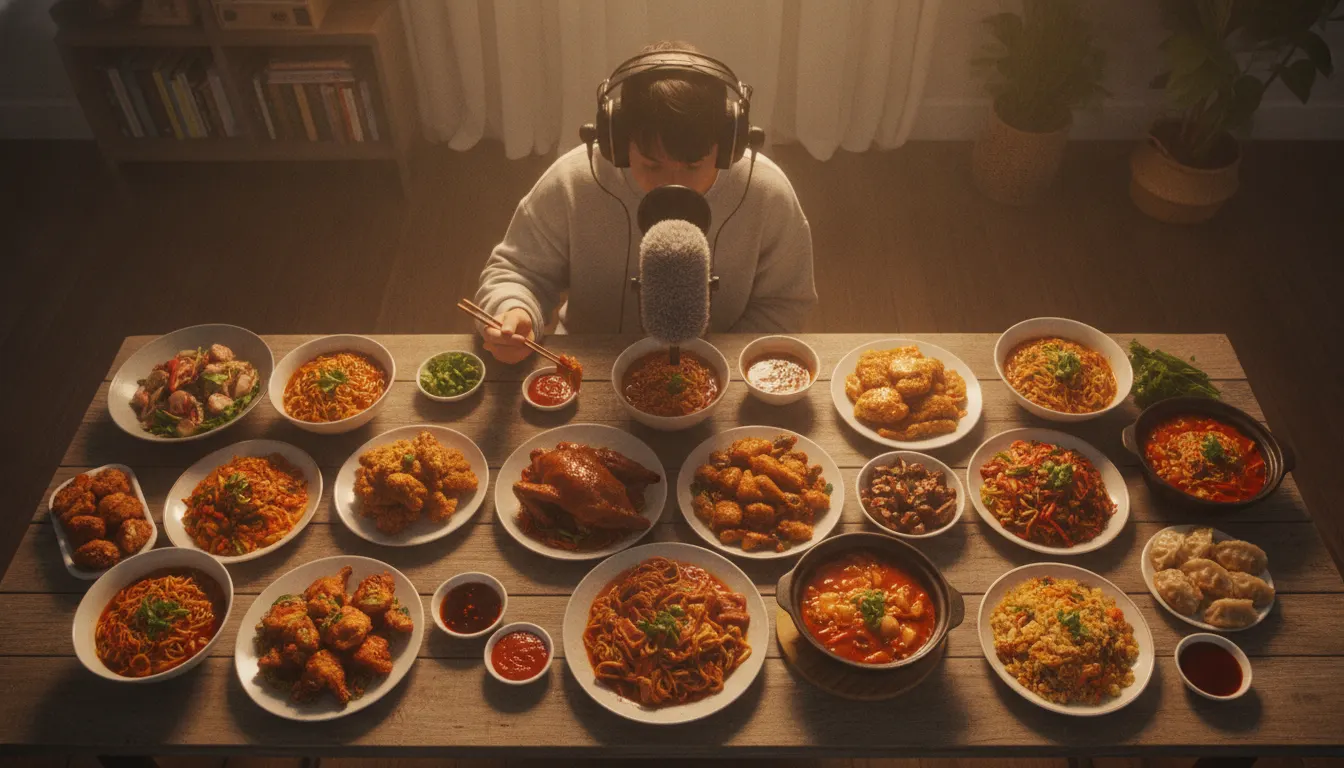
Mukbang and ASMR tabletop overhead. Top-down food spread, binaural mic close, no-narration crunch sound focus, glossy food gloss.
The moves a human crew would use to get here. Cue applies them for you, and knowing their names is how you ask for a change.
Top-down or high-angle shot showing the full food arrangement, prioritizing abundance and visual inventory of the meal.
Even frontal lighting that maximizes the reflective quality of sauces, oils, and wet textures on food surfaces.
Close microphone placement - often binaural setups - that captures directional eating sounds at exaggerated presence.
Ring light illumination that produces catchlights in eyes while keeping the food surface evenly lit without shadows.
Extreme close-up shots of food textures - cross-sections, pulls, tears - that are the primary visual event of the ASMR variant.
Long uncut takes during eating that preserve the temporal reality of the meal and build the parasocial intimacy of the format.
Food presented in its original takeout or delivery packaging, with containers visible in frame as a mark of authenticity.
Mukbang - a portmanteau of the Korean words for eating (meokneun) and broadcast (bangsong) - originated on South Korean platforms around 2010 and became a global YouTube and TikTok phenomenon by the mid-2010s. The format involves a host eating large quantities of food on camera, typically with minimal editing and maximum audio presence. The ASMR (Autonomous Sensory Meridian Response) variation foregrounds the sounds of eating - crunching, slurping, chewing - as the primary sensory content. Together they created a distinct visual and sonic aesthetic that has become one of the most recognizable content formats online.
Mukbang emerged from South Korean internet culture, where the combination of solo dining culture (eating alone is common in South Korean urban life), social isolation, and the parasocial intimacy of streaming platforms created demand for a viewing experience that simulated shared eating. Early mukbang creators on AfreecaTV in 2010-2012 established the basic format: a person eating in front of a camera, interacting with the live chat, with no production pretension.
The format migrated to YouTube, where creators like Nikocado Avocado, Bloveslife, and Stephanie Soo developed American versions that combined the Korean eating format with different production values and performance styles. By 2018, mukbang had been covered by every major media outlet and had spawned dedicated channels across all platforms.
The mukbang tabletop aesthetic is defined by its relationship to food as subject. Unlike food photography or cooking shows, the visual priority is abundance and texture: large quantities of food arranged for maximum visual impact, often in takeout containers or directly on the table. The overhead or close-angle tabletop shot that shows the full food spread is the establishing shot of the format.
Lighting in professional mukbang content is typically daylight or softbox-heavy, producing even illumination that maximizes the glossy, saturated appearance of sauces, oils, and wet textures. Ring lights became associated with the format because they produce minimal shadows across the food surface while illuminating the creator's face evenly. The lack of shadows is a deliberate aesthetic choice: the format values abundance and visual access, not the moody shadow play of fine dining photography.
The ASMR variant of mukbang shifts the emphasis from eating quantity to eating sound. Binaural microphones - sometimes placed inside fake ears at either side of the frame - capture directional crunching, slurping, and chewing sounds at an exaggerated presence. The camera is placed closer to the food, often at an angle that emphasizes texture. The production aesthetic becomes more controlled: quieter environments, closer framing, slower pacing. The visual equivalent of whispering.
Bethany Gaskin · 2016
American mukbang creator who built a 7 million subscriber channel on seafood boil mukbang with ASMR-focused audio production
Nicholas Perry · 2016
Established the melodramatic American mukbang format with high-quantity restaurant food and direct-to-camera emotional performance
Zach Choi · 2017
Close-up ASMR mukbang format using tight framing and binaural audio to foreground food texture and eating sounds
Sas · 2016
Korean-Canadian ASMR eating channel combining the Korean mukbang format with high-production ASMR audio techniques
Jane ASMR · 2015
South Korean ASMR creator whose eating content helped establish the international ASMR mukbang crossover format
A Look is not a filter. It is a set of stored decisions the pipeline reads before it makes a single frame, so two videos in the same Look actually match.