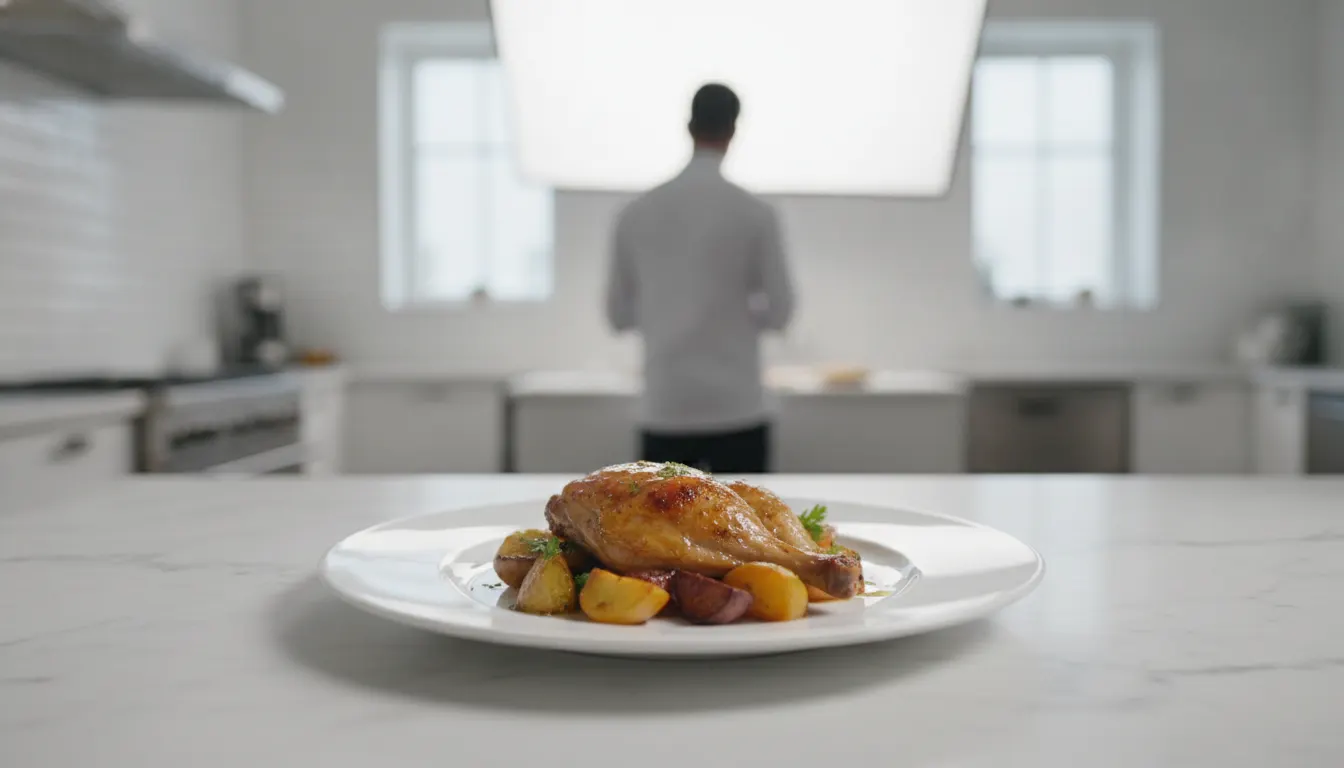
FOOD PRODUCT STILL · CONTEMPORARY · USA
Food Network Bright Clean
Food Network bright-clean food. High-key softbox lighting, white plate centered, gloss-and-glycerine sheen, retouched appetite-appeal.
food-networkbrighthigh-keyappetite-appeal
LUT food-network-high-key
WHEN TO USE
- Recipe content, cooking tutorials, or food demonstration photography for general audiences
- Cookbook photography for mass-market, family cooking, or accessible cuisine titles
- Food brand or CPG product photography requiring an approachable, non-intimidating visual register
- Grocery store, supermarket, or convenience food brand imagery
- Social media recipe content for platforms where bright, high-contrast images perform well in feed
- Meal kit delivery brand photography requiring fresh, clear representation of raw ingredients
WHEN NOT TO USE
- Fine dining, premium restaurant, or luxury food brand photography where the bright accessible aesthetic undercuts exclusivity
- Dark moody artisanal or heritage food products (charcuterie, aged cheese, craft spirits) where the atmospheric approach is expected
- Avant-garde culinary content where the conventional television aesthetic contradicts the subject's ambition
- International cuisine with strong visual cultural traditions that the clean neutral approach erases
SIGNATURE TECHNIQUES
How the look is made.
The moves a human crew would use to get here. Cue applies them for you, and knowing their names is how you ask for a change.
- 01High
key, multi-source lighting with large softboxes to eliminate shadows and reveal all surface detail
- 02Three
quarter angle hero shot (45 degrees elevation) that shows the full plate while preserving depth
- 03White, cream, or light
colored props: plates, linens, cutting boards - no dark surfaces to absorb light
- 04Steam simulation
water-soaked cotton hidden near food, photographed immediately upon removal from heat
- 05Saturated color accuracy
greens should read green, tomatoes red, cheeses warm - no warm color shift
- 06Clean garnish architecture
fresh herb sprig, oil drizzle, flaky salt, contrasting color accent
- 07Post
processing with bright highlights, natural mid-tones, and no shadow crushing
HISTORY & CONTEXT
Where it comes from.
Food Network Bright Clean: Television's Food Photography Standard
The bright, clean, high-key food photography aesthetic that Food Network established in the early 2000s represents the dominant visual language of American food television and the cookbook photography that followed its model. Launching in 1993, Food Network grew through the late 1990s and 2000s with a visual language that prioritized appetizing accessibility over atmospheric drama: bright, even lighting that revealed every color and texture of an ingredient, clean white or cream props, and compositions that made food look achievable rather than exclusive.
The Rachael Ray and Bobby Flay Era
Food Network's daytime programming with hosts like Rachael Ray (30 Minute Meals, from 2001) and Bobby Flay set the template: a brightly lit kitchen studio, food presented in clean bowls and platters, with multiple light sources eliminating harsh shadows and ensuring consistent exposure from every angle. The aesthetic communicated energy and approachability - food as something fun and accessible rather than a culinary achievement requiring special reverence.
Visual Characteristics
The Food Network bright clean look is characterized by high-key overall exposure (no deep shadows), saturated natural food colors particularly for greens and reds, white or cream backgrounds and surfaces, and a preference for three-quarter-angle hero shots rather than pure overhead flat-lay. Steam was prized as a freshness signal and was often simulated with carefully hidden water-soaked cotton. Garnishes were architectural: a sprig of fresh herb, a drizzle of oil, a sprinkle of flaky salt.
Contrast with Dark Moody and Flat Lay
The Food Network bright clean aesthetic sits between the high-key white precision of e-commerce product photography and the dark moody chiaroscuro that fine-dining and artisanal food brands adopted in the 2010s. It most closely resembles the Better Homes & Gardens cookbook photography tradition of the 1970s-1990s, updated with brighter, more saturated color and cleaner white surfaces.
NOTABLE WORKS
Where you have seen it.
Bobby Flay Mesa Grill cookbook photography (1997-2000s), bright clean print extension of TV aesthetic
Better Homes & Gardens New Cook Book photography (multiple editions, 1970s-2010s)
The Pioneer Woman Cooks (Ree Drummond, 2009), mass-market bright clean cookbook standard
Cooking Light magazine photography (1987-2018), health-forward bright-clean aesthetic
THE RECIPE
The exact knobs
the renderer turns.
A Look is not a filter. It is a set of stored decisions the pipeline reads before it makes a single frame, so two videos in the same Look actually match.
SettingValue
GradeColour LUT applied to every frame
food-network-high-keyTransitionHow one shot becomes the next
hard cuts · 200ms · ease-in-outKen BurnsCamera move applied to stills
Slow push · 0.025 · centerTypographyDisplay / body / mono pairing
Inter · Inter · JetBrains MonoMusic moodWhat the bed under the voice sounds like
upbeat-pop-cooking-show · energetic-acousticPrompt suffixAppended to every shot prompt in this Look
Food Network bright clean food photography, high key softbox, white plate centered, gloss glycerine sheen, appetite appealPALETTE
Primary
#F5F5F0
Secondary
#A89B82
Accent
#C8302E
Text/Light
#1A1A1A
Text/Dark
#F5F5F0
BG 900
#1A1A1A
BG 800
#2A2A28
RELATED LOOKS
Next to it on the shelf.


Your first cut
is on us.
+ New videoFree plan · no card · 1080p export