Arzach
1975
Métal Hurlant / Les Humanoïdes Associés; wordless pterodactyl album
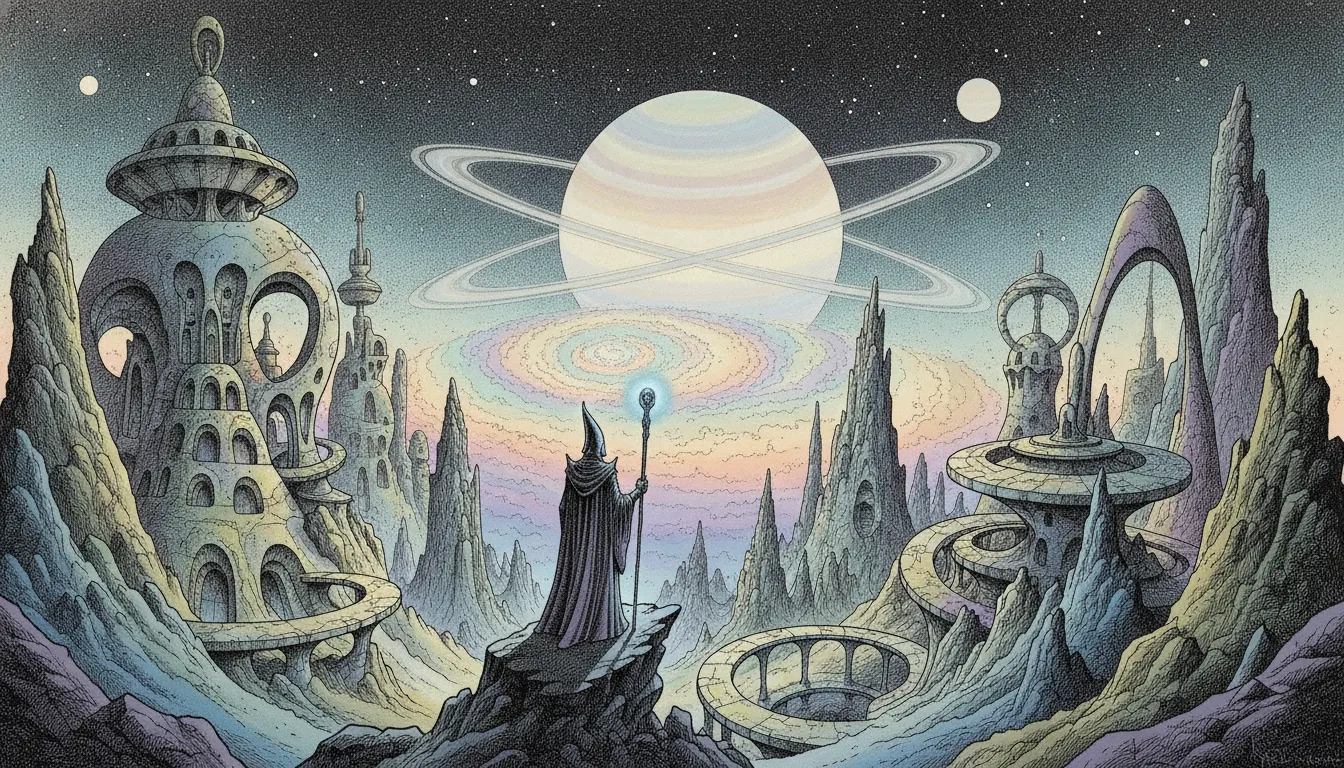
Moebius Jean Giraud Heavy Metal sci-fi. Hyper-detailed line, surreal alien architecture, pale flat color fill, Metal Hurlant cosmic vista.
The moves a human crew would use to get here. Cue applies them for you, and knowing their names is how you ask for a change.
gestural, slightly imprecise outlines that suggest rather than define form - the anti-Blueberry Moebius mode
enormous desert or cosmic spaces rendered with minimal detail to maximize scale
flat transparent washes layered over precise inked linework
extended wordless sequences building atmosphere through pure image
figures whose appearance encodes their cosmic function
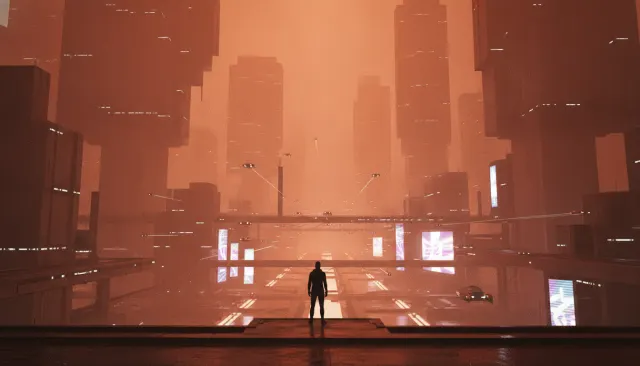
shaft-cities, impossible vertical density, ancient alien ruins at planetary scale
Jean Giraud (1938-2012), publishing under the pseudonym Moebius for his science-fiction and experimental work and under his own name for his classic western series, is the most influential European comics artist of the twentieth century and one of the most referenced visual artists in the history of science fiction cinema.
Giraud began his career drawing Lieutenant Blueberry, a Franco-Belgian western begun in 1963 with writer Jean-Michel Charlier. The Blueberry series established his technical mastery: dense, realistic crosshatching for shadow and texture, documentary-quality rendering of southwestern American landscape and period costume, and a cinematic composition sense. More than forty albums of Blueberry were produced over four decades, making it one of the landmark achievements of European comics realism.
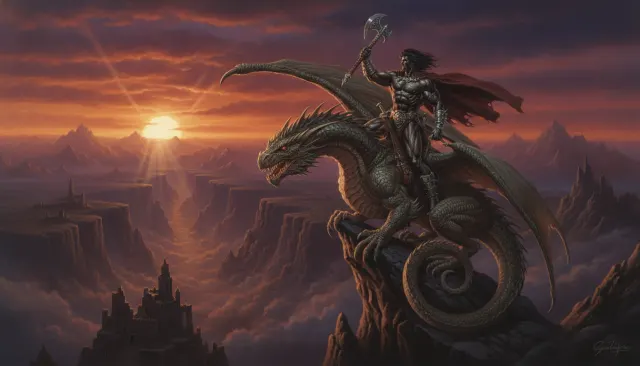
Published in the inaugural issue of the French comics magazine Métal Hurlant (Heavy Metal) in 1975, Arzach announced a completely different sensibility. The wordless album follows a silent pterodactyl rider through vast, desolate alien landscapes drawn in an open, gestural line that was the stylistic opposite of the Blueberry crosshatch. Moebius described his process as deliberately loosening control - drawing quickly, allowing errors to remain, trusting the mark. The result was a visual world of enormous atmospheric depth created with minimalist means: flat color washes, open horizon lines, and a sense of vast, silent space that had never appeared in comics before.
The six-volume science fiction epic The Incal, written by Alejandro Jodorowsky and drawn by Moebius, is the most significant work of French comics and one of the foundational texts of visual science fiction. The story follows John DiFool, a low-class detective in a dystopian megacity, through a cosmic adventure involving a luminous artifact called the Incal. Moebius's cityscapes in The Incal - towering shaft-cities extending kilometers underground, ornate alien civilizations, cosmic voids - directly influenced the visual world of Luc Besson's The Fifth Element (1997) and Jodorowsky's screenplay for his unmade Dune (which in turn influenced Alien's visual design via H.R. Giger).
Moebius worked as a concept designer for Star Wars (1976, unused designs), Alien (1979), TRON (1982), The Abyss (1989), and The Fifth Element (1997). His visual language - the combination of hyperdetailed costume and technology with vast, open, philosophically charged environments - is the template for a generation of science fiction production designers.
1975
Métal Hurlant / Les Humanoïdes Associés; wordless pterodactyl album
with Alejandro Jodorowsky; 6-volume cosmic epic
1971
Jean Giraud/Charlier western
1976
serialized in Métal Hurlant
1979
uncredited design work
1982
Moebius Studio contribution
1997
costume and concept design with Jean-Paul Gaultier
1987
Jodorowsky/Moebius; dream-logic philosophical album
A Look is not a filter. It is a set of stored decisions the pipeline reads before it makes a single frame, so two videos in the same Look actually match.