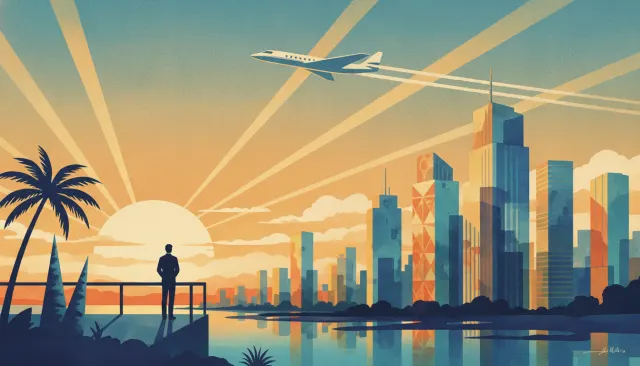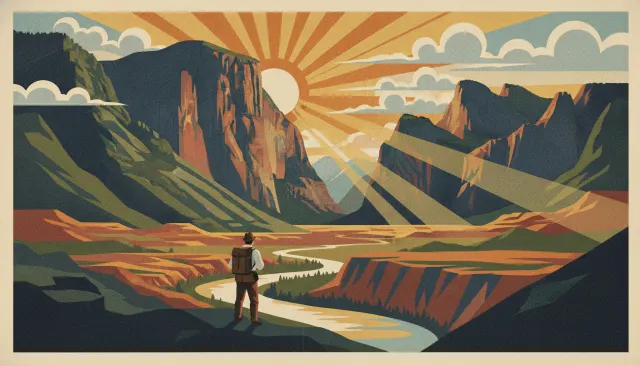
Airbnb Illustrations (2015-present)
internal design team; destination and category illustration system
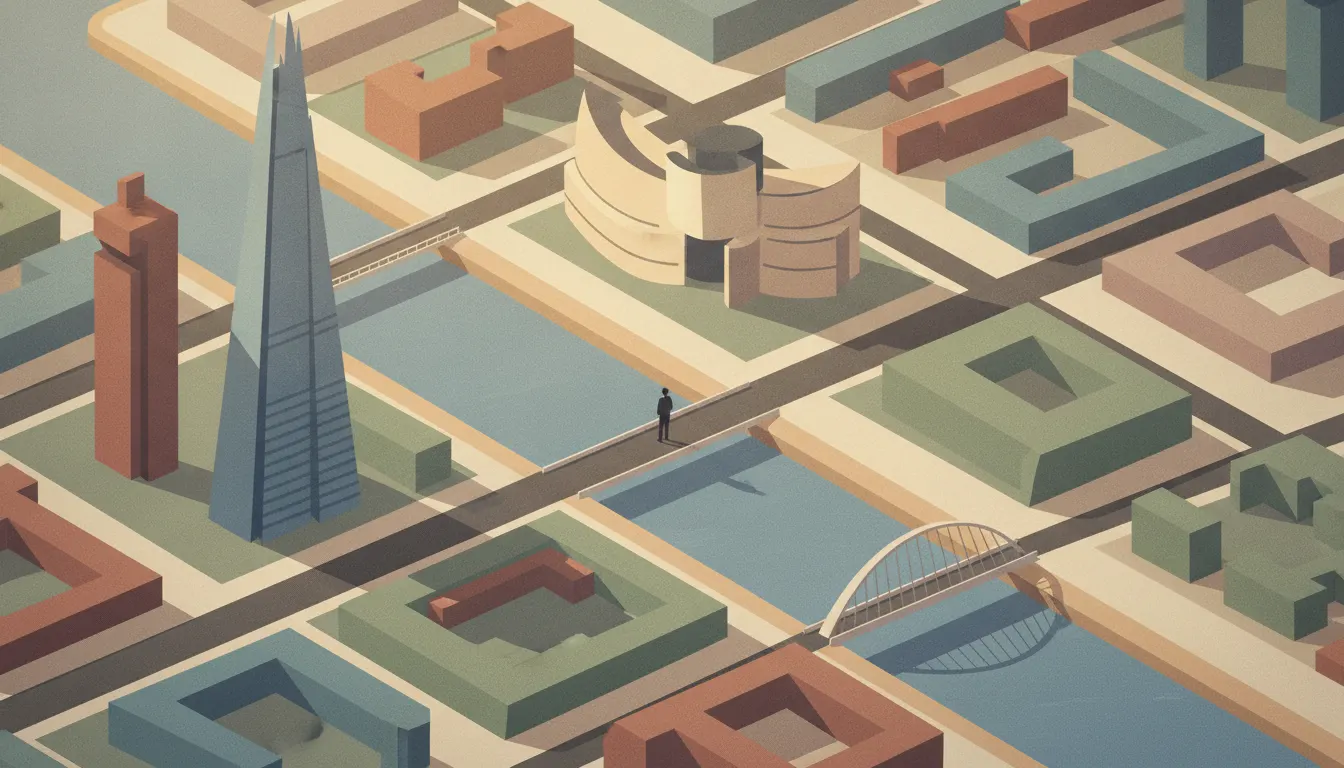
Modern Herb Lester flat-vector travel illustration. Soft palette city map, isometric landmark, contemporary editorial city-guide aesthetic.
The moves a human crew would use to get here. Cue applies them for you, and knowing their names is how you ask for a change.
no painted transitions
a subtle drop shadow or ambient occlusion layer beneath objects in flat 2.0 variants
each location associated with a 3-4 color palette derived from cultural association
no facial detail below expressive eyes
landmarks treated as modular icons that maintain consistent style across all destinations
large areas of solid background color framing floating illustrated elements
Modern flat travel illustration describes the visual language of destination and travel marketing that emerged from the collision of flat design (popularized by Google Material Design and Apple iOS 7 in 2013) with the long tradition of travel poster illustration. It is the dominant visual mode for contemporary travel apps, booking platforms, tourism boards, and travel content creators.
The style synthesizes several traditions: the bold flat-color geography of mid-century Pan Am travel posters; the icon-design principles of Material Design and SF Symbols; the isometric illustration style popularized on Dribbble and Behance from roughly 2014 onward; and the soft, desaturated palette associated with Airbnb's brand visual language. Where mid-century travel posters used painterly edges and imprecise color, modern flat travel illustration is built entirely in vector programs (Illustrator, Figma, Sketch) with mathematically precise color fills, no gradients in the purist versions, and consistent geometric grids.
First-generation flat travel illustration (c. 2013-2016) was characterized by strict 2D, pure-flat color with sharp edges and no shadow. By 2016-2018, a 'flat 2.0' or 'semi-flat' version emerged in which subtle drop shadows, gentle gradients, and soft highlight spots were reintroduced - giving illustrated objects a modest sense of volume while maintaining the overall geometric cleanliness. Isometric projection (a 3D drawing technique using parallel projection at a 30-degree angle) became standard for cityscape illustrations, creating the impression of a bird's-eye urban landscape from a consistent angle.
A modern flat travel illustration typically includes: a simplified skyline or landmark (Eiffel Tower, London Bridge, Sydney Opera House) rendered as vector shapes; small human figures in rounded, faceless or simple-faced design; local vegetation (palms, cypress, cherry blossoms) as graphic shapes; color-coded landmark labels; and a warm or vibrant background that establishes the destination's brand color (Paris = blush pink, Tokyo = cherry blossom pink, New York = teal-blue).
internal design team; destination and category illustration system
flat travel illustration integration in product UI
A Look is not a filter. It is a set of stored decisions the pipeline reads before it makes a single frame, so two videos in the same Look actually match.