Love Live! School Idol Project
Sunrise / Lantis / ASCII Media Works · 2013
Originating anime series establishing all core visual conventions of the franchise
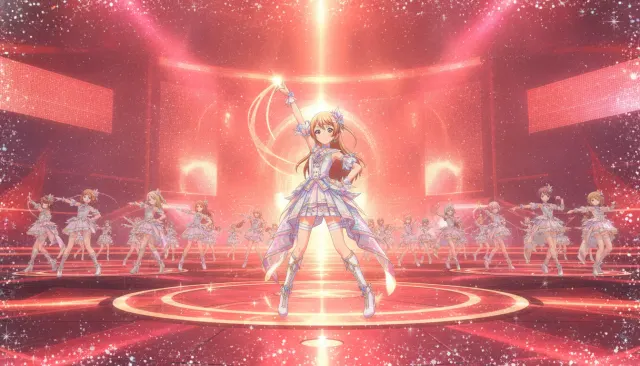
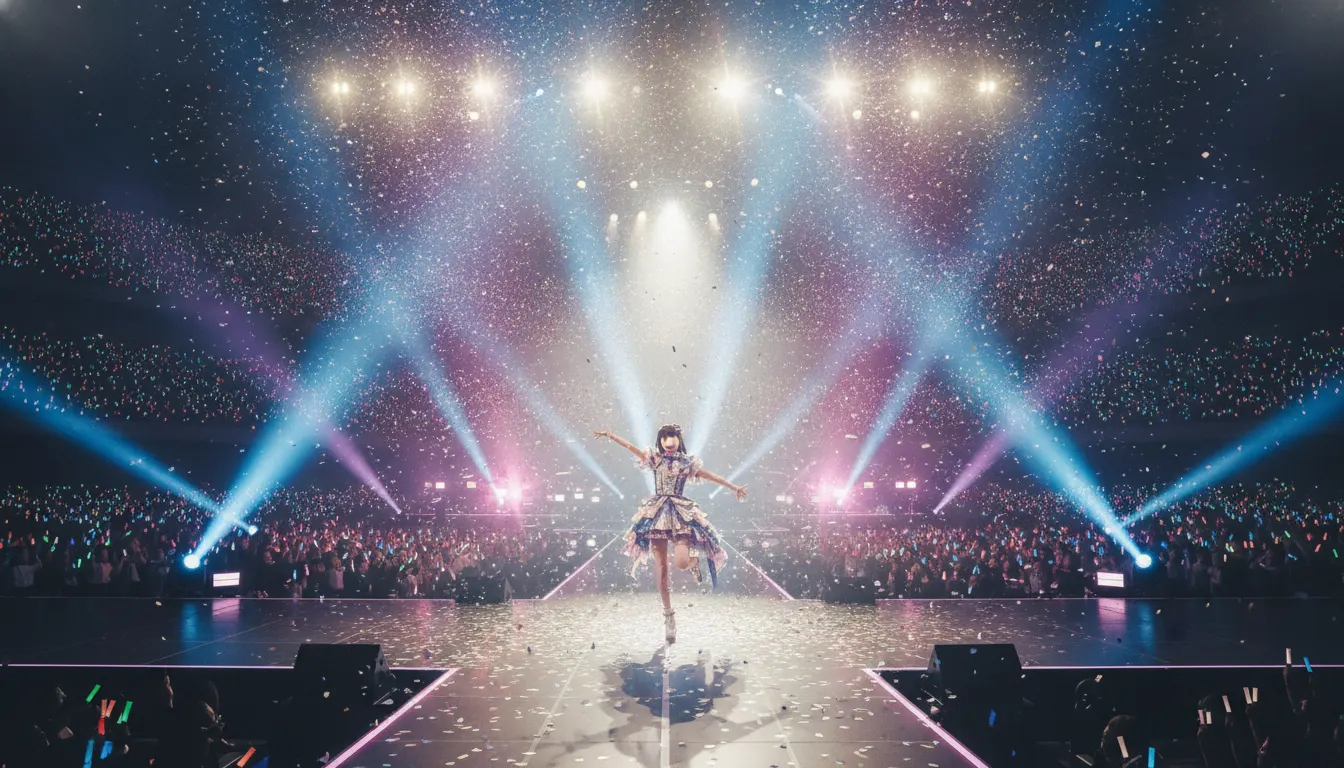
Idol anime register in the Love Live / Idolmaster / Oshi no Ko lineage. Bright stage lights, glitter confetti, choreographed performance frames, idol costumes.
The moves a human crew would use to get here. Cue applies them for you, and knowing their names is how you ask for a change.
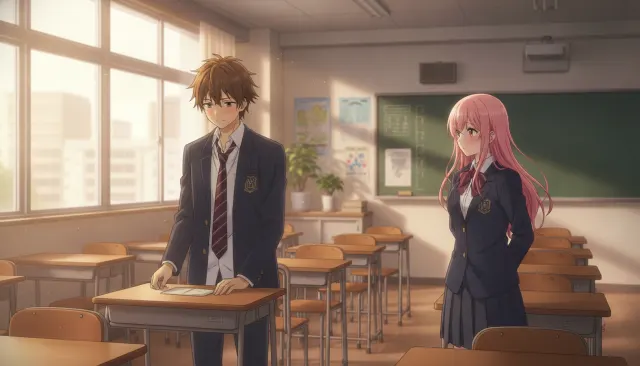
Each character fully realized in school uniform, practice wear, and performance costume -- three visual modes that signal narrative context immediately
Deliberate visual mode switch from hand-animated story scenes to CG character models during performances -- a convention accepted as stylistic rather than a quality compromise
CG performance enables orbital camera moves around full nine-member formations maintaining synchronized choreography -- impossible in 2D key animation
Each member's assigned color extended into personal motif (flower, animal, season) applied to costume trim, fan merchandise, and card game artwork
Club room, rooftop, and school entrance used as recurring emotional staging grounds that anchor the extraordinary (idol performance) in the ordinary (school life)
Character designs calibrated for coherent appearance across anime, rhythm game sprites, merch figures, and live-concert projection -- functional multi-surface visual system
Love Live! School Idol Project launched as a multimedia franchise in 2010 through a collaboration between Sunrise studio, Lantis music label, and ASCII Media Works' Dengeki G's Magazine. The original TV anime (2013-2014) and its sequel (2014-2015) followed nine high school girls forming a school idol group to save their academy from closure. The franchise became one of the most financially successful anime properties of the 2010s and established a specific visual and production vocabulary that defined modern idol anime.
Love Live! operates as a media mix: the anime is one component alongside rhythm games (Love Live! School Idol Festival, 2013-2023), live concerts with voice actors as performers, and extensive merchandise. The visual system must function coherently across all these surfaces, which shaped the design philosophy. Character designs are simple enough to replicate as figures, distinct enough to identify at event merchandise scale, and expressive enough to carry 26 episodes of character drama.
The franchise pioneered the now-standard approach of using 2D hand animation for story sequences and CG character models for performance sequences. The two visual modes are distinct and audiences accepted the seam as a stylistic convention. The CG performance segments enabled group choreography with camera moves impossible in 2D -- orbital tracking shots around nine performers maintaining synchronized dance formation.
Every character's visual design is fully realized in three costume states: school uniform (daily life), idol practice wear (rehearsal), and performance costumes. Performance costumes are designed to be visually spectacular from any camera angle, with elements (ribbon tails, tiered skirts, headpieces) that read dynamically in motion. These are then rendered as actual merchandise for fan purchase, closing the loop between screen and product.
Love Live!'s narrative formula -- group forms, faces setback, overcomes through friendship and performance -- is delivered with sincerity that the visual language supports: close-up reaction shots during songs that connect performance emotion to story stakes, and post-concert scenes that resolve narrative arcs through the experience of shared music.
Sunrise / Lantis / ASCII Media Works · 2013
Originating anime series establishing all core visual conventions of the franchise
Sunrise · 2016
Second-generation franchise with Aqours group, expanding the visual vocabulary with coastal outdoor settings
Sunrise · 2020
Third-generation entry with solo unit focus, diversifying the ensemble dynamic
Sunrise · 2021
Fourth franchise with smaller core cast (5 members), more concentrated character focus
KLab / Bushiroad · 2013
Mobile rhythm game that ran parallel to the anime and defined the franchise's media-mix financial model
Bandai Namco / A-1 Pictures (2011 anime) · 2005
Parallel franchise that originated the media-mix idol model Love Live! adopted and expanded
A Look is not a filter. It is a set of stored decisions the pipeline reads before it makes a single frame, so two videos in the same Look actually match.