The Lion King
Jon Favreau / MPC / Rob Legato / Caleb Deschanel · 2019
$1.65B gross; entirely CGI 'live-action' film using VR virtual production workflow and MPC's 1,000-artist animal pipeline
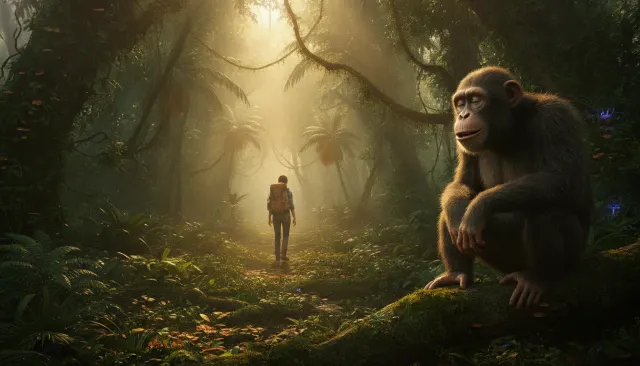
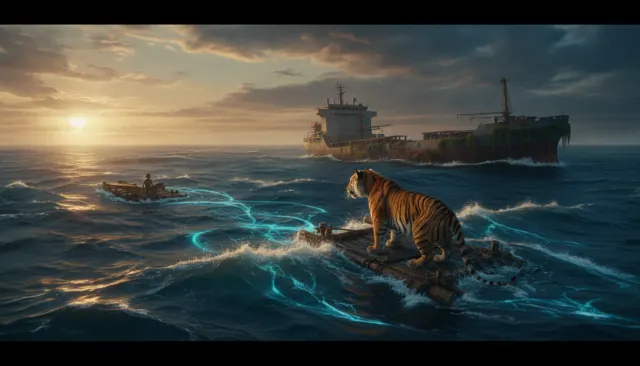
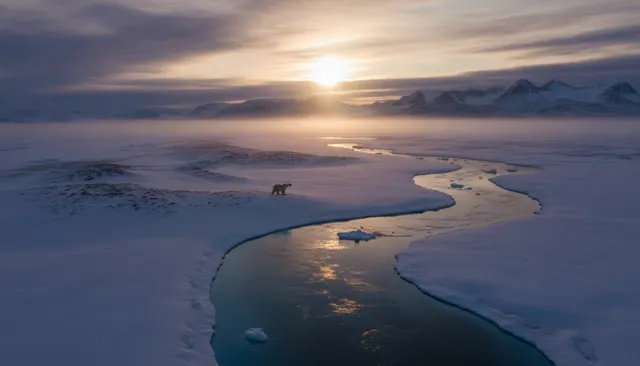
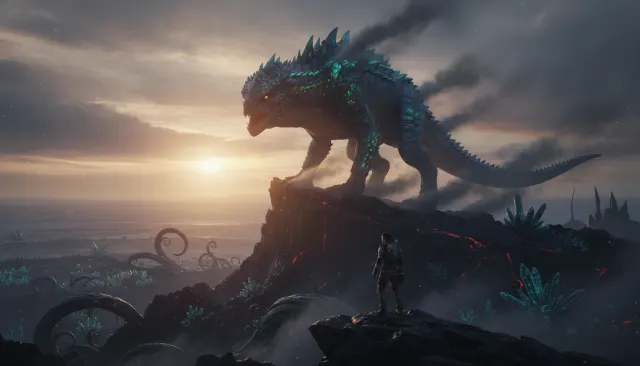
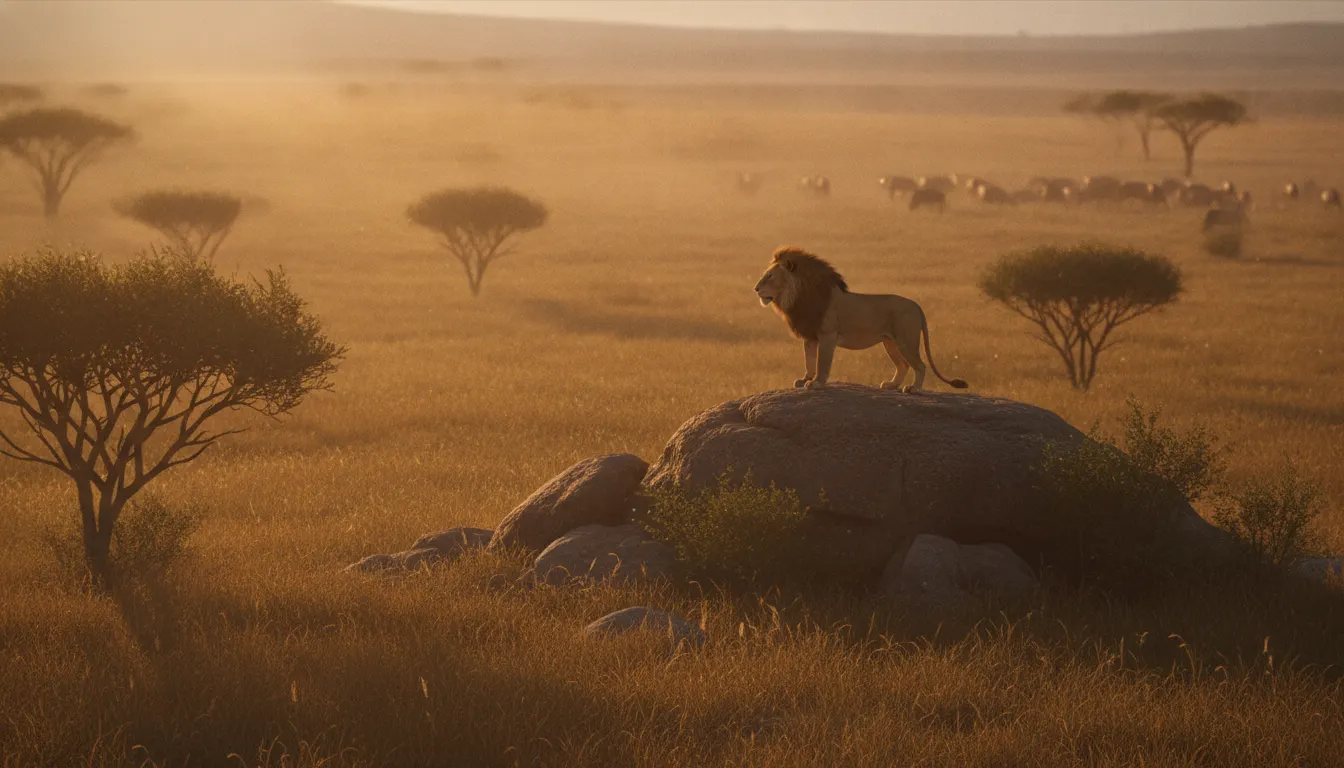
Lion King 2019 Favreau photoreal remake. Documentary-feel African savanna, photoreal CG lions, virtual production pipeline.
The moves a human crew would use to get here. Cue applies them for you, and knowing their names is how you ask for a change.
Game-engine real-time preview of the full CG world viewed through VR headset by director and DP, enabling physical cinematography decision-making in a digital environment
Hundreds of square kilometers of procedural terrain with grass simulation, rock strata, and atmospheric heat haze rendered at photographic fidelity
Species-specific motion and behavioral reference studies for every African animal in the film, ensuring biological plausibility across 20+ animal species simultaneously
Deliberate honoring of real lion facial anatomy -- no brow raises, no smiles -- placing emotional performance entirely in voice, body language, and musical scoring
Complete diurnal cycle rendered for every environment to enable consistent lighting continuity regardless of script's temporal placement of any scene
Physically accurate heat shimmer and low-atmosphere scattering specific to high-altitude East African plateau conditions, differentiating the look from generic outdoor environments
Jon Favreau's The Lion King (2019, VFX supervisor Rob Legato, MPC as primary studio, DP Caleb Deschanel) was described by its creators as a 'live-action' remake, though it contained exactly one live-action frame: a brief reflection of a real sunset. Everything else -- the pride lands, the animals, Pride Rock -- was entirely computer-generated by MPC's team of over 1,000 artists. The film grossed $1.65 billion worldwide, making it one of the highest-grossing animated films ever made, regardless of how it was categorized.
Favreau and cinematographer Caleb Deschanel used a virtual reality headset and a game-engine preview of the entire film during production. Wearing the VR headset, Favreau could position a virtual camera anywhere within the photoreal CG environment and watch scenes play out, making shot selections as though he were physically present on the African savannah. This approach -- virtual production enabled by game engine real-time rendering -- was a direct precursor to the ILM StageCraft LED volume system used in The Mandalorian (2019).
MPC's animal team embedded researchers in wildlife documentaries and worked with zoologists to build behavioral libraries for every African mammal in the film. Lions, meerkats, warthogs, hyenas, baboons, and birds each required separate motion and behavioral reference studies. Pride leader male lion walking gait, cub play behavior, and the specific weight distribution of a large cat's territorial survey stance all informed the animation rigs.
The film's most consistent critical note was that photoreal animals lack the expressive range of animated characters. Real lions cannot raise their eyebrows, smile, or exaggerate emotion -- and MPC honored that constraint. The result is a film where emotional performance is carried almost entirely by voice casting, musical cues, and body language rather than facial expression. This was a deliberate artistic choice, but it constrained the film's emotional register compared to the 1994 original.
MPC's African savannah environments were built at geographic scale: the pride lands represent hundreds of square kilometers of simulated terrain, with procedural grass simulation, atmospheric scattering for heat haze over savannah, and a full day-night-weather cycle rendered for every environment shot.
The Lion King's critical conversation centered almost entirely on one question: can photoreal animals carry the emotional register of an animated musical? The original 1994 film's 2D characters could raise eyebrows, smile, and perform the full range of human emotional expression. MPC's 2019 lions, rigidly faithful to actual lion anatomy, cannot. This constraint made scenes like Simba's trauma over Mufasa's death -- where the 1994 film used exaggerated expression to signal grief -- read as strangely flat to many viewers. The film's $1.65 billion gross proved the market wanted it; the critical debate about whether it succeeded artistically remains unresolved.
The production team, led by production designer James Chinlund, conducted an extensive location scouting trip to the Mbali Private Game Reserve in Limpopo, South Africa, as well as the Maasai Mara in Kenya. The geological and ecological specificity of these locations -- the exact color of red laterite soil, the specific silhouette of acacia trees against flat-topped mesa landforms -- is encoded in the film's environment design. The pride lands are not a generic Africa but a botanically and geologically coherent specific East African plateau biome.
Jon Favreau / MPC / Rob Legato / Caleb Deschanel · 2019
$1.65B gross; entirely CGI 'live-action' film using VR virtual production workflow and MPC's 1,000-artist animal pipeline
Jon Favreau / MPC · 2016
Direct technical predecessor using the same director and studio to establish the pipeline that Lion King would scale
BBC Natural History Unit / Mike Gunton · 2016
Wildlife documentary establishing the photographic reference standard that MPC's savannah simulations were designed to match
Barry Jenkins / MPC · 2024
Prequel film maintaining the 2019 aesthetic pipeline under a new director, demonstrating the system's transferability
Disney Nature / Keith Scholey · 2011
Disneynature documentary featuring actual Kenyan lion prides, the type of reference material used by MPC's behavioral research team
Ang Lee / Rhythm & Hues · 2012
Earlier benchmark photoreal big cat CGI that MPC's Lion King team explicitly built upon and exceeded
A Look is not a filter. It is a set of stored decisions the pipeline reads before it makes a single frame, so two videos in the same Look actually match.