The Jungle Book
Jon Favreau / MPC / Rob Legato / Bill Pope · 2016
Academy Award Best VFX; 800+ MPC artists creating the entire world around a single live-action child performer
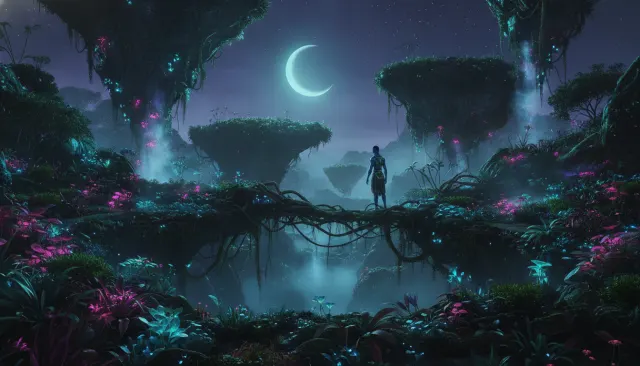
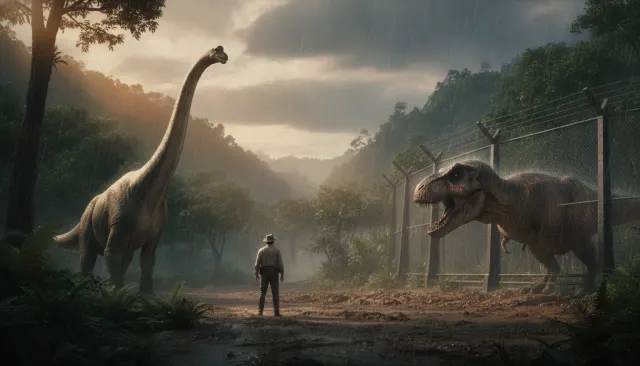
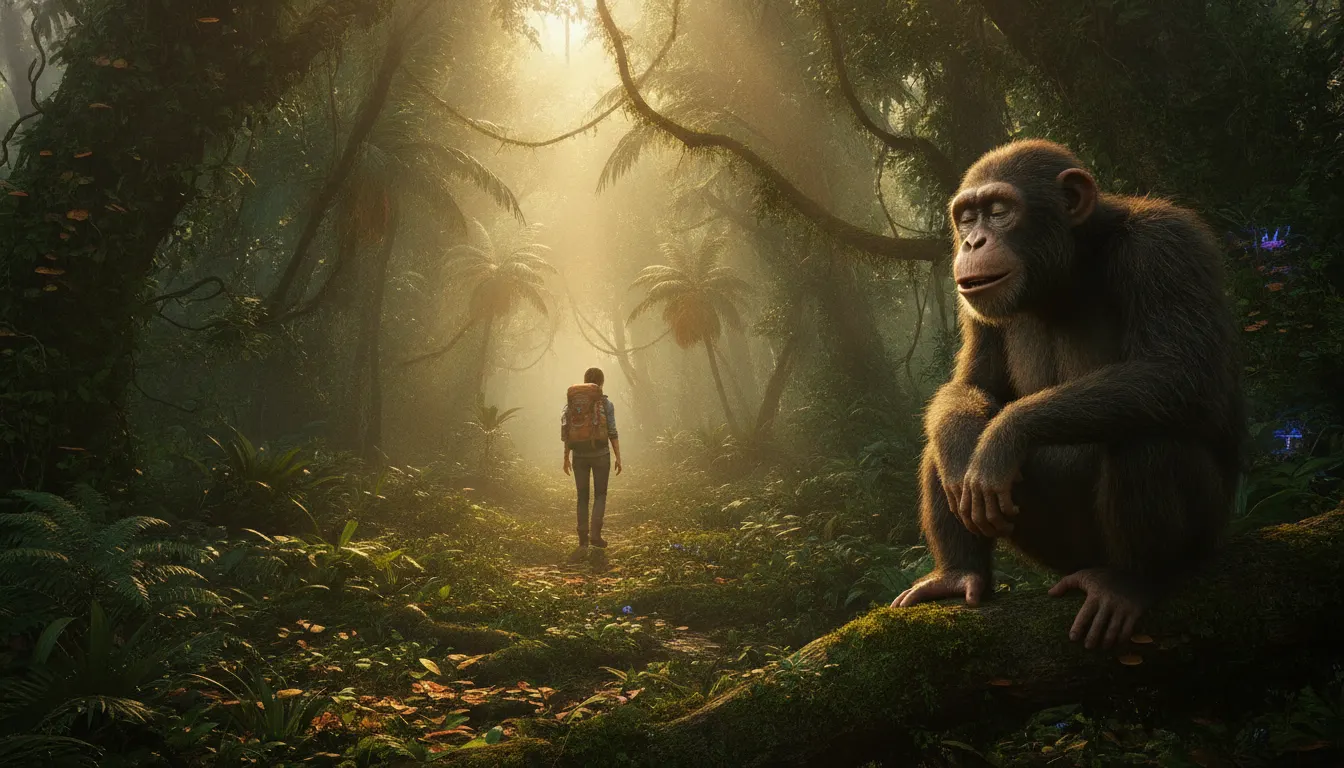
Jungle Book 2016 Favreau photoreal jungle. Single live-action child in fully CG jungle, photoreal animal cast.
The moves a human crew would use to get here. Cue applies them for you, and knowing their names is how you ask for a change.
Multi-country photography campaigns in India and Asia building surface, light, and atmospheric reference for every CG environment state
Physical lens selection and frame rate matching wildlife documentary conventions, embedding the 'real footage' register into CGI camera performance
Slightly enlarged eyes and mobile lips on otherwise anatomically accurate animals, threading the needle between photoreal credibility and voiced character expressiveness
Houdini-based plant distribution ensuring unique angle-to-angle canopy variation rather than obviously tiled environment assets
Volumetric light shafts through jungle canopy using physically accurate atmospheric scattering, creating the specific filtered quality of equatorial forest light
Purpose-built MPC fur solver handling millions of individual strands per frame at feature-film resolution, enabling close-up believability on large mammals
Jon Favreau's The Jungle Book (2016, VFX supervisor Rob Legato, MPC London as primary VFX studio) represents one of the most significant milestones in photoreal digital environment and creature production. With a sole live-action performer -- child actor Neel Sethi as Mowgli, shot entirely on a blue-screen stage in Los Angeles -- the entire jungle world was created digitally by MPC's team of over 800 artists.
The production shot location photography in India and across Asia to build reference libraries for every surface, light condition, and atmospheric state the jungle needed. Production designer Elliot Scott used this reference to design environments at the scale of actual jungle biomes rather than stylized interpretations. DP Bill Pope selected physical lenses, filters, and frame rates that matched wildlife documentary conventions, ensuring that even though the environment was entirely CGI, the camera behavior established the register of footage of a real place.
MPC's animal characters -- Baloo (bear), Bagheera (black panther), Shere Khan (tiger), King Louie (Gigantopithecus) -- required reconciling photorealistic animal anatomy with the expressive requirements of voice performance. Each animal was granted small anatomical liberties: slightly enlarged eyes, mobile lips, and facial musculature calibrated to support the vocal performances of Ben Kingsley, Bill Murray, Idris Elba, and Christopher Walken. Fur simulation at feature-film resolution required entirely new simulation tools at MPC.
The Jungle Book jungle environments layered physical subsystems: atmospheric scattering through canopy light shafts, water physics on river scenes, fire simulation for the climactic sequence, and individual plant movement under wind loads. MPC's environment team used Houdini for procedural generation of foliage density, ensuring no two angles of jungle read as identically tiled.
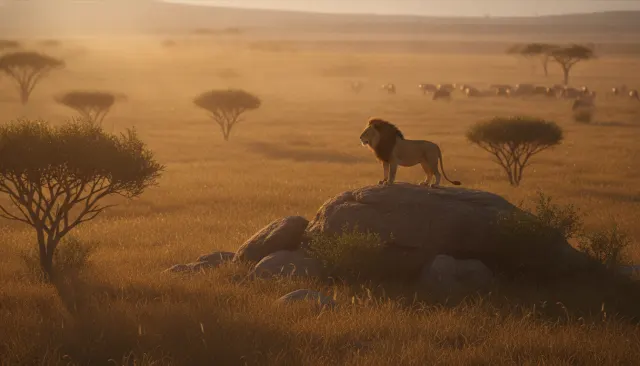
The film won the Academy Award for Best Visual Effects (2017) and directly enabled Favreau's subsequent Lion King (2019), which pushed the same pipeline into a savannah biome. MPC's tools developed for Jungle Book became the foundation for a generation of photoreal creature production across the industry.
Neel Sethi was 10 years old when principal photography began, and he spent the majority of production acting opposite puppets, sticks with eyeballs, and blue-screen walls. Director Favreau and acting coach Linda Lowy developed specific methodologies for eliciting performance from a child actor with no physical scene partners. The VFX team's job downstream was to ensure every animal's eye contact, breathing, and reactive timing honored the specificity of Sethi's performance -- creating the impression of a genuine inter-species relationship that the actor had to conjure without any genuine animal present.
Baloo (voiced by Bill Murray) required the most significant anatomical compromise in the production: bears cannot physically speak with human-legible lip movement, and their face structure makes expression extremely limited. MPC's solution was to give Baloo slightly enlarged, more mobile lips than an anatomically accurate bear while keeping the rest of his body rigorously realistic. This hybrid -- anatomically real everything except the face's speech apparatus -- was tested against wildlife photography to find the threshold of acceptable compromise.
Jon Favreau / MPC / Rob Legato / Bill Pope · 2016
Academy Award Best VFX; 800+ MPC artists creating the entire world around a single live-action child performer
Jon Favreau / MPC / Rob Legato · 2019
Direct technical successor using the same MPC pipeline for African savannah biome with entirely CGI cast
Sony / Jake Kasdan / Moving Picture Company · 2017
Jungle environment CGI in the same period using comparable pipeline, offering a stylistically looser counterpoint
Netflix / Andy Serkis / WETA Digital · 2018
Concurrent Jungle Book adaptation with Weta Digital animal pipeline, directly comparable technical and aesthetic approaches
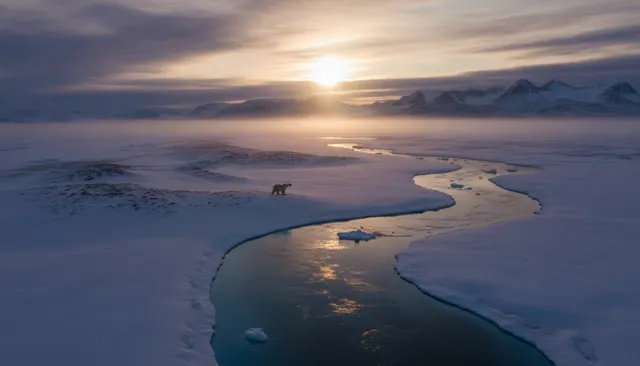
BBC Natural History Unit / Justin Anderson · 2016
Documentary wildlife cinematography contemporaneous with the film, establishing the visual reference standard the VFX sought to match
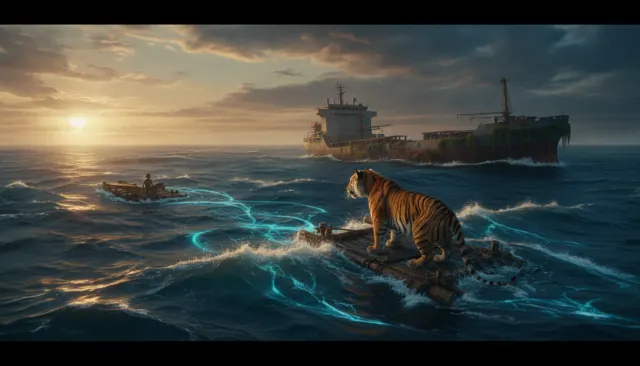
Ang Lee / Rhythm & Hues / Claudio Miranda · 2012
Earlier benchmark photoreal tiger and ocean environment, the direct predecessor the Jungle Book team measured themselves against
A Look is not a filter. It is a set of stored decisions the pipeline reads before it makes a single frame, so two videos in the same Look actually match.