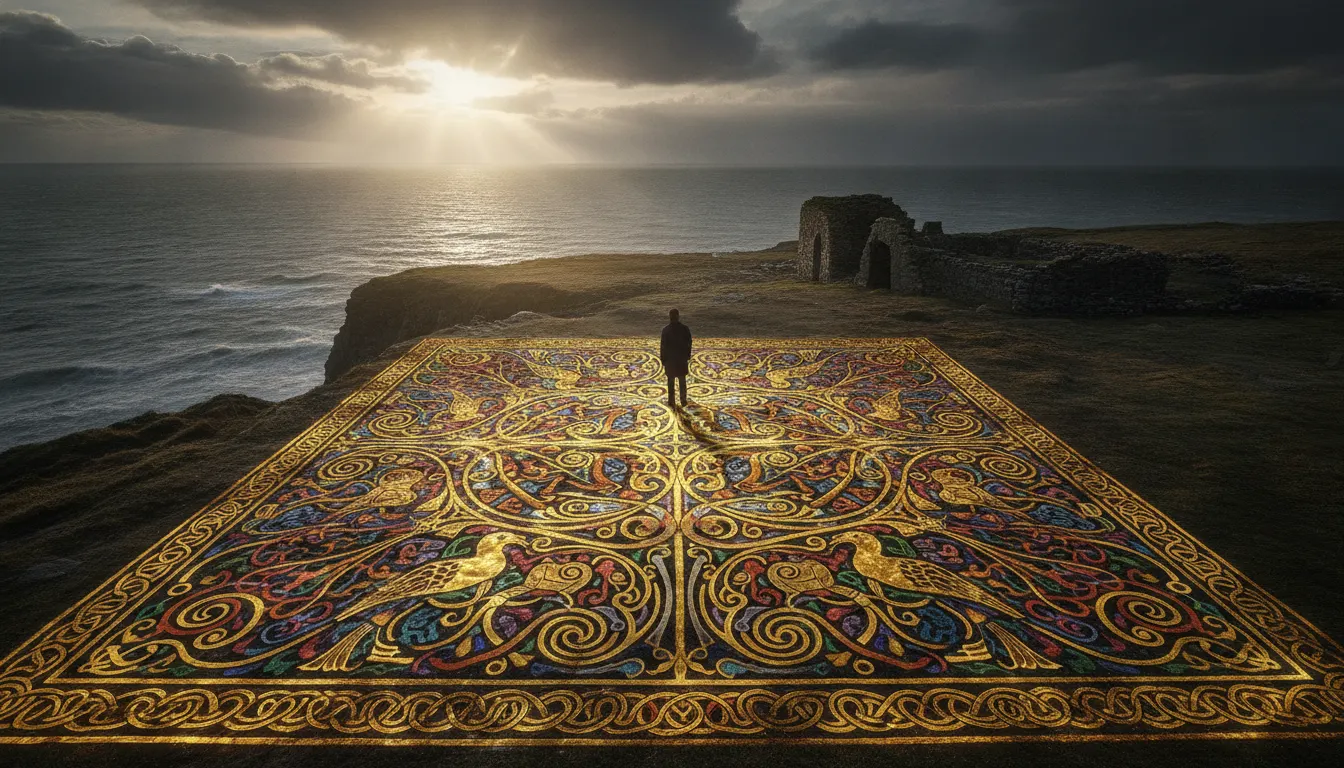
Lindisfarne Gospels (c. 715-720 AD)
British Library, Cotton MS Nero D.IV
Lindisfarne Gospels Anglo-Saxon illuminated gospel page. Eadfrith carpet page, interlaced birds, gold leaf, Northumbrian monastery Insular masterpiece.
The moves a human crew would use to get here. Cue applies them for you, and knowing their names is how you ask for a change.
continuous strands that pass over and under one another in mathematically precise patterns
animal bodies - birds, serpents, dogs - elongated into ribbon-like strands woven into knotwork panels
full-page non-text decorative spreads organized on a cross or cruciform armature
verdigris green, folium purple, red lead, yellow ochre, lead white - no synthetic colors
gold leaf or gold pigment used only for initials and halos, not as background
grid geometry: designs constructed over invisible point-grids ensuring mathematical regularity
semi-naturalistic figures of Matthew, Mark, Luke, and John rendered in Mediterranean icon style framed by Insular ornament
The Lindisfarne Gospels, produced on Holy Island (Lindisfarne) off the Northumbrian coast around 715-720 AD, represent the apex of Insular - or Hiberno-Saxon - manuscript illumination. Attributed to the monk Eadfrith, later Bishop of Lindisfarne, the manuscript was created as an act of devotion to Saint Cuthbert (died 687 AD), the community's patron. The manuscript is now housed at the British Library in London.
The most visually stunning pages of the Lindisfarne Gospels are its carpet pages - full-page decorative spreads positioned before each of the four Gospels. These pages contain no text; they are pure geometric and zoomorphic ornament organized on a cross-shaped armature, filled with interlocking knotwork so dense that individual strands are traced with difficulty. Under magnification, the interlace resolves into birds, fish, dogs, serpents, and cats with elongated necks and limbs woven together in continuous ribbons - a characteristic of the Insular style scholars call zoomorphic interlace.
The palette draws from mineral pigments: verdigris (copper green), folium (purple-red from the turnsole plant), yellow ochre, lead white, and red lead. Gold and silver appear sparingly but with high symbolic weight - gold is reserved for majuscule initials and the halos of Evangelist portraits, never applied broadly as in later Continental manuscripts.
The major initial pages - particularly the Chi-Rho page (XPI autem) at Matthew 1:18, announcing the birth of Christ - compress extraordinary intricacy into letterforms. A single initial page might contain several thousand interlaced strands. Art historians have calculated that to plan and execute such a page, the scribe-artist must have worked from pricked-point grids invisible to the naked eye, maintaining geometric perfection across the entire vellum surface.
Insular art synthesizes three traditions: the Celtic La Tène curvilinear tradition, Anglo-Saxon metalwork zoomorphic ornamentation (see the Sutton Hoo helmet and shoulder clasps, c. 625 AD), and Mediterranean Christian iconography carried north by missionaries from Rome and the Eastern Church. The result is neither purely Celtic nor purely Anglo-Saxon, but a hybrid that flourished in the monasteries of Northumbria and Ireland between c. 600 and 900 AD.
British Library, Cotton MS Nero D.IV
Trinity College Dublin, MS 58
Bibliothèque nationale de France
Durham Cathedral Library
British Museum (contemporary metalwork parallel)
Trinity College Dublin, MS 57
A Look is not a filter. It is a set of stored decisions the pipeline reads before it makes a single frame, so two videos in the same Look actually match.
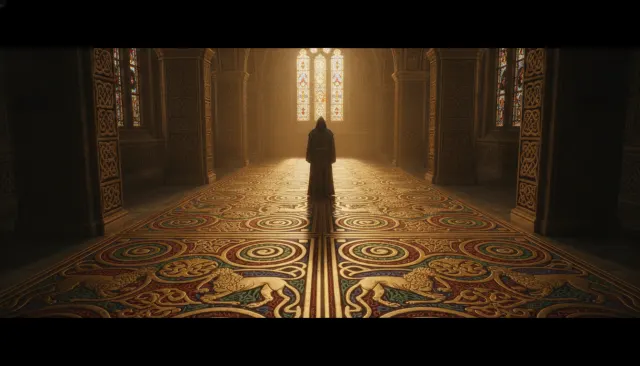 Historical Illuminated ExtendedBook of Kells Celtic Illuminated
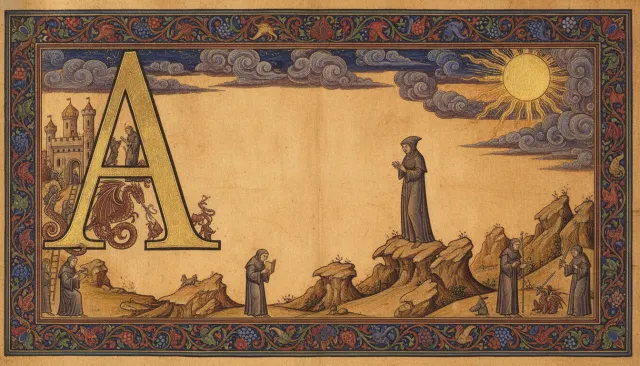 Medieval VictorianMedieval Illuminated Manuscript
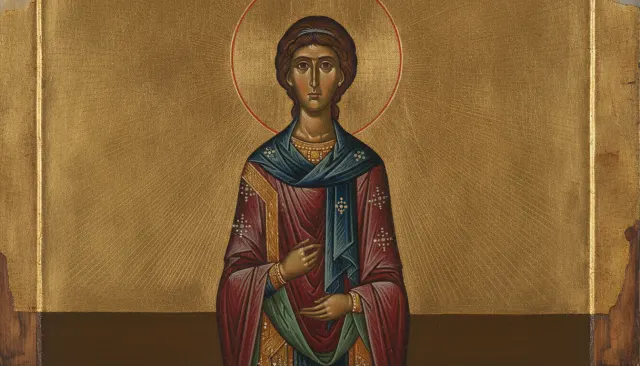 Eastern HistoricalByzantine Icon Gold Leaf
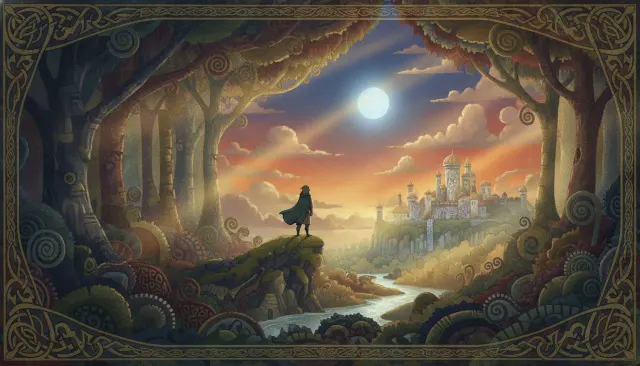 Indie Art AnimationCartoon Saloon Celtic Illuminated
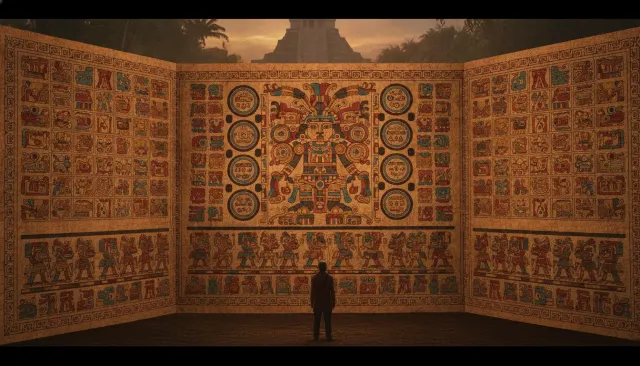 Historical Illuminated ExtendedAztec Mesoamerican Codex Symbol
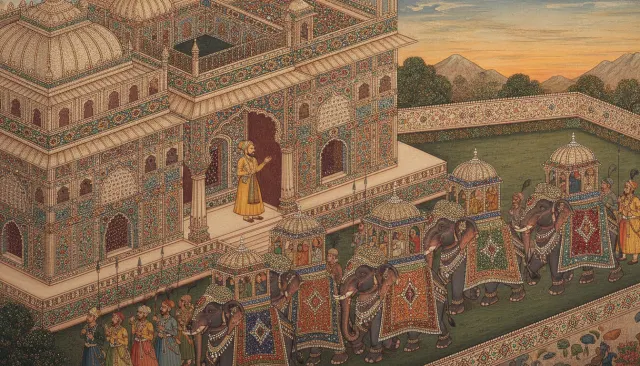 Eastern HistoricalMughal Indian Miniature