Klaus
Netflix / SPA Studios / Sergio Pablos · 2019
Academy Award-nominated feature and the defining proof-of-concept for 3D-lit-as-2D NPR animation at feature scale
Sergio Pablos Klaus 2019 painterly-lit 3D feature. SPA Studios proprietary volumetric-light tool, hand-painted 2D-feel surfaces on 3D rigs, Netflix Christmas indie.
The moves a human crew would use to get here. Cue applies them for you, and knowing their names is how you ask for a change.
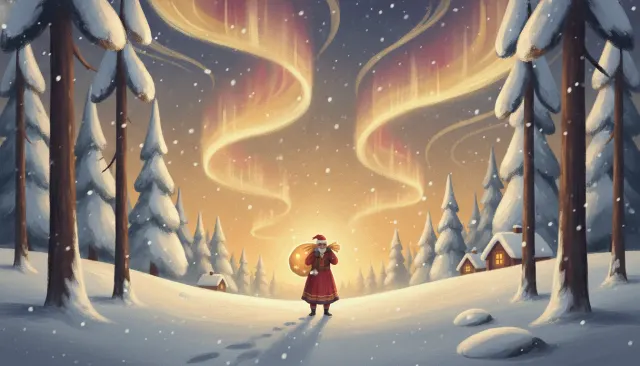
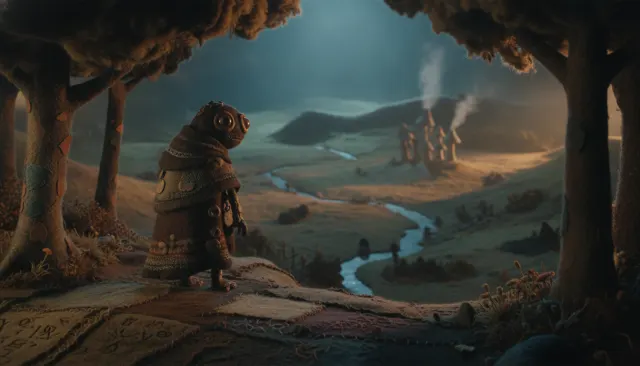
Hand-painted texture maps on 3D geometry with 3D lighting calculations outputting traditional 2D-animation-quality painted surfaces, the core SPA Studios innovation
Every surface material carries legible paint strokes or drawn marks, from wood grain to snow accumulation to fabric pattern
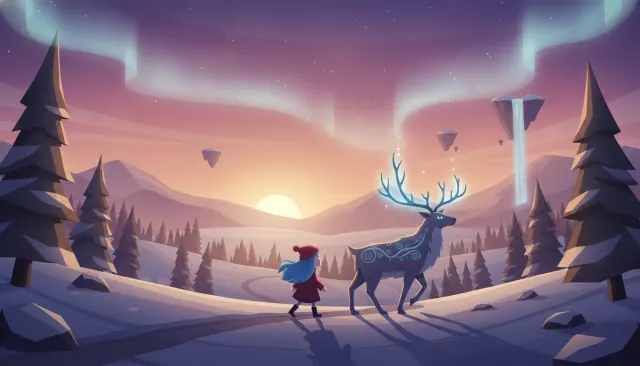
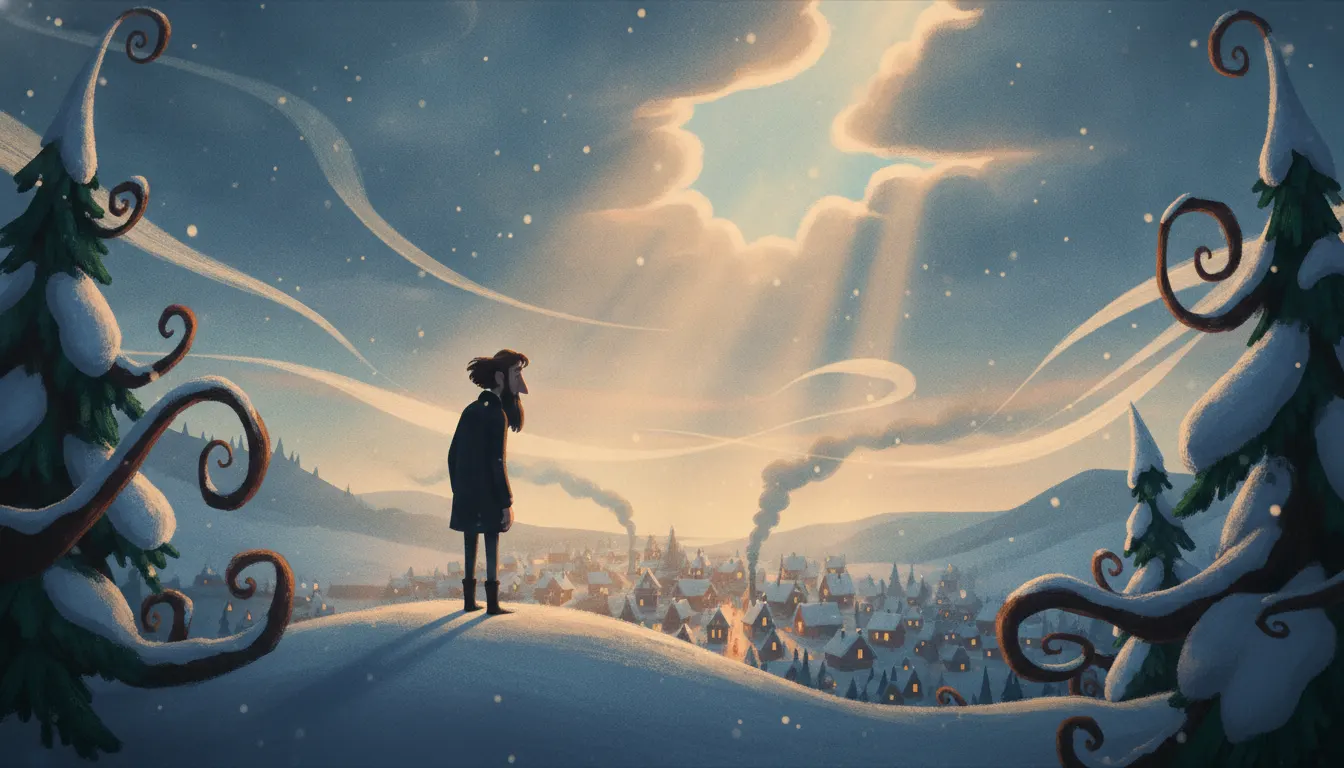
Warm amber, ochre, and deep blue-black inspired by Northern European folk painting and golden-hour light, creating emotional warmth through color temperature
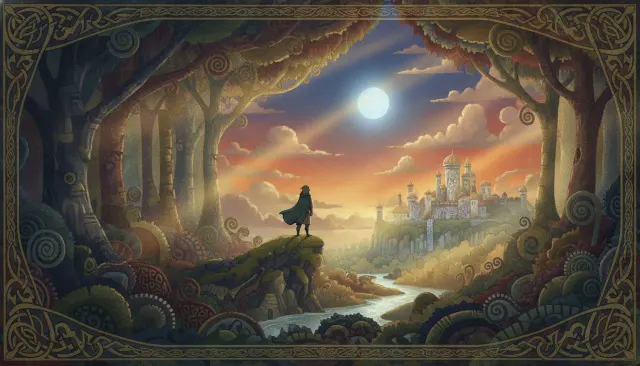
Character garments and environment surfaces decorated with rosemaling-influenced patterns referencing Norwegian and Finnish folk textile traditions
Perspective and parallax calculated from 3D geometry while all visible surfaces retain hand-painted appearance, giving the film dimensional coherence without CG polish
Shadow areas use separately designed painted shadow textures rather than simple darken operations, maintaining the hand-crafted quality in the film's darker regions
Sergei Pablos's Klaus (Netflix, 2019) achieved what had been theorized but never executed at feature scale: fully realized 2D-animation-quality feature film output using a 3D CG pipeline. Pablos, who had spent decades in Disney feature animation (he created the Despicable Me concept before Illumination), founded SPA Studios in Madrid specifically to develop the technical methodology that Klaus required.
Klaus's core technical innovation was its non-photorealistic rendering (NPR) system, developed in-house at SPA Studios over several years. Traditional 2D animation uses a flat, light-source-agnostic fill with a separate shadow layer painted manually by artists. Pablos's team developed a 3D rendering pipeline that used 3D geometry and lighting calculations but output results that were indistinguishable from hand-painted 2D cells. The system placed hand-painted texture maps on 3D surfaces, then used 3D lighting to determine which textures were visible and in what proportion -- producing 3D-correct depth and perspective with the visual quality of brushed paint.
Every surface in Klaus carries visible brushwork: wood grain in the buildings of Smeerensburg reads as painted strokes; Klaus's beard has individual hair marks that suggest a round brush; snow accumulates in painterly masses rather than CG particle fields. The color palette is influenced by Northern European folk art and golden-hour oil painting -- warm amber and ochre for Klaus's workshop, deep blue-black for the hostile village, clean white for snow.
The character designs reference Scandinavian folk art traditions: Klaus himself draws from Santa Claus imagery filtered through Norwegian rosemaling (decorative painting tradition), while Smeerensburg's rival families have flat-decorated garments that reference Finnish and Norwegian textile art. This folk-art visual grounding gives the film's painterly surfaces a cultural specificity beyond generic 'storybook' aesthetics.
Klaus received the Academy Award nomination for Best Animated Feature (2020) and won the Annie Award. Its technical approach has been cited as one of the most significant methodological contributions to animation in the 21st century, opening a path for 2D-quality output from 3D pipelines without the per-frame cost of traditional hand-drawn production.
Sergio Pablos's career arc is directly relevant to understanding Klaus. He created the original concept for Despicable Me in 2005 and sold it to what became Illumination Entertainment, leaving the project before production to found SPA Studios. Klaus was partly motivated by a desire to prove what animated feature filmmaking could be outside the studio system -- a prestige work made in Europe, for an adult-as-well-as-family audience, with aesthetic ambitions that would not survive the commercial filtering of a major studio production process. The Netflix deal gave Pablos the freedom to spend years developing the NPR pipeline without commercial deadline pressure.
The town of Smeerensburg, populated by two families perpetually at war for reasons no one remembers, functions as a visual metaphor for tribal conflict. The production design deliberately made the town grimy, grey-blue, and architecturally hostile -- buildings lean inward, streets are narrow, and the sky is perpetually overcast. This environment design is the visual argument of the film's social satire before a line of dialogue is spoken: this is what a community looks like when it organizes itself around inherited conflict rather than cooperation.
Netflix / SPA Studios / Sergio Pablos · 2019
Academy Award-nominated feature and the defining proof-of-concept for 3D-lit-as-2D NPR animation at feature scale
Cartoon Saloon / Nora Twomey · 2017
Contemporary 2D-quality flat-shaded animated feature sharing Klaus's commitment to visible artistic texture over CG polish
Cartoon Saloon / Tomm Moore / Ross Stewart · 2020
Hand-drawn animated feature occupying similar critical and aesthetic space as Klaus -- painterly, folk-influenced, prestige
Sylvain Chomet · 2010
2D-drawn animated feature in the Hergé visual tradition, establishing the European painterly animation register Klaus entered
Dorota Kobiela / Hugh Welchman · 2017
Feature animated entirely in Van Gogh oil-painting style using a combination of oil paintings and rotoscope, a contemporaneous approach to the same painterly animation challenge
SPA Studios / Netflix · 2019
Production documentary detailing the NPR pipeline development, widely circulated among animation professionals
A Look is not a filter. It is a set of stored decisions the pipeline reads before it makes a single frame, so two videos in the same Look actually match.