Coraline
Laika / Henry Selick / Neil Gaiman (novel) · 2009
Studio's debut establishing the dark literary aesthetic and introducing 3D-printed replacement faces at production scale
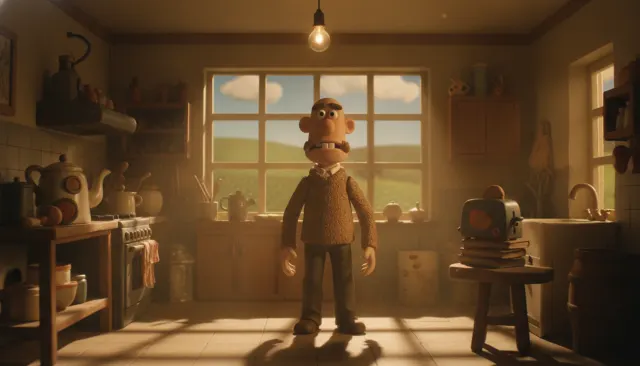
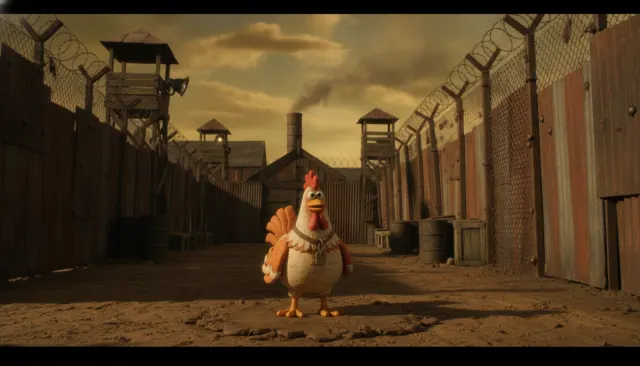
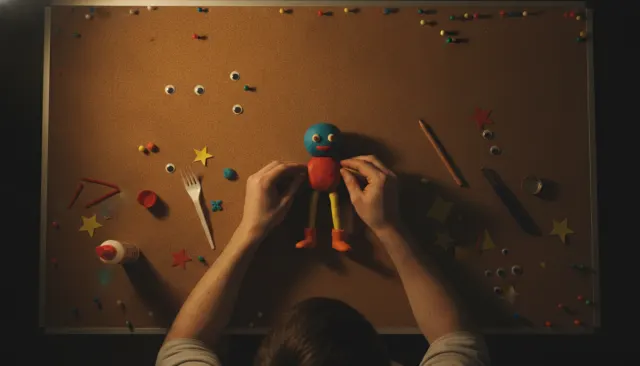
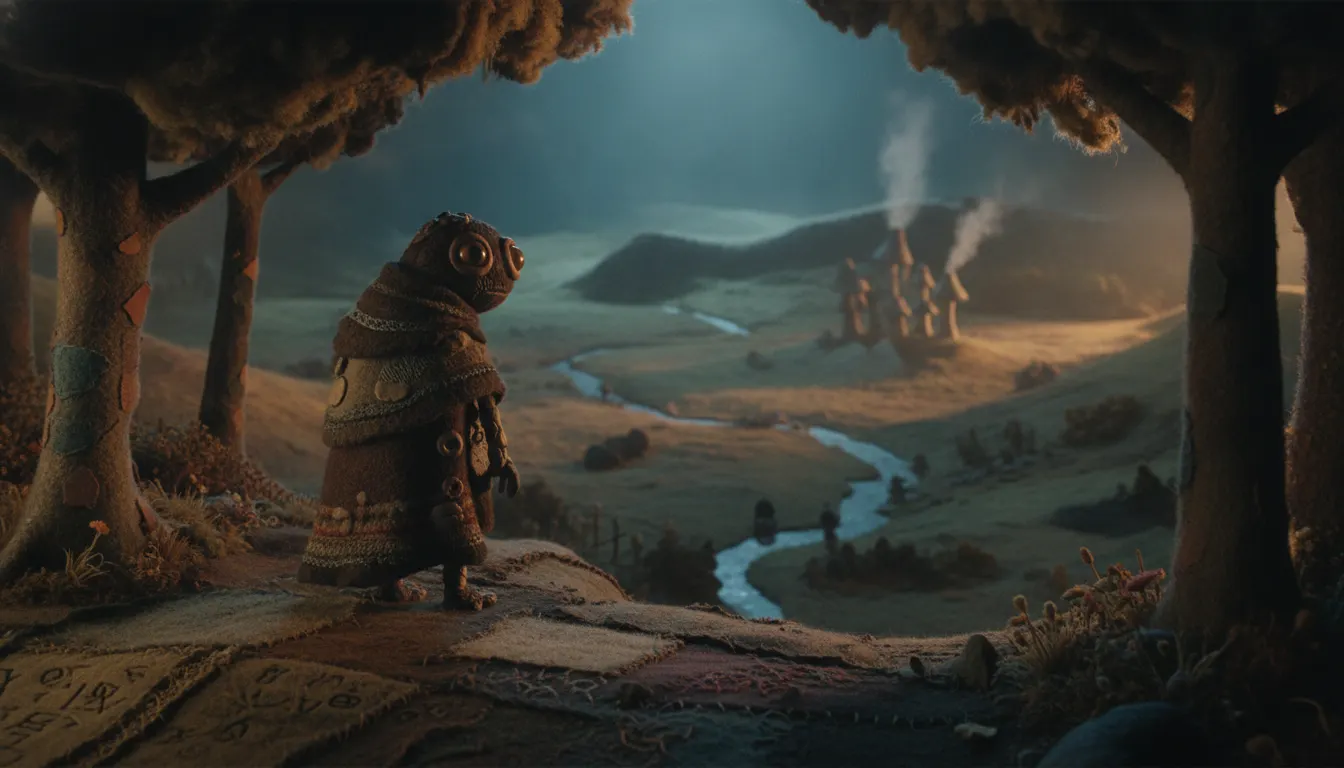
Laika Studios stop-motion-feel CG hybrid. Missing Link, Boxtrolls textures. Tactile felt-and-fabric materials within rendered scenes.
The moves a human crew would use to get here. Cue applies them for you, and knowing their names is how you ask for a change.
Thousands of 3D Systems full-color ProJet-printed replacement face parts enabling Disney-level expression complexity within physical stop-motion production
VFX supervisor-directed color grading and texture matching designed so audiences cannot identify where physical photography ends and CG begins
Knitted, sewn, and woven costumes and environment surfaces produced by craft specialists at miniature scale, giving characters and sets tactile material authenticity
All physical elements illuminated with actual light sources rather than digitally simulated, preserving the specific quality of photon-material interaction that separates physical from CG
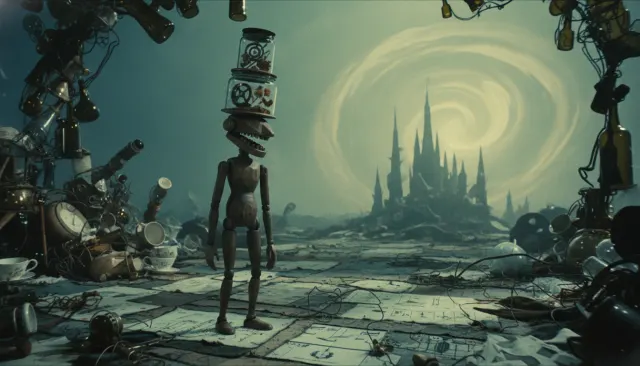
Character and environment designs referencing European illustration traditions -- Edward Gorey, Tim Burton aesthetics, dark fairy tale illustration -- rather than mainstream animation conventions
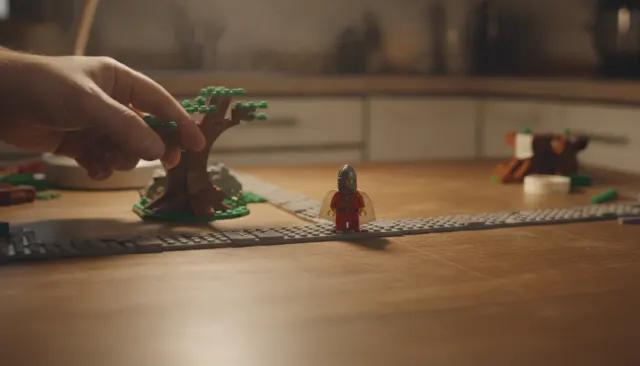
Full environments built at 1/6 to 1/12 scale with correct material shading behavior under miniature studio lighting, creating spatial coherence between character and world
Laika, the Portland, Oregon animation studio founded by Phil Knight and led by creative director Travis Knight, occupies a unique position in animation: every feature film is produced primarily in physical stop-motion while integrating digital CG in ways deliberately designed to be undetectable. The studio's approach to CG-hybrid work became progressively more ambitious from Coraline (2009) through Kubo and the Two Strings (2016) and Missing Link (2019), ultimately developing proprietary tools that redefined what stop-motion could be.
Laika's most significant technical innovation is its use of 3D printing for replacement facial expression parts. Traditional stop-motion required hand-sculpted replacement faces, limiting the number of achievable expressions. Laika worked with 3D Systems to develop full-color ProJet 660Pro printing capable of producing thousands of individually colored, microscopically detailed replacement face parts per character per production. Coraline used approximately 200,000 replacement parts; Kubo used over 1.5 million. This enabled expression complexity equivalent to computer animation while maintaining the physical tangibility of stop-motion.
Laika's CG elements are introduced where physical production reaches practical limits: crowd scenes with dozens of characters (water droplets in Boxtrolls, the epic ocean sequence in Kubo), fire and fluid dynamics, and large-scale environment extensions. The guiding principle, articulated by VFX supervisor Brian McLean, is that audiences should never be able to identify where the physical ends and the digital begins. This requires extensive color-grading and texture matching work to unify the slightly-different-sharpness quality of CG renders against physical photography.
The defining visual quality of Laika work is the tactile presence of physical materials under real light. Coraline's knitted 'other world' was created by Portland textile artist Althea Crome, who hand-knitted sweaters at 1/12th scale. Every surface in a Laika film has been physically touched, constructed, and illuminated with real photons -- a quality that CG, however good, cannot perfectly replicate. The CG integration works because it inherits this physical light data from the camera.
Laika's five features -- Coraline (2009), ParaNorman (2012), The Boxtrolls (2014), Kubo and the Two Strings (2016), and Missing Link (2019) -- each pushed the CG-hybrid technique further while maintaining the studio's commitment to dark, literary subject matter and European illustration traditions in character design.
Kubo and the Two Strings (2016) contains the largest stop-motion puppet ever constructed for a feature film: the skeleton warrior Beetle, standing over 16 feet when fully assembled. The film's climax required Weta Digital (New Zealand) to contribute CG ocean simulations at a scale beyond what physical water could practically achieve on a stop-motion set. The CG-hybrid integration was more ambitious than any previous Laika film, with some sequences requiring frame-by-frame compositing of 20+ separately photographed layers. The film's visual quality won the Annie Award and earned an Academy Award nomination, vindicating the scale of the technical ambition.
Laika was founded by Phil Knight, Nike's co-founder, who purchased the studio in 2005 after it had operated as Will Vinton Studios. Knight's decision to invest Nike-scale resources in a stop-motion animation studio with no commercial distribution guarantee -- and no pressure to produce sequels or franchise content -- created the conditions for Laika's artistic identity. The studio has never produced a direct sequel to any of its films, which is an anomaly in modern animation economics and a direct product of Knight's ownership model.
Laika / Henry Selick / Neil Gaiman (novel) · 2009
Studio's debut establishing the dark literary aesthetic and introducing 3D-printed replacement faces at production scale
Laika / Sam Fell / Chris Butler · 2012
Zombie-comedy featuring first 3D-printed face with color printing capability and extensive CG crowd simulation integration
Laika / Graham Annable / Anthony Stacchi · 2014
Dickensian industrial setting pushing environment construction complexity and CG-physical integration to new scales
Laika / Travis Knight · 2016
Peak technical achievement: the largest stop-motion puppet ever built, 1.5 million printed face parts, and CG ocean sequences winning Annie Award for visual effects
Laika / Chris Butler · 2019
Laika's most vibrant-palette film demonstrating the aesthetic's range from dark Gothic toward warm adventure comedy
Netflix / Henry Selick · 2022
Stop-motion feature from Coraline's director demonstrating the dark-animated aesthetic without Laika's specific CG-hybrid pipeline
A Look is not a filter. It is a set of stored decisions the pipeline reads before it makes a single frame, so two videos in the same Look actually match.