CLAYMATION · 1990S · UK
Art Attack Plasticine Craft
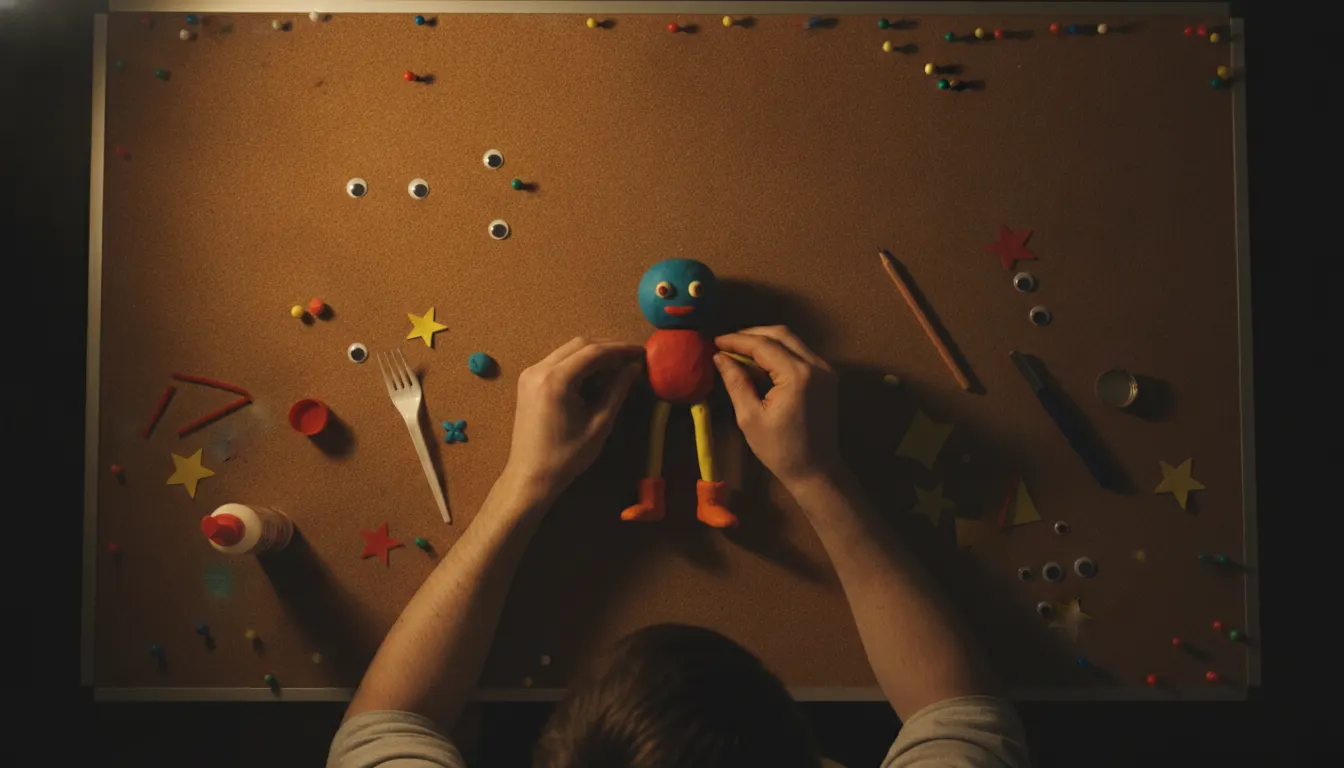
Art-Attack-style craft-table plasticine. Top-down macro shots of clay being shaped by hands, kid-show craft tutorial energy, sped-up sculpting.
claymationcraftkids-tvtop-down
LUT craft-table-bright
WHEN TO USE
- DIY, crafting, or maker content that wants to signal approachability and hands-on process
- Nostalgia content aimed at UK millennials who grew up with the programme
- Children's educational or creative content where the instructional process is part of the content
- Brand content that wants to signal democratic creativity: anyone can make this
- Social media craft and art content where visible process and imperfection are authenticity markers
- Workshop, school, or educational institution content
WHEN NOT TO USE
- Professional, premium, or luxury contexts where amateur-coded aesthetics undermine brand positioning
- Adult audiences who expect sophisticated art direction rather than primary-school craft energy
- Content requiring technical precision or clean results -- the Art Attack aesthetic celebrates mess
- B2B or corporate contexts where the children's TV association is a distraction
SIGNATURE TECHNIQUES
How the look is made.
The moves a human crew would use to get here. Cue applies them for you, and knowing their names is how you ask for a change.
- 01Primary
coloured plasticine in bold, unblended blocks -- red, yellow, blue, green
- 02Hands visible in frame throughout
the making process is the content
- 03Close
up shots of rolling, pressing, and shaping clay with household tools
- 04Bright, even studio lighting that removes shadow and emphasises colour over form
- 05Visible fingerprints, seam lines, and material imperfection as aesthetic features
- 06Scale shifts from close craft detail to wide
shot reveal
- 07Mixed media combinations
plasticine with paper, card, paint, and found objects
HISTORY & CONTEXT
Where it comes from.
Art Attack Plasticine Craft Look
Art Attack was a children's art programme that ran on ITV in the United Kingdom from 1990 to 2007, hosted by Neil Buchanan throughout its original run. It became one of the most watched children's programmes in British television history, and its crafting segments -- particularly those involving plasticine, papier-mache, and recycled materials -- defined a generation's understanding of amateur art-making.
The Aesthetic Philosophy
The Art Attack visual aesthetic is deliberately unpolished, approachable, and instructional. Its defining quality is that it looks achievable: the tools are household objects, the materials are cheap, and the results are charming rather than pristine. The programme explicitly valued creative effort over technical perfection, making the process visible rather than hiding it.
Plasticine as Primary Medium
Plasticine segments were central to Art Attack's output. Buchanan's hands-on demonstrations with brightly coloured, primary-toned plasticine -- rolling, pressing, shaping, layering -- established a visual vocabulary of handmade clay craft that is fundamentally different from Aardman's professional animation plasticine work. Art Attack plasticine is rougher, more improvised, and more obviously the work of non-specialist hands.
Giant Art Sequences
One of the programme's most distinctive recurring features was the 'Big Art Attack' segment, in which Buchanan created enormous ground-level artworks from found materials and pigments that were only legible from an aerial camera perspective. This shift in scale and viewpoint is a recurring visual idea across the show's craft vocabulary.
Cultural Legacy
Art Attack's visual aesthetic has experienced significant nostalgic revival in the 2010s and 2020s through DIY YouTube culture, crafting social media, and lo-fi art content. Its 'imperfect but heartfelt' approach to plasticine and mixed media has become a reference point for deliberately amateur-coded creative content.
NOTABLE WORKS
Where you have seen it.
Art Attack Reboot (Disney Channel, 2013-2016)
Blue Peter craft segments (BBC, 1958-present, parallel British children's craft television tradition)
Hart Beat (ITV, 1984-1993, predecessor programme with Tony Hart)
Morph (BBC, 1977-1981 / 2014-present, Tony Hart's plasticine character, Aardman co-production)
THE RECIPE
The exact knobs
the renderer turns.
A Look is not a filter. It is a set of stored decisions the pipeline reads before it makes a single frame, so two videos in the same Look actually match.
SettingValue
GradeColour LUT applied to every frame
craft-table-brightTransitionHow one shot becomes the next
soft cuts · 180ms · ease-in-outKen BurnsCamera move applied to stills
Slow push · 0.04 · centerTypographyDisplay / body / mono pairing
Archivo · Inter · CourierMusic moodWhat the bed under the voice sounds like
upbeat-kids-pop · xylophone-bouncePrompt suffixAppended to every shot prompt in this Look
Art Attack plasticine craft tutorial, top-down craft table macro, hands shaping clay puppet, sped-up sculpting, 1990s kids tvPALETTE
Primary
#E8552A
Secondary
#F5C144
Accent
#3A8FD7
Text/Light
#2A0F08
Text/Dark
#FFF8E8
BG 900
#1A0808
BG 800
#2A1410
RELATED LOOKS
Next to it on the shelf.
Your first cut
is on us.
+ New videoFree plan · no card · 1080p export