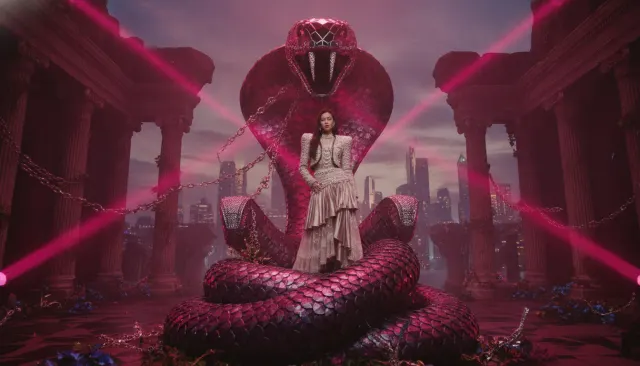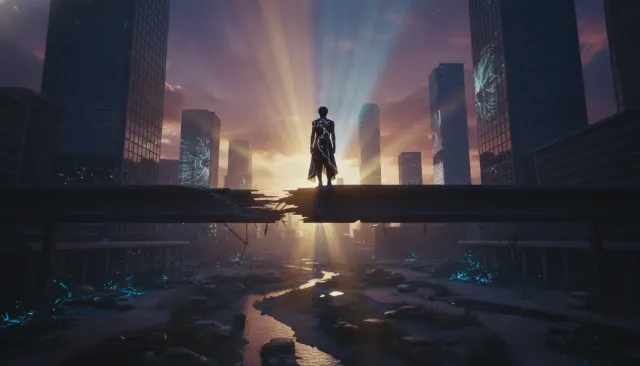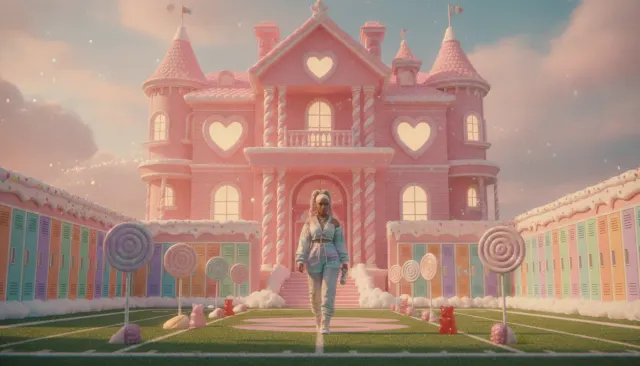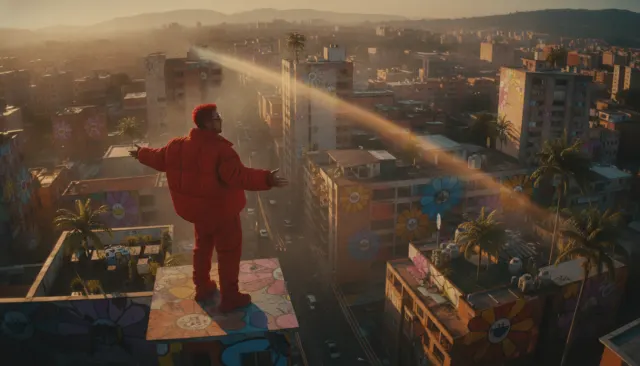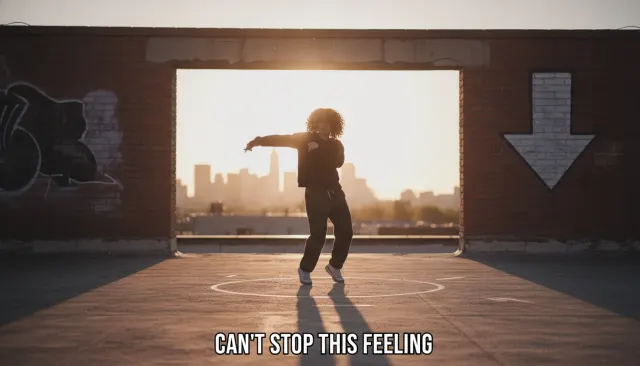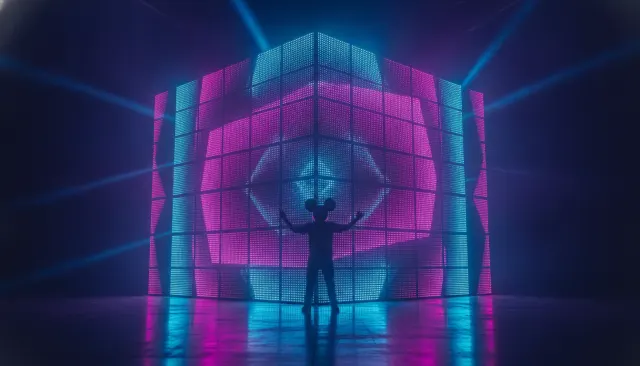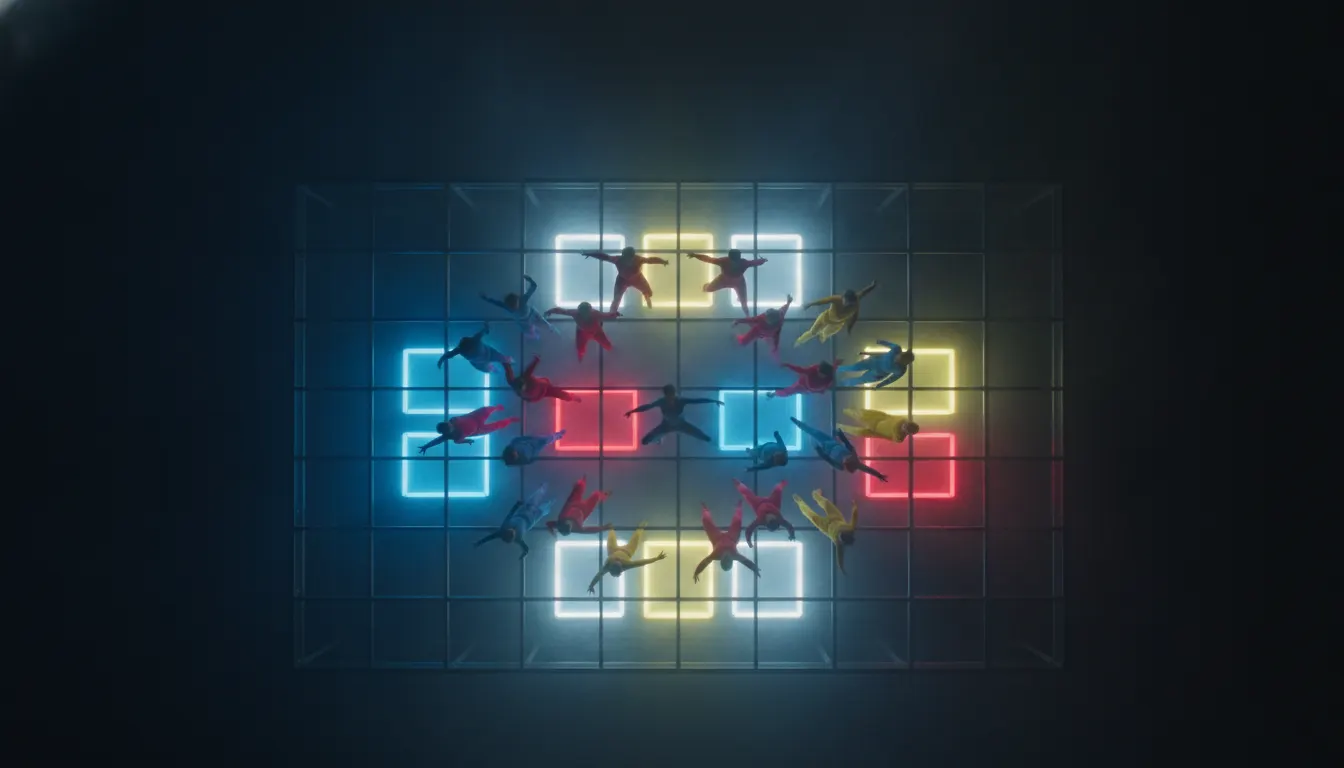
BTS, 'DNA' dir. Lumpens
2017
multi-environment color concept, synchronized choreography template
K-pop polished choreography MV. Glass-floor box set, color-block sub-units, immaculate sync, drone overhead formation reveal, color-graded perfection.
The moves a human crew would use to get here. Cue applies them for you, and knowing their names is how you ask for a change.
set concept: 5-8 distinctly designed environments each with unique color palette within a single video
as-teleportation: match-cut transitions between sets that make spatial jumps feel motivated and rhythmic
angle position framing the full group
coded costuming: individual member identification through color variant within unified costume concept
lit studio environments with LED cyc or colored lighting rigs creating immersive color environments
cut insert choreography: hands, feet, face-in-profile detail cuts between wide masters
saturation color grading with clean skintone rendering and vivid object colors
The K-pop music video is the most production-engineered format in contemporary music - a medium where every element, from set architecture to costume color coding to camera blocking, is designed with a precision that approaches industrial production design. The result is a visual language that is immediately recognizable, globally legible, and operationally distinct from every other music video tradition.
The Korean entertainment companies SM Entertainment, YG Entertainment, JYP Entertainment, and HYBE (Big Hit Entertainment) each maintain distinct but related visual styles. SM's aesthetic (SHINee, EXO, NCT, aespa) tends toward colder, more futuristic color palettes - blue-white corporate environments, geometric architecture, and a quality of technological aspiration. YG's aesthetic (BLACKPINK, Big Bang) leans toward more fashion-forward luxury with a harder, darker edge. HYBE/Big Hit (BTS, TXT, NewJeans) spans the widest range but established the warm, color-saturated narrative-concept video as K-pop's most internationally accessible format.
BTS's visual work, particularly the "DNA" (2017, dir. YongSeok Choi / Lumpens), "Dynamite" (2020), and "Butter" (2021) videos, established the template that most mainstream K-pop references: a sequence of distinctly designed sets (each a different color and architectural concept), inter-set transitions that use the edit as spatial teleportation, and synchronized choreography photographed from multiple angles including aerial drone, wide master, and close-cut insert.
"DNA" (2017) is the canonical example: seven distinct visual environments each with their own saturated color palette, connected by match-cuts and motivated transitions. The choreography is shot from a dedicated wide-angle master position that frames the full group, with inserts cut in for close-up detail.
K-pop choreography videos use color coding as a navigation system for fan engagement. In group videos, individual members may wear distinctly colored variants of the same costume to allow fans to track specific performers through complex group choreography. The production design of sets is coordinated with costume color to create a chromatic coherence across the full frame.
NewJeans' visual work ("Hype Boy" 2022, "OMG" 2023) introduced a more lo-fi, Y2K-nostalgic aesthetic into the K-pop visual mainstream - consumer-camera warmth and casual-realistic settings in contrast to the maximalist set design of their predecessors. This was a deliberate aesthetic departure that became enormously influential.
The defining technical challenge of K-pop video production is the choreography coverage problem: how do you photograph synchronized group choreography for both the wide master that proves the synchrony and the close-up inserts that give the performance emotional intimacy? The solution developed over the 2010s is a multi-pass approach: the group performs the song multiple times in the same set, once for the wide master and once (or more) for insert coverage. This means that a 4-minute K-pop video may represent 12-16 hours of continuous performance work from a group of 5-9 members. The physical demands on performers are therefore encoded directly into the production format - the polished visual result conceals an enormous quantity of labor.
The practice room video - a companion format to the official music video, shot with a single wide-angle camera in a mirrored practice room with minimal lighting - emerged as a parallel K-pop visual convention that shows the choreography without the production design. Practice room videos consistently generate millions of views because they reveal the labor that the polished video conceals.
2017
multi-environment color concept, synchronized choreography template
2020
retro-warm K-pop optimization
2018
YG fashion-luxury aesthetic
2019
JYP color-bright concept
2020
SM futurism
2022
Y2K lo-fi departure
2021
virtual-world concept
2021
retro-pop color-field
A Look is not a filter. It is a set of stored decisions the pipeline reads before it makes a single frame, so two videos in the same Look actually match.