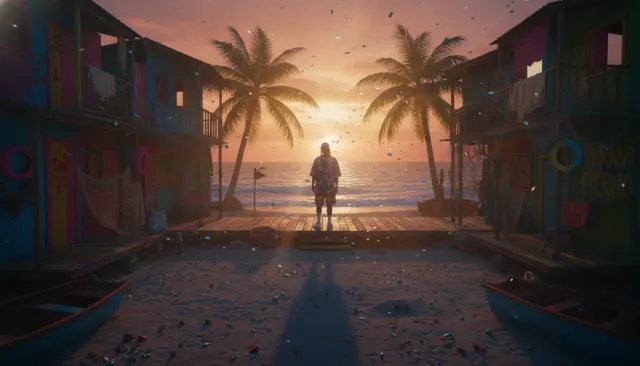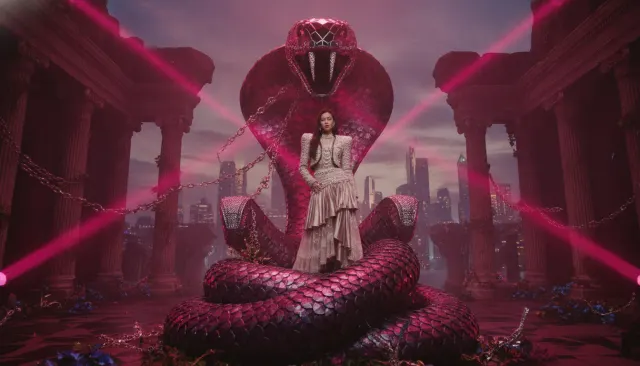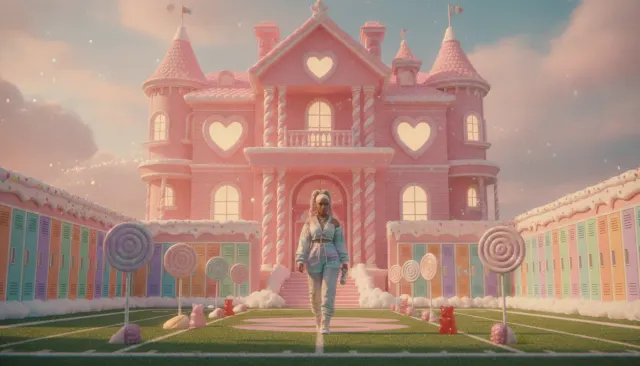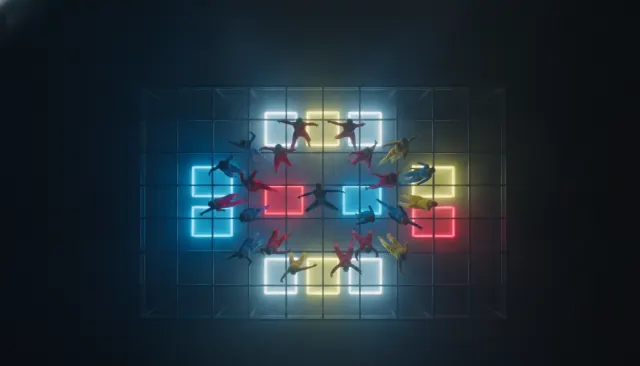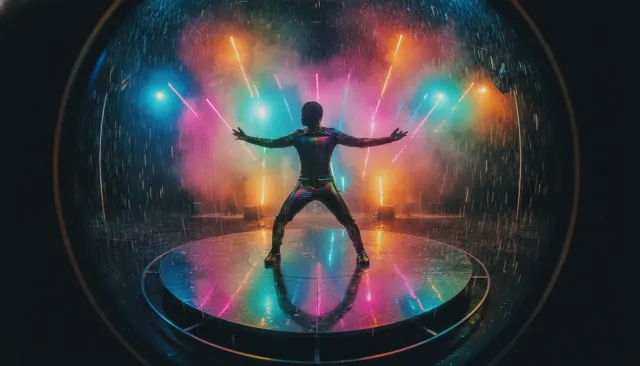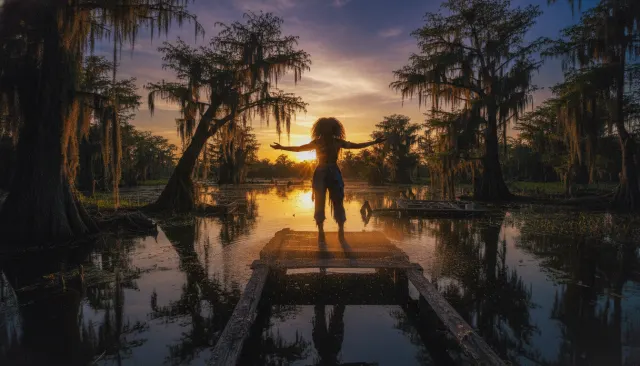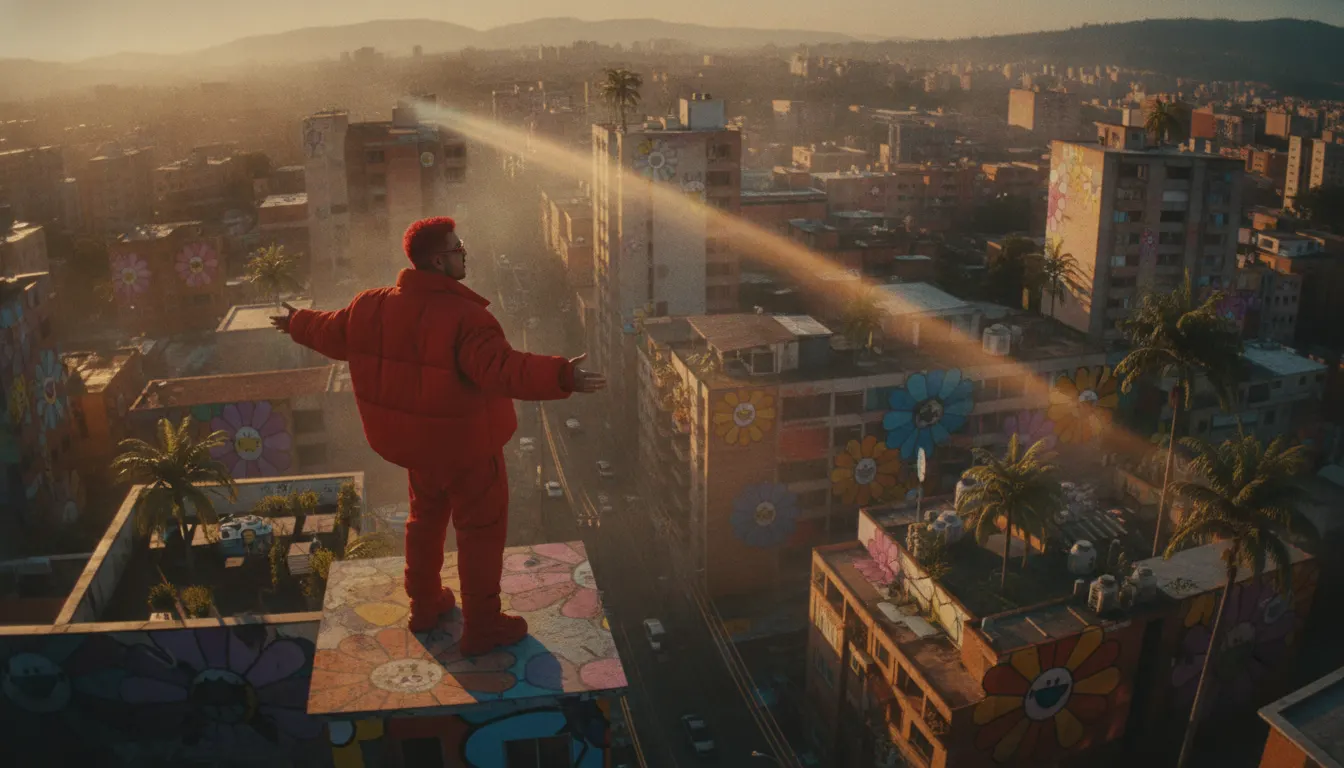
J Balvin, 'Rojo' dir. Stillz
2020
red monochrome world
J Balvin Colombia vibrant reggaeton MV aesthetic. Colores album era one-color-per-song concept, Medellin urban + jungle palette, Beauty Behind The Madness Murakami collaboration vibrancy.
The moves a human crew would use to get here. Cue applies them for you, and knowing their names is how you ask for a change.
hue color-world: entire set, costume, lighting, and grade calibrated to one color
key studio lighting with colored gels or LED RGB panels creating total chromatic environment
cubes, spheres, grid structures in the dominant hue
saturated post-production grade pushing digital color toward the saturation limit
flowers, street art, barrio textures - grounding abstract settings
J Balvin (Jose Álvaro Osorio Balvín) has built one of the most visually distinctive bodies of work in contemporary Latin music - a maximalist, hyper-saturated aesthetic that positions Medellín's cultural energy against global fashion, streetwear, and pop art references. Where earlier reggaeton visual culture leaned toward generic luxury tropes, Balvin's team built a world with its own internal visual logic.
J Balvin's album Colores (2020) was structured around a simple but potent visual concept: each single received its own color - Rojo, Amarillo, Verde, Morado, Azul - and a video in which that color dominated the visual field absolutely. The "Rojo" video (dir. Stillz, 2020) is an unbroken study in red: the set, costumes, lighting, and color grading were calibrated to a single hue, with the performer and dancers existing entirely within that chromatic world. "Amarillo" followed the same logic in yellow.
This systematic color-as-concept approach was unusual in popular music video production and gave the Colores campaign both critical attention and immediate social media recognizability. Each video could be identified by its dominant color before its content was processed.
Balvin's visual work consistently foregrounds Medellín and Colombian cultural identity not as local limitation but as global source of energy. Collaborations with Colombian graffiti artists, reference to the city's reputation for flower culture (Feria de las Flores), and use of Colombian street aesthetic elements ground the videos in specific geography even when the settings are abstract color-field studios.
The fashion component is global streetwear: Balvin's partnerships with Nike, Jordans, and his own Guess collaboration produced visual content that positioned Colombian culture within the global sneaker and streetwear ecosystem rather than against it.
Directors Stillz (Colin Tilley) and Still Watching Netflix (Christian Breslauer) built much of the Balvin visual world. Colin Tilley's approach emphasizes technical precision - crane and Steadicam choreography that tracks dancers through color-saturated environments with controlled kinetic energy. Christian Breslauer brings a more abstract conceptual framework, using color, geometry, and surrealist imagery drawn from Latin American visual art traditions.
Balvin's visual collaborations with Bad Bunny - particularly "Un Verano Sin Ti" (2022) era content - extended the vibrant Latin aesthetic toward a more Puerto Rico-specific beach and party culture visual language, using warm Caribbean light and tropical setting as counterpart to Balvin's more studio-controlled chromatic work.
2020
red monochrome world
2020
yellow monochrome world
2020
purple monochrome world
2017
Medellín cultural pride
2017
2019
2019
2016
early high-saturation aesthetic
A Look is not a filter. It is a set of stored decisions the pipeline reads before it makes a single frame, so two videos in the same Look actually match.